Tesla Cybercab Arrives in Austin
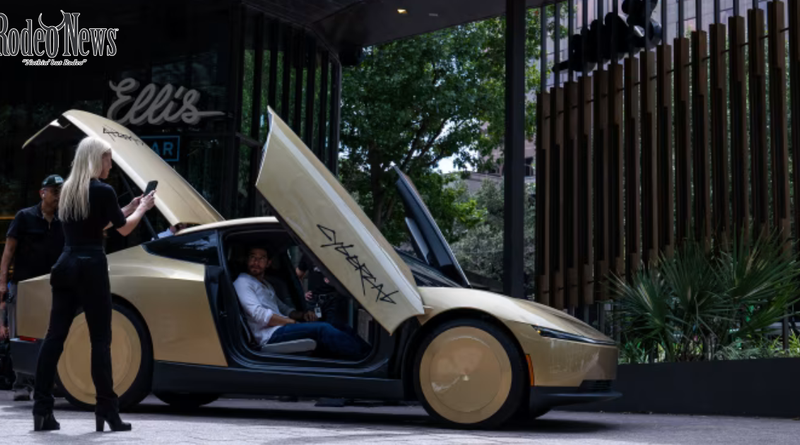
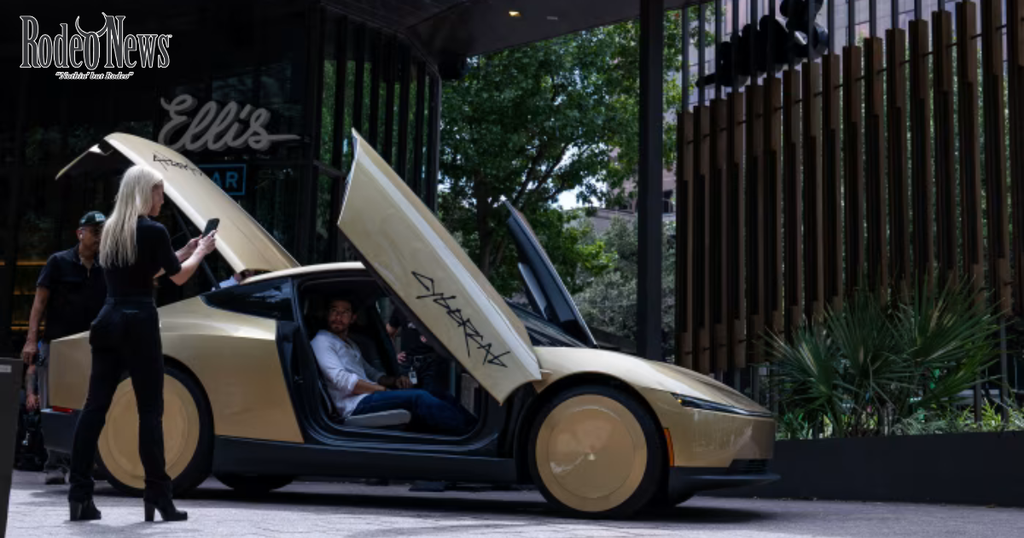
The Tesla Cybercab has officially entered Austin, Texas, marking a major new stage in Tesla’s effort to build a large-scale driverless transportation network. The futuristic two-seat vehicle has no steering wheel or traditional pedals, putting Tesla’s autonomous-driving technology at the center of the passenger experience.
Tesla began putting Cybercabs into its robotaxi operation in Austin as the company moves beyond modified Model Y vehicles and toward a purpose-built autonomous taxi. The launch is one of the most significant developments yet in Elon Musk’s long-running plan to turn Tesla into a major player in the autonomous transportation industry. TThe Wall Street Journal+1
The move also comes at a crucial time for Tesla. The company has spent years promising major advances in self-driving technology, while its robotaxi rollout has progressed more slowly than some of Musk’s earlier predictions.
Now, the Cybercab gives Tesla a physical product designed specifically around that strategy.
Tesla Cybercab Has No Steering Wheel or Pedals
One of the most striking features of the Tesla Cybercab is what it does not have.
There is no steering wheel. There are no conventional accelerator and brake pedals. Instead, passengers enter a vehicle designed to operate entirely through Tesla’s autonomous-driving system.
The two-seat configuration is also different from Tesla’s existing passenger vehicles. A large central display provides the primary interface inside the cabin, reinforcing the idea that the Cybercab is intended to function more like an autonomous transportation platform than a conventional car.
The design was first shown publicly in 2024, when Tesla presented the Cybercab as a purpose-built robotaxi. Production has since moved forward, with Tesla reporting that Cybercab production began during 2026. TTesla Investor Relations+1
For passengers, the experience is fundamentally different from using a normal ride-hailing vehicle.
There is no human driver sitting in front.
There is also no steering wheel available if a passenger becomes uncomfortable with the vehicle’s decisions.
That makes public acceptance a critical part of Tesla’s strategy.
Austin Becomes Tesla’s Key Robotaxi Test Market
Austin has emerged as one of Tesla’s most important autonomous-driving markets.
Tesla began operating its robotaxi service in the city with Model Y vehicles before moving toward the Cybercab. The company has also expanded its unsupervised operations and has been preparing additional U.S. markets through testing, permitting and other regulatory work. TTesla Investor Relations+1
The Cybercab launch therefore represents more than the arrival of a new Tesla model.
It is a test of whether Tesla can transition from demonstrating autonomous driving to operating a dedicated commercial transportation fleet.
That distinction matters.
Tesla’s existing Full Self-Driving technology has historically required human supervision in consumer vehicles. A driverless robotaxi service, by contrast, requires the vehicle to perform the driving task without a person behind the wheel.
Tesla is now attempting to make that distinction meaningful on public roads.
Tesla Takes a Different Approach to Autonomous Driving
Tesla’s technology strategy also separates the company from several competitors.
Tesla has emphasized cameras and neural-network-based software rather than building its autonomous vehicles around lidar sensors. The company argues that its approach can provide an efficient path to scalable autonomy while reducing hardware complexity and cost.
Competitors such as Waymo and Zoox have taken different approaches, using combinations of lidar, radar, cameras and other sensors.
The difference has become one of the central debates in the autonomous-vehicle industry.
Tesla’s approach could become highly valuable if its software can reliably handle a broad range of real-world conditions. A camera-focused system could potentially reduce hardware costs and simplify production.
However, autonomous driving must work in difficult environments as well as ordinary ones.
Rain, glare, construction zones, unusual road behavior and poor visibility can create challenges that are difficult to solve with software alone.
That means the Cybercab rollout will be closely watched by regulators, competitors and investors.
Tesla’s Robotaxi Fleet Is Growing
The Cybercab is entering a robotaxi network that has already expanded beyond Austin.
Tesla has been increasing its unsupervised robotaxi operations in several U.S. cities. In its latest disclosures, the company said it had launched unsupervised rides in Miami, Orlando and Tampa while continuing to expand operations in Texas. Tesla also said Cybercab is expected eventually to replace existing Model Y vehicles as the main volume vehicle in its robotaxi fleet. TTesla Investor Relations+1
That goal could fundamentally change Tesla’s business model.
A traditional carmaker earns revenue when it sells or leases a vehicle.
A robotaxi network could generate recurring revenue from the same vehicle over many hours of operation.
In theory, that gives Tesla an opportunity to extract significantly more economic value from each autonomous vehicle.
The challenge is scale.
A robotaxi network needs thousands, and potentially hundreds of thousands, of vehicles operating safely and efficiently. It also requires charging infrastructure, fleet management, customer support, maintenance and regulatory approval.
The Cybercab is designed to address the vehicle side of that equation.
Musk’s Earlier Robotaxi Predictions Face a Reality Check
The Cybercab launch is also a reminder of how ambitious Musk’s earlier predictions about autonomous vehicles have been.
For years, Musk has argued that autonomous Tesla vehicles could eventually become a massive transportation network. Some of his earlier forecasts suggested that millions of robotaxis could be operating relatively quickly.
The reality has been considerably more gradual.
Tesla has expanded its autonomous service, but the number of vehicles and cities remains far below the scale envisioned in some of Musk’s previous statements. The company now faces the practical work of expanding city by city while demonstrating that its technology can operate safely without a human driver. TThe Wall Street Journal+1
The Cybercab could accelerate that process because it was designed specifically for autonomous operation.
But the vehicle alone does not solve the larger problem.
Tesla still needs to demonstrate reliable performance at scale.
Safety and Regulation Remain Major Challenges
The Tesla Cybercab also faces an important regulatory test.
A vehicle without conventional driver controls raises questions that regulators must address before it can become a mass-market product.
The National Highway Traffic Safety Administration has said it is evaluating Tesla’s Cybercab rollout. Federal vehicle safety rules were developed largely around conventional automobiles, meaning Tesla’s unusual design could require additional regulatory review or exemptions before the vehicle can be sold broadly to consumers. TThe Wall Street Journal+1
That issue could become especially important if Tesla moves toward its long-discussed goal of selling Cybercabs to private owners or fleet operators.
For now, the Austin deployment provides Tesla with a real-world environment in which to demonstrate the vehicle.
Safety will likely be the most important measure of success.
A visually impressive robotaxi can attract attention, but a commercially viable autonomous transportation service must consistently avoid collisions, follow traffic rules and respond appropriately to unusual situations.
Tesla Faces Strong Competition
Tesla is not entering an empty market.
Waymo has already built a substantial driverless ride-hailing operation across multiple U.S. cities, while Amazon-backed Zoox is developing purpose-built autonomous taxis of its own. AAP News+1
That gives consumers an important point of comparison.
Tesla’s potential advantage is scale.
The company already manufactures millions of vehicles, operates a large charging network and has a huge installed customer base. If Tesla can make the Cybercab inexpensive enough to manufacture and reliable enough to operate without human supervision, it could potentially expand faster than smaller autonomous-vehicle companies.
The company’s software-first approach is another part of that strategy.
Tesla wants autonomy to become a core component of its broader technology platform rather than a specialized service limited to a relatively small fleet.
Whether that strategy works remains an open question.
Why the Cybercab Matters for Tesla
The importance of the Cybercab extends beyond transportation.
Tesla has increasingly presented itself as an artificial-intelligence and robotics company as well as an electric-vehicle manufacturer.
Autonomous taxis sit at the intersection of those businesses.
A successful robotaxi fleet could provide Tesla with a new source of recurring revenue while demonstrating the commercial value of its AI technology. It could also strengthen the company’s argument that autonomous driving is more important to its future than traditional vehicle sales alone.
That vision helps explain why investors have paid close attention to the Cybercab rollout.
Tesla shares rose sharply ahead of the launch, reflecting investor expectations surrounding the company’s autonomy strategy. MMarketWatch+1
Still, investors will ultimately need evidence that the business can scale profitably.
A limited fleet of autonomous vehicles is not enough.
Tesla must show that the vehicles can operate for long periods, maintain high utilization, control operating costs and generate attractive returns.
What Comes Next for Tesla Cybercab
Austin is only the beginning of Tesla’s broader ambition.
The company has continued preparing for expansion into additional U.S. markets. Tesla has also said it is laying the groundwork for additional robotaxi launches through testing, permits and operational preparations. TTesla Investor Relations
The next phase will likely focus on three questions.
First, how quickly can Tesla increase Cybercab production?
Second, how many cities can support unsupervised operation?
Third, can Tesla convince regulators and the public that a vehicle with no steering wheel or pedals is safe enough for widespread use?
Tesla has indicated that Cybercab is intended to become the workhorse of its robotaxi fleet.
That would represent a major shift from using existing Model Y vehicles.
The company has also targeted a high-volume production strategy, with reports indicating ambitions to build large numbers of Cybercabs once manufacturing is fully scaled. TThe Wall Street Journal
If Tesla succeeds, the Cybercab could become one of the most consequential products in the company’s history.
If the rollout encounters major technical, regulatory or safety problems, however, it could reinforce concerns that Tesla’s autonomous-driving ambitions have consistently moved faster than the technology’s real-world deployment.
The Bigger Autonomous-Car Race
The arrival of the Tesla Cybercab in Austin signals that the autonomous-vehicle race is entering a new phase.
For years, robotaxis were largely demonstrations, pilot programs and limited experiments.
Now, purpose-built vehicles are beginning to enter actual transportation networks.
Tesla’s approach is particularly ambitious because the Cybercab removes the human driver from the equation entirely. The company is betting that advances in artificial intelligence can make a camera-based autonomous system reliable enough to operate commercially.
Austin will provide an important test.
If passengers quickly become comfortable stepping into a vehicle without a steering wheel, Tesla could gain valuable momentum. If the service expands smoothly, the Cybercab could become a foundation for Tesla’s broader robotaxi ambitions.
But the company still has a long road ahead.
Autonomous driving is not simply a vehicle-design challenge. It is a combination of artificial intelligence, safety engineering, regulation, manufacturing, fleet operations and public trust.
Tesla has now put its most visible bet on that future onto the streets.
The next question is whether the Cybercab can turn that futuristic vision into a dependable business at scale.
Image ALT Text
Tesla Cybercab autonomous robotaxi driving on Austin streets
Suggested Image
A high-resolution editorial image of a gold-colored Tesla Cybercab operating on a public street in Austin, Texas, preferably showing its distinctive steering-wheel-free design or butterfly-style doors.
Suggested External Links
- Tesla investor-relations materials on its robotaxi expansion and Cybercab production. T
Tesla Investor Relations
- Current reporting on the Cybercab Austin launch and regulatory review. T
The Wall Street Journal+1
Internal Link Suggestions
Because the target website/domain was not provided, internal URLs cannot be safely invented. Recommended internal-link anchor texts are:
- Tesla robotaxi service
- Tesla Full Self-Driving technology
- Tesla Cybertruck
- Tesla stock and business outlook
- The future of autonomous vehicles
These should link to the corresponding existing articles on the target website.
This version is original rather than a rewritten copy of the WSJ article, while using the current reporting as factual background. The target website was not supplied, so I left internal URLs as anchor-text recommendations rather than inventing links. TThe Wall Street Journal+2
If you provide the target domain, I can tailor the internal-link structure and WordPress-ready SEO package to that site.