Iran Attacks Kuwait: 5 Alarming Updates
Iran attacks Kuwait as missiles and drones were launched toward the Gulf state early Thursday, September 3, in the latest escalation of the renewed conflict between Tehran and Washington.
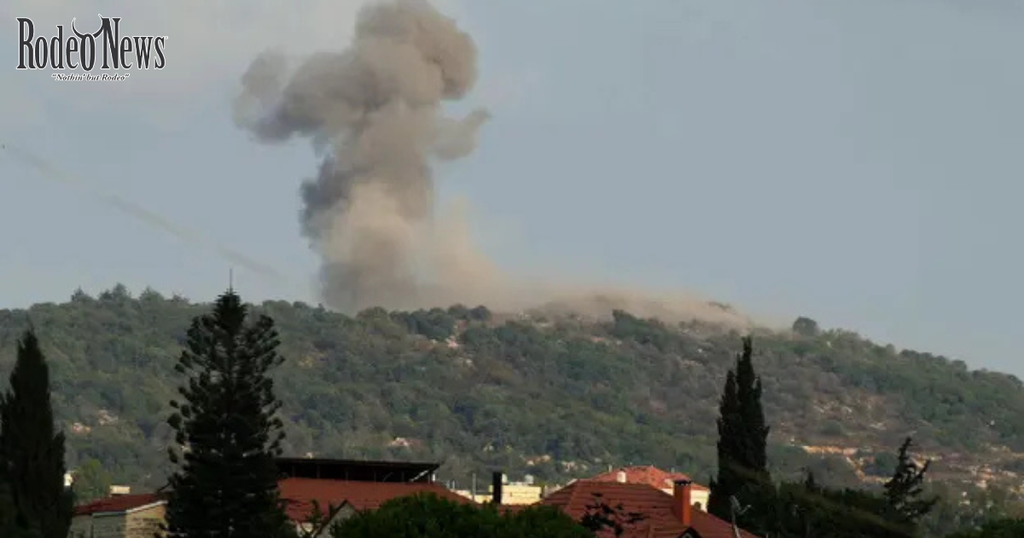
Kuwait’s Defense Ministry said its air defenses confronted what it described as a “blatant” Iranian attack. The strikes came after several days of intensifying U.S.-Iran military activity centered on the strategically vital Strait of Hormuz. FFox News+1
The latest developments mark a dangerous expansion of the confrontation. Kuwait hosts several U.S. military facilities, making it a particularly sensitive target as Iran retaliates against American operations in the region.
At the same time, the Strait of Hormuz remains at the center of the crisis. Commercial shipping through the waterway has fallen sharply, while rising geopolitical risks have pushed oil prices higher.
Here are five major developments to understand.
1. Iran attacks Kuwait with missiles and drones
The immediate trigger for Thursday’s alarm was a series of Iranian missile and drone attacks directed toward Kuwait.
Kuwaiti authorities said air defenses intercepted the incoming threats. The government did not immediately report casualties from the attack. The strikes followed Iranian attacks against other U.S. allies in the region, including Bahrain and Jordan. TThe Washington Post+1
Kuwait’s geographic position makes the development particularly significant. The country sits directly across the Persian Gulf from Iran and hosts U.S. forces that have supported American military operations in the Middle East.
That means any Iranian attack involving Kuwait carries risks beyond the immediate exchange of missiles and drones.
It could also create pressure on Washington to respond.
Iran has presented its attacks against American allies as retaliation for U.S. military operations against Iranian targets. Tehran’s latest actions therefore appear designed to demonstrate that American forces and facilities across the region remain vulnerable.
For Kuwait, however, the situation creates a difficult security challenge. The country is not the principal combatant in the U.S.-Iran confrontation, yet its territory and airspace can become part of the battlefield.
2. The Strait of Hormuz remains the central flashpoint
The Strait of Hormuz is at the heart of the latest escalation.
The narrow waterway connects the Persian Gulf with the Gulf of Oman and the wider Arabian Sea. It is one of the world’s most important energy corridors, making any military confrontation around the strait a major concern for governments, shipping companies and energy markets.
The latest round of fighting began after U.S. forces struck Iranian rocket launchers on an island in the Strait of Hormuz on Sunday.
Washington said the launchers posed a threat to shipping and were connected to Iranian preparations involving mines. Iran subsequently retaliated against U.S. positions in the region. AAP News+1
The United States later carried out additional strikes against Iranian military capabilities, including air-defense systems, radar installations and maritime assets.
Iran’s response has extended beyond American forces in Iran.
The attacks on Kuwait and other U.S.-aligned states show how quickly the conflict can spread geographically.
That is one reason the Strait of Hormuz is so important. A disruption there could affect not only the countries directly involved in the conflict but also global energy markets.
3. The U.S.-Iran conflict has entered another dangerous phase
The Iran attacks Kuwait development comes after a monthlong lull in direct U.S.-Iran fighting.
That pause had raised hopes that the conflict might move toward a more stable diplomatic arrangement. Instead, the exchange of attacks in recent days has revived fears of a much wider confrontation.
The U.S. military has said its recent operations are focused on military capabilities that threaten American personnel and commercial shipping.
Iran, meanwhile, has continued to threaten retaliation.
President Donald Trump has also warned that Washington could conduct additional strikes against Iran. The White House has maintained that Tehran must change its behavior, particularly regarding military activity and the Strait of Hormuz.
Vice President JD Vance, however, said Thursday that he would not describe the current confrontation as a war, despite the continued exchange of strikes. He also declined to provide a timeline for when the fighting might end. TTIME+1
That uncertainty is becoming one of the defining features of the conflict.
Neither side appears willing to completely back down, but neither has publicly laid out a clear path toward a lasting settlement.
As a result, every new attack carries the possibility of triggering another round of retaliation.
4. A reported wedding strike has intensified tensions
Another major factor behind the latest escalation is a reported U.S. strike on a wedding gathering in southern Iran.
Iranian authorities said a U.S. airstrike hit a home in Kuhestak, a coastal community near the Strait of Hormuz, while a wedding was taking place.
Iranian state media initially reported that four people were killed and dozens were wounded. Later reporting said a fifth person, a 22-year-old woman, died in hospital, bringing the reported death toll to five. Iranian officials said nearly 70 people were wounded. MMarketScreener+1
The U.S. military has said it does not target civilians and has acknowledged reports about the incident while investigating what happened.
The incident has nevertheless become a major political issue.
Iranian officials have condemned the strike and called for an investigation. The incident has also increased public anger in Iran at a time when the military confrontation is already escalating.
For Washington, the incident creates another challenge. Any confirmed civilian casualties can increase international pressure on the U.S. and make de-escalation more difficult.
For Tehran, meanwhile, the reported casualties provide another justification for retaliatory action.
That cycle creates a dangerous feedback loop: military strikes lead to casualties, casualties generate political pressure, and political pressure increases the likelihood of further military action.
5. Oil prices are rising as shipping risks grow
The conflict is also being felt far beyond the battlefield.
Oil markets have reacted strongly to renewed fighting around the Strait of Hormuz. Reuters reported that Brent crude reached a six-week high during Thursday trading as investors assessed the risk of further disruptions. RReuters+1
The concern is straightforward.
If commercial vessels cannot safely navigate the Strait of Hormuz, energy shipments could be delayed or redirected. Even the threat of disruption can cause traders to price additional risk into crude oil.
Shipping activity has already been significantly affected by the conflict.
That matters because the strait is a critical route for energy exports from the Persian Gulf. Any prolonged disruption could increase transportation costs and potentially push fuel prices higher in countries far from the Middle East.
The economic consequences could therefore become broader if the military confrontation continues.
Higher oil prices can affect gasoline, transportation, manufacturing and consumer prices. For governments already dealing with inflationary pressures, another energy shock would create additional problems.
Why Iran’s attack on Kuwait matters
The Iran attacks Kuwait story is significant because it illustrates how the U.S.-Iran conflict is no longer limited to direct attacks on Iranian or American military positions.
Kuwait, Bahrain, Jordan and other countries in the region are increasingly exposed to the consequences.
Several of these countries host American military personnel or facilities. That makes them strategically important to Washington and potentially attractive targets for Iranian retaliation.
But attacks on those countries also increase the risk of a broader regional conflict.
Kuwait has strong economic and security relationships with the United States. At the same time, it shares the Persian Gulf with Iran and has a direct interest in preventing further instability.
A prolonged exchange of attacks could therefore place Gulf governments in an increasingly difficult position.
They must defend their territories while trying to prevent their countries from becoming full participants in a war between larger powers.
What happens next?
The biggest question is whether Thursday’s attack will trigger another round of U.S. strikes against Iran.
President Trump has already indicated that Washington is prepared to respond if Iranian attacks continue.
Iran, meanwhile, has demonstrated that it can target American interests beyond Iran’s borders.
That creates the possibility of a continuing cycle of retaliation.
Diplomacy remains possible, but the current environment is unfavorable.
The latest escalation has hardened positions on both sides. The reported civilian deaths in southern Iran have added another layer of political pressure, while attacks involving U.S. allies make it increasingly difficult for Washington to ignore Iranian retaliation.
The Strait of Hormuz will remain especially important.
If shipping activity begins to recover, markets could interpret that as a sign of stabilization. If vessel traffic falls further, however, traders may anticipate a more serious energy disruption.
The direction of oil prices could therefore become an important indicator of how markets assess the conflict.
Global markets are watching the Gulf closely
The renewed fighting demonstrates why a regional conflict involving Iran can quickly become a global economic issue.
The Strait of Hormuz is not simply a military flashpoint. It is also a critical maritime corridor for energy supplies.
As a result, governments around the world are closely watching the situation.
European and Asian economies could be particularly sensitive to prolonged energy disruptions. Shipping companies must also consider whether vessels can safely operate through the region.
Meanwhile, Gulf countries face the immediate security threat of missiles and drones.
That combination makes the latest escalation unusually consequential.
Bottom line
The Iran attacks Kuwait represent one of the clearest signs that the latest U.S.-Iran escalation is spreading across the Gulf.
Kuwaiti air defenses intercepted Iranian missiles and drones, according to the country’s Defense Ministry, while other U.S. allies in the region have also reported Iranian attacks. AAP News+1
At the center of the confrontation is the Strait of Hormuz, where military activity and reduced shipping have raised concerns about global energy supplies.
The reported strike on a wedding gathering in Iran has further intensified political tensions, while oil prices have climbed as traders assess the risk of additional disruption.
For now, the most important question is whether the latest attacks remain a limited exchange or become the beginning of a broader regional escalation.
With the United States threatening further action and Iran continuing to retaliate, the situation remains highly volatile.
Any additional strike involving U.S. forces, Kuwait or commercial shipping could quickly change the trajectory of the conflict.
Sources & Further Reading
- Fox News live coverage — Source article supplied for this report.
- — Independent reporting on the latest developments.
- Reuters coverage of the escalation and civilian casualties — Reporting on the latest U.S.-Iran escalation.
- Reuters oil-market coverage — Updates on oil prices and Strait of Hormuz risks.
Internal link recommendation: Because no target website/domain was provided, add 2–3 links to your site’s existing articles about Iran, Kuwait, the Strait of Hormuz, or oil prices before publishing.