
Zelenskyy Urges Trump to Seek China’s Help
Ukrainian President Volodymyr Zelenskyy has asked U.S. President Donald Trump to seek China’s help in efforts to end Russia’s war in Ukraine, putting Beijing’s relationship with Moscow at the center of a renewed diplomatic push.
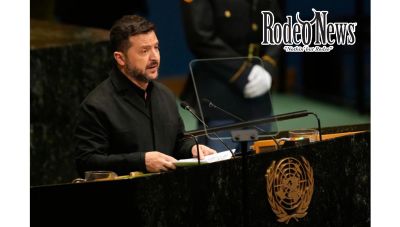
Zelenskyy said Friday that he wanted Trump to encourage Chinese President Xi Jinping to use Beijing’s influence over Russia as part of an effort to bring the more than four-year-old invasion to an end. The Ukrainian president said he had not yet received details about what Trump and Xi discussed during their recent meeting, but expected to learn more.
The request came as Zelenskyy wrapped up a U.S. visit connected to the United Nations General Assembly. During the trip, he met Trump, spoke with U.S. lawmakers and held discussions with other international leaders about the war, Ukraine’s defense needs and possible diplomatic steps.
The latest developments highlight the increasingly international nature of efforts surrounding the Russia-Ukraine conflict. Alongside discussions involving Washington, Kyiv and Moscow, Ukraine is now seeking a greater role for China, while also pressing European and other governments on sanctions, security assistance, trade routes and financial support.
Zelenskyy urges Trump to involve China
Zelenskyy’s appeal to Trump reflects Ukraine’s view that Beijing has significant influence in Moscow.
China has maintained close relations with Russia throughout the war. NATO countries have previously described China as an important enabler of Russia’s military effort, while Beijing has continued to reject the characterization that it is directly responsible for Russia’s war.
For Kyiv, however, China’s relationship with Russia represents a potential diplomatic channel.
Zelenskyy said he had asked Trump to raise the issue with Xi. The Ukrainian president was seeking to determine whether Beijing could encourage Moscow to consider steps toward ending the fighting.
The timing was notable because Trump and Xi met in Washington during the same week as Zelenskyy’s visit to the United States.
Zelenskyy said he had not received feedback from the White House on the Trump-Xi discussions. That means the practical impact of his request remained unclear.
Still, the development places China alongside the United States and European countries as an important factor in the diplomatic environment surrounding the war.
U.S. seeks initial technical talks
Alongside the China initiative, Zelenskyy said Washington was seeking to restart diplomacy through technical-level discussions involving the United States, Ukraine and Russia.
The proposed format would initially bring together delegations rather than the three countries’ leaders. According to Zelenskyy, Ukraine was waiting for Washington to propose a date.
American officials also suggested the United Arab Emirates as a possible location for the meetings.
The proposal follows earlier rounds of trilateral negotiations. Representatives from the United States, Ukraine and Russia met three times earlier in 2026, with two meetings taking place in Abu Dhabi and another in Geneva.
Those discussions did not produce a significant breakthrough.
The latest proposal therefore represents another attempt to establish a diplomatic channel before any potential meeting involving Trump, Zelenskyy and Russian President Vladimir Putin.
Kremlin spokesman Dmitry Peskov said Friday that Putin and Trump had discussed the possibility of holding such a meeting during a phone call earlier in September. However, Peskov did not provide a date or additional details.
The uncertainty surrounding the timing illustrates the difficulty of moving from diplomatic statements to formal negotiations.
Putin leaves the door open to negotiations
Putin also addressed the possibility of renewed talks while speaking to reporters in St. Petersburg.
He criticized recent Ukrainian attacks inside Russia and in Russian-held areas of Ukraine. At the same time, he said proposals to resume negotiations remained available.
Putin indicated that Moscow would consider its response carefully and emphasized that decisions about restarting the negotiating process would be based on Russia’s interests.
That position leaves open the possibility of further discussions but does not establish that a new peace process has been agreed.
The two sides continue to disagree over fundamental issues surrounding the war. Previous negotiations have struggled to bridge those differences, particularly on security and territorial questions.
For now, the proposed technical talks would provide a lower-level channel through which Washington, Kyiv and Moscow could explore possible areas of discussion.
Zelenskyy points to U.S. sanctions
During his American visit, Zelenskyy also met with members of the U.S. Senate and House of Representatives.
He thanked lawmakers for bipartisan support for legislation targeting Russia with additional sanctions. Trump signed the legislation into law the previous week, although the measures had not yet been implemented at the time of Zelenskyy’s comments.
Zelenskyy said sanctions could be used as pressure on Moscow to return to negotiations.
For Ukraine, economic pressure remains part of a broader strategy that combines diplomacy with military and financial support.
The Ukrainian government has repeatedly argued that sanctions can affect Russia’s ability to sustain its war effort. Moscow, meanwhile, has continued to criticize Western sanctions and maintain that it can withstand economic pressure.
The implementation of the newly signed U.S. measures could therefore become another point of attention in the coming weeks.
Zelenskyy says Trump approved Patriot licenses
Another important issue from Zelenskyy’s U.S. visit involved Patriot air defense systems.
The Ukrainian president said Trump had confirmed a final decision allowing Ukraine to obtain licenses to produce Patriot systems.
Ukraine has sought additional air defense capabilities because Russian ballistic missiles and other weapons continue to threaten Ukrainian cities and infrastructure.
The Patriot system is particularly important to Kyiv because of its ability to intercept certain ballistic missile threats. However, supplies have been limited, creating pressure for Ukraine to expand its access to the systems.
Trump had previously said in July that Ukraine would be allowed to produce Patriots but later appeared to reconsider the decision.
Zelenskyy’s latest comments suggest that the licensing issue has now moved forward.
If implemented, domestic production could give Ukraine another avenue for strengthening its air defense capacity. The timing is significant as the country continues to prepare for further attacks against cities, energy facilities and other infrastructure.
Black Sea shipping remains a major concern
The diplomatic discussions also extended beyond military operations and sanctions.
Zelenskyy said Ukraine was seeking international support for keeping Black Sea shipping routes open.
Both Ukraine and Russia are major suppliers of agricultural commodities, including wheat, barley and sunflower oil. Disruptions to shipping through the Black Sea can therefore affect not only the two countries but also international food markets.
Zelenskyy said he discussed the issue with leaders from India, Turkey, Egypt and other countries during his U.S. trip.
Those governments have an interest in maintaining reliable access to food shipments.
Kyiv wants Russia to accept a ceasefire arrangement covering the Black Sea that would allow agricultural deliveries to resume without the same level of wartime disruption.
The issue adds another layer to the diplomatic effort. A potential Black Sea agreement could address economic and humanitarian concerns even if a comprehensive peace settlement remains out of reach.
Ukraine faces continued financial pressure
Zelenskyy also used his U.S. trip to discuss Ukraine’s financial needs.
He met with leaders of the International Monetary Fund and the European Commission as Kyiv faces a substantial budget deficit caused by the continuing war and reduced economic production.
Ukraine’s wartime expenses remain heavily connected to defense spending.
According to Zelenskyy, a large part of the country’s financing gap is related to weapons purchases. He also pointed to possible future arrangements involving technology sharing and joint drone production.
Ukraine has developed a major drone industry during the war, and unmanned systems have become increasingly important on the battlefield.
The possibility of international technology partnerships could therefore become part of Ukraine’s longer-term defense and industrial strategy.
European financial assistance is expected to continue, while the IMF is also maintaining support programs.
Fighting continues as diplomacy develops
The diplomatic activity comes as fighting continues across Ukraine and Russia.
Russian aerial attacks killed five people and wounded 11 in Ukraine overnight and into Friday, according to officials cited by The Associated Press. Ukrainian officials said eight regions came under attack.
Kyiv was among the areas affected. Zelenskyy said a strike hit an office building in the capital, killing four people. A 14-year-old boy was also killed in an attack on an apartment building, while at least seven residents were injured, according to Ukrainian officials.
Russia’s Defense Ministry said Russian forces had struck a missile engine depot near Kyiv and other targets.
Ukraine, meanwhile, continued attacks against Russian infrastructure. Zelenskyy said Ukrainian forces struck two refineries as part of a campaign targeting Russia’s economy.
Russian media also reported drone attacks against other facilities, although some of those reports were not independently confirmed.
The continuing attacks underscore the gap between diplomatic discussions and conditions on the ground.
What happens next
The next stage of the diplomatic effort will depend on whether the proposed technical talks can actually be scheduled.
Ukraine is waiting for Washington to suggest a date for discussions involving U.S., Ukrainian and Russian delegations. The United Arab Emirates has been suggested as a possible venue.
At the same time, Zelenskyy wants Trump to engage China on Russia and is seeking continued American and European support for Ukraine’s military and financial needs.
The involvement of China could add another diplomatic dimension to the process. Beijing has maintained close ties with Moscow, while Ukraine and its Western partners have continued to seek ways to persuade Russia to enter negotiations.
For Washington, Kyiv and Moscow, the challenge remains turning discussions into concrete agreements.
There is no indication from the latest developments that a comprehensive peace settlement has been reached. Instead, several separate diplomatic tracks are emerging at the same time: possible U.S.-Ukraine-Russia technical talks, discussions involving China, pressure through sanctions, efforts to protect Black Sea shipping and negotiations over military support.
For Ukraine, those efforts are unfolding while Russian attacks continue and the country remains heavily dependent on international military and financial assistance.
For Russia, the Kremlin continues to assess whether renewed negotiations serve its interests while maintaining military operations.
And for the United States, the latest discussions place Washington at the center of a complicated diplomatic process involving not only Kyiv and Moscow but also Beijing and other governments with economic and security interests tied to the conflict.
The coming weeks could show whether the proposed technical talks become a sustained negotiating channel. Until then, Zelenskyy’s appeal to Trump to seek China’s help represents another attempt to widen the diplomatic effort surrounding the war in Ukraine.