
Spain Housing Crisis: 87-Year-Old Eviction Sparks Protests
The Spain housing crisis has become the center of renewed public anger after the eviction of an 87-year-old woman from the Madrid apartment where she had lived for more than seven decades. The case of María del Carmen Abascal, widely known as “Maricarmen,” has sparked demonstrations, an overnight protest camp and demands for stronger protections for tenants.
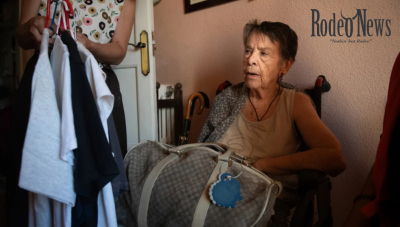
Maricarmen was forcibly removed from her home in Madrid’s Retiro neighborhood on September 23. Images showing the elderly woman being carried from the building on a stretcher spread widely and became a powerful symbol of the country’s worsening housing affordability problems.
Within days, tens of thousands of people took part in demonstrations in Madrid. Protesters called for stronger renter protections, action against housing speculation and restrictions on evictions when suitable alternative housing is not available.
The controversy has also put pressure on the Spanish government. Prime Minister Pedro Sánchez said his government was preparing a housing decree for consideration by the Cabinet, while protesters demanded concrete measures to address rising rents and a shortage of affordable homes.
Spain Housing Crisis Focuses Attention on Maricarmen
Maricarmen’s story began more than 70 years ago.
Spanish media reported that her father first rented the Madrid apartment in 1956. She remained in the property after her parents died and continued living there under an old regulated rental arrangement.
The apartment became more than simply a rental property. It was the home where Maricarmen spent most of her life and where her parents died.
Her case eventually became entangled in changes to the property’s ownership and Spanish rental law.
The building changed ownership in 2018. According to the Madrid Tenants’ Union, Maricarmen was given an opportunity to purchase the apartment but could not afford it. An investment company later acquired the property.
The dispute then centered on her rent and the legal status of her long-standing tenancy.
Rent Increase Became Central to the Dispute
One of the most significant issues in the case was the proposed increase in Maricarmen’s monthly rent.
According to the Madrid Tenants’ Union, her rent was increased from roughly €500 per month to €2,650. The amount was later reduced to approximately €1,650, but that figure remained beyond what she could afford on her pension.
The Guardian reported that the initial increase represented a rise of about 230%, while Spanish newspaper El País reported the requested €2,650 rent was several times her previous payment. The precise figures reported by different outlets vary depending on the point in the dispute being described.
The case therefore became closely linked to a larger debate about what happens when long-term tenants face new owners, dramatically different market rents and limited alternative housing.
For protesters, Maricarmen’s situation represented more than one individual eviction.
It became a visible example of the pressures facing older and lower-income renters in Madrid.
viction Sparks Protests Across Madrid
The eviction on September 23 quickly became a national story.
Supporters had gathered outside the building before authorities arrived, hoping to prevent Maricarmen from being removed. When the eviction proceeded, she was carried out on a stretcher and taken away by ambulance.
The images generated widespread reaction.
According to the Associated Press, tens of thousands of people marched through Madrid on September 26. Demonstrators demanded stronger tenant protections and called for an end to evictions when people do not have adequate alternative housing.
Some protesters stayed after the march and established a camp at Puerta del Sol, one of Madrid’s most recognizable public squares.
The demonstration continued into Sunday, September 27, with additional protesters joining the encampment.
The scene evoked memories of Spain’s 2011 “indignados” protest movement, when demonstrators occupied Puerta del Sol and other public spaces during a period of economic hardship and political dissatisfaction.
Protesters Demand Stronger Tenant Protections
Housing activists have called for several changes in response to the Spain housing crisis.
Among their demands are stronger protections for renters, measures targeting fraudulent practices and an end to evictions where no appropriate alternative accommodation is available. Some protesters have also called for indefinite rental contracts.
A spokesperson for Madrid’s Tenants’ Union said protesters intended to remain at Puerta del Sol until the government adopted new legislation.
The demonstrations have therefore moved beyond Maricarmen’s individual case and toward broader questions about rental policy.
The central issue is whether Spain can increase the availability of affordable housing quickly enough to keep pace with demand.
Spain Faces a Major Housing Shortage
The Spain housing crisis is not limited to Madrid.
Rising housing costs have affected residents in several major Spanish cities. Madrid, Barcelona and Valencia have faced particularly strong pressure as population growth, tourism and limited housing supply increase competition for homes.
The Bank of Spain estimated that the country had a housing shortage of roughly 550,000 homes in 2025, with significant shortages concentrated in major urban areas.
That shortage has become an important factor behind increasing rents and property prices.
When the number of available homes does not keep pace with demand, prospective tenants compete for a limited supply. In popular cities, that can place additional pressure on households that already have limited income.
Spain’s public rental housing supply is also relatively small.
According to figures cited by the Associated Press, subsidized public rental housing accounts for less than 2% of Spain’s housing stock, compared with an average of around 8% across the European Union.
That difference has become an important part of the debate over how Spain should respond to its housing problems.
Why Madrid Has Become a Housing Flashpoint
Madrid is one of Spain’s largest and most economically important cities.
It also faces intense demand for housing.
The city’s population, employment opportunities and international appeal have increased competition for homes. At the same time, housing construction and affordable rental supply have struggled to keep pace with demand, according to analysts cited in recent coverage.
Tourism and population growth have added another layer to the issue.
While these trends can contribute to economic activity, they can also increase pressure on housing markets in neighborhoods where available properties are already limited.
For people on fixed incomes, rapidly rising rents can create a particularly difficult situation.
That is one reason Maricarmen’s case has resonated with protesters.
Maricarmen Says She Does Not Want to Leave Her Home
Before her eviction, Maricarmen spoke publicly about her situation and her desire to remain in the apartment.
She had lived there since 1956, meaning the property had been her home for roughly 71 years.
Her case also involved complicated questions surrounding the succession of the old rental contract.
According to El País, the original agreement was signed by her father. After his death, the tenancy passed to Maricarmen’s mother and later to Maricarmen herself. The legal question surrounding those successive transfers became part of the dispute over whether the old rent-controlled arrangement could continue.
The situation demonstrates why Spain’s housing debate is not simply about current market prices.
It also involves decades-old contracts, changing ownership structures and laws governing tenant rights.
Government Faces Pressure to Act
The protests have placed additional pressure on Spain’s Socialist-led government.
Prime Minister Pedro Sánchez directly addressed Maricarmen during a political event in Madrid and said the government was working to bring forward a new housing decree. He called on parliamentary groups to support the measure.
The government was expected to consider new housing measures at a Cabinet meeting on Tuesday, September 29.
The proposed action comes as public frustration over housing continues to grow.
However, passing new rules is only one part of the challenge. Spain must also address the underlying shortage of affordable housing, particularly in major cities where demand remains high.
The Wider Meaning of the Spain Housing Crisis
Maricarmen’s eviction has become a symbol because it combines several problems in a single case.
She is an elderly tenant.
She had lived in the same home for more than seven decades.
Her rent became unaffordable after the property’s ownership changed.
And her eviction occurred against the backdrop of a national housing shortage.
For many protesters, those circumstances demonstrate how housing pressures can affect people who have spent most of their lives in the same communities.
The debate also reflects a broader European challenge.
Housing affordability has become an increasingly important issue in cities where rents and property prices have risen faster than many households’ incomes.
Spain is now confronting that problem while also trying to increase the supply of homes.
Spain Housing Crisis Could Shape New Housing Policies
The government response following Maricarmen’s eviction could become an important test of Spain’s housing policy.
Protesters are demanding immediate protections for vulnerable tenants. Housing advocates are also calling for structural changes that would increase affordable housing and reduce the risk of people being displaced from their communities.
At the same time, property owners and investment groups have interests in maintaining functioning rental markets and protecting property rights.
The challenge for policymakers is therefore complex.
Any new measures will need to address affordability while also dealing with housing supply, rental contracts and the legal rights of property owners and tenants.
A National Debate Triggered by One Eviction
The Spain housing crisis has been discussed for years, but Maricarmen’s case has given the debate a particularly visible human face.
Her eviction generated images that quickly spread across Spain.
Those images were followed by demonstrations in Madrid and an overnight encampment at Puerta del Sol. The protests have transformed an individual housing dispute into a national conversation about rents, public housing and tenant protections.
Whether the government’s planned housing measures will satisfy protesters remains to be seen.
What is clear is that housing has become a major social issue in Spain, particularly in Madrid and other high-demand cities.
For Maricarmen, however, the issue remains deeply personal.
The apartment was her home for more than 70 years.
For the protesters who gathered in Madrid, her eviction has become a reminder of what they say is a much larger problem: a housing market where many residents increasingly struggle to find a secure and affordable place to live.
The coming weeks will show whether the political response can match the scale of public concern.