
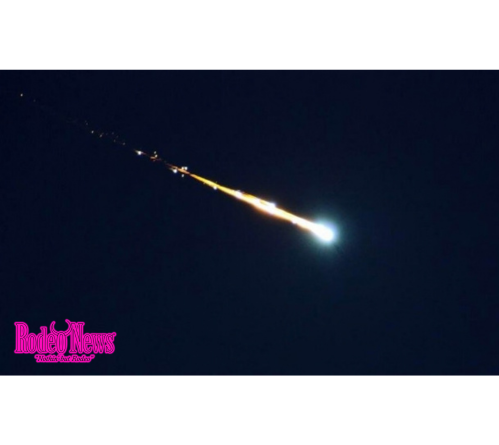
An Alabama fireball added an unexpected flash of excitement to a weekend already filled with spectacular celestial events, as residents looked toward the sky around the time of September’s 2026 Harvest Moon.
The timing made the sight particularly notable. The September full moon reached its peak on Sept. 26, while NASA had highlighted the Harvest Moon’s meeting with Saturn and Neptune as one of the month’s major skywatching events.
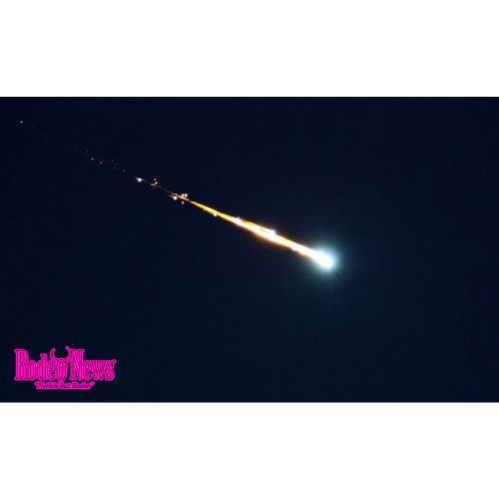
For people across Alabama and other parts of the southern United States, the night offered an opportunity to see more than just a bright full moon. Meteors, planets and other objects can occasionally create dramatic flashes across the sky, giving observers only seconds to notice what is happening.
The reported Alabama fireball is part of a broader pattern of meteor activity that astronomers and skywatchers monitor throughout the year.
Alabama Fireball Adds Drama to Harvest Moon Night
A fireball is not a separate type of space object. The term generally describes an exceptionally bright meteor.
As a piece of cosmic debris enters Earth’s atmosphere at high speed, friction and compression heat the material and surrounding air. The resulting streak can become bright enough to be seen over a large area.
NASA and the American Meteor Society use the term “fireball” for particularly bright meteors. Some can briefly outshine Venus, making them much more noticeable than ordinary shooting stars.
That distinction is important when describing an Alabama fireball. A bright streak does not automatically mean a large asteroid is approaching Earth.
In many cases, the object burns up high in the atmosphere before reaching the ground.
NASA’s All-Sky Fireball Network operates cameras across the United States to monitor these events. The network can help researchers calculate characteristics such as a fireball’s trajectory, speed and depth of penetration into Earth’s atmosphere.
Harvest Moon 2026 Created a Spectacular Backdrop
The timing of the Alabama fireball was especially interesting because of the September Harvest Moon.
NASA identified Sept. 26 as the night when the Harvest Moon would take center stage. The full moon appeared near Saturn, while the much fainter Neptune was also positioned nearby.
The Harvest Moon is traditionally the name given to the full moon closest to the autumnal equinox.
In 2026, the autumn equinox occurred on Sept. 22 in the Northern Hemisphere. Just four days later, the full Harvest Moon rose in the evening sky.
That created an attractive combination for casual observers and amateur astronomers.
The Moon was bright enough to dominate the night, while Saturn provided another easily visible target. Neptune was more challenging because it is too faint to see with the unaided eye under ordinary conditions.
NASA recommends using binoculars or a telescope for observers hoping to find Neptune.
What Makes an Alabama Fireball Different From a Shooting Star?
The words “shooting star” can be misleading.
A shooting star is not actually a star. It is the visible streak created when a meteoroid enters Earth’s atmosphere and heats up.
Most meteors are relatively faint and can disappear almost instantly.
A fireball is much brighter.
Some fireballs produce long, glowing trails that remain visible for several seconds. Others can fragment or produce a noticeable flash near the end of their atmospheric journey.
Their brightness makes them easier for large numbers of people to notice.
That also means reports can come from observers separated by many miles. One person may see a flash overhead, while someone in another community sees the same object moving across a different part of the sky.
For this reason, meteor organizations encourage people who witness unusually bright events to submit observations.
Multiple independent reports can help scientists reconstruct the object’s path.
Alabama Has Seen Other Dramatic Fireballs
The latest sighting is not Alabama’s first encounter with an unusually bright meteor.
Earlier in 2026, NASA’s Marshall Space Flight Center in Huntsville documented a fireball that traveled across a broad section of the southern United States.
A June event was observed by cameras associated with NASA’s meteor monitoring work in Huntsville, while reports came from multiple states. A separate June fireball generated more than 50 reports across Louisiana, Florida, Alabama, Arkansas, Mississippi and Texas, according to reporting based on American Meteor Society observations.
These events demonstrate why Alabama is an interesting location for meteor monitoring.
Huntsville is home to NASA’s Marshall Space Flight Center, where researchers have long participated in studies involving meteors and lunar impacts.
NASA says two telescopes at the Automated and Lunar and Meteor Observatory at Marshall Space Flight Center are used to monitor flashes caused by meteoroid impacts on the Moon.
That scientific infrastructure makes Huntsville particularly relevant to observations of objects entering Earth’s atmosphere.
September Was Full of Celestial Events
The Alabama fireball appeared during a month packed with astronomical highlights.
NASA’s September skywatching guide identified several notable events, including Venus reaching peak brilliance, the September equinox and the Harvest Moon’s meeting with Saturn and Neptune.
The month began with opportunities to use the Moon as a guide to other objects in the sky.
By mid-September, Venus became especially prominent in the evening sky. Then the equinox marked the astronomical transition into fall in the Northern Hemisphere.
The Harvest Moon followed shortly afterward.
For observers, the combination meant there were several reasons to spend time outdoors after sunset.
Southern Taurids Could Bring More Fireballs
The possibility of additional bright meteors did not end with the Harvest Moon.
The Southern Taurid meteor shower began around Sept. 20 and is expected to remain active through Nov. 20, 2026. Its peak periods are expected in October and November.
The Southern Taurids are not known for producing huge numbers of meteors.
Instead, they have a reputation for producing unusually bright fireballs.
That makes the shower particularly interesting for observers who would rather see one spectacular meteor than dozens of faint ones.
The shower originates from debris associated with Comet 2P/Encke. The meteors move relatively slowly compared with many other meteor showers, which can make their glowing trails appear especially noticeable.
Therefore, people who missed the Alabama fireball may have additional opportunities to see bright meteors during the weeks ahead.
When Is the Best Time to Watch the Sky?
Meteor watching does not require expensive equipment.
In fact, a telescope is generally unnecessary for seeing meteors.
The biggest advantage comes from finding a location with a wide view of the sky and limited artificial lighting.
Space.com recommends giving your eyes time to adjust to darkness and avoiding bright phone screens while observing. Meteors can appear across large portions of the sky, so looking broadly rather than concentrating on a tiny area can increase the chance of spotting one.
Patience is also important.
A person can spend several minutes watching the sky without seeing anything spectacular. Then, suddenly, a bright meteor may flash across the horizon.
Fireballs are particularly unpredictable.
They can occur outside the peak of a major meteor shower because not every meteor comes from a known annual shower.
Bright Moonlight Can Make Meteor Watching Harder
There is one important complication for anyone trying to watch meteors around a full moon.
Moonlight makes the sky brighter.
That can wash out fainter meteors and reduce the number of shooting stars visible to the naked eye.
The American Meteor Society’s late-September outlook noted that the Moon would be full on Sept. 26 and remain bright during the following nights, making meteor observing more difficult.
However, a bright fireball can still stand out.
That is one reason unusually bright meteors attract attention even when normal meteor activity is difficult to observe.
How to Report an Alabama Fireball
People who see another Alabama fireball can help astronomers by documenting what they observed.
Useful information can include:
- The approximate time of the sighting
- The observer’s location
- The direction the meteor traveled
- How long it remained visible
- Its apparent color
- Whether it fragmented
- Whether a sound was heard
- Whether other people witnessed the event
Photos and video can be especially valuable.
Security cameras, vehicle dashcams and outdoor cameras can sometimes capture meteors that people miss with their own eyes.
NASA’s fireball monitoring network uses automated cameras to collect observations from across the country.
Public reports can provide another layer of information, particularly when the same object is seen from several locations.
Fireballs Usually Do Not Mean an Immediate Threat
A spectacular meteor can look alarming.
However, brightness alone does not mean that a dangerous object is headed toward a populated area.
Most meteoroids that enter Earth’s atmosphere burn up or break apart before reaching the ground.
Even when fragments survive and land as meteorites, the affected area is generally much smaller than the area over which the meteor was visible.
The enormous visibility of a fireball is largely caused by the height at which it becomes luminous.
An object many miles above the ground can be seen from a very large region.
That is why one meteor can generate reports across multiple states.
More Night-Sky Opportunities Are Coming
The Alabama fireball may have been the most unexpected spectacle of the weekend, but it is only one part of a busy 2026 skywatching calendar.
The Southern Taurids will remain active into November and have the potential to produce bright fireballs. Later in the year, the Orionids, Leonids and Geminids will provide additional opportunities for meteor watchers.
The Geminids, in particular, are considered one of the year’s strongest annual meteor showers, with the 2026 peak expected in December.
For Alabama residents, that means there will be plenty of reasons to keep watching the night sky.
The key is simply knowing when to look and finding a location away from bright city lights.
A Flash of Light Can Reveal a Much Bigger Story
The Alabama fireball is a reminder that dramatic astronomical events do not always require a telescope or a scheduled launch.
Sometimes, all it takes is looking up.
The September 2026 Harvest Moon already provided a striking nighttime display, with Saturn nearby and Neptune available to observers using optical equipment.
The appearance of a bright meteor added another brief event to the scene.
For scientists, however, these flashes are more than beautiful sights.
Each fireball can provide information about the small bodies that travel through the solar system and occasionally intersect Earth’s path.
And with NASA’s fireball monitoring systems and citizen observations working together, a few seconds of light across the sky can become useful scientific data.
For anyone in Alabama who happened to see the flash, the message is simple: keep looking up.
The next spectacular meteor could appear without warning.