
A new report about the Netanyahu Oct. 7 warning has reopened questions about what Israeli leaders knew in the days before Hamas launched its devastating attack on southern Israel in October 2023.
The New York Times reported on Sept. 25 that two people with knowledge of a conversation between Israeli Prime Minister Benjamin Netanyahu and United Arab Emirates President Mohammed bin Zayed said the Emirati leader had warned Netanyahu in late September 2023 that Hamas was considering a major attack. The report also said the warning was not shared with Israel’s senior security leadership at a key meeting held on Oct. 1, six days before the assault.
The allegations are disputed. Netanyahu has denied receiving such a warning, describing the earlier report about the alleged phone call as false. The UAE government has also declined to confirm the specific conversation, while saying that Israel and the Emirates maintain communication channels through which relevant intelligence can be shared.
The latest reporting therefore does not establish that Netanyahu personally received a definitive operational warning of the Oct. 7 attack. Instead, it adds new accounts from people who say the UAE leader raised concerns about a possible Hamas assault.
Netanyahu Oct. 7 Warning: What the Report Says
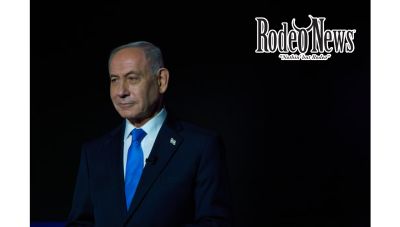
According to the New York Times, one source said he had spoken directly with Mohammed bin Zayed, while another said they had been briefed by someone involved in the conversation between the two leaders.
The sources said the Emirati president contacted Netanyahu in late September 2023 after receiving information indicating that Hamas was preparing an attack.
However, the information reportedly lacked important details. It was not clear whether Hamas intended to launch rockets, conduct a ground assault or take another form of military action.
That distinction is important because the report describes the warning as significant but not necessarily a detailed prediction of the attack that occurred on Oct. 7.
The original source of the intelligence received by the UAE leader also remains unclear.
The New York Times reported that Mohammed bin Zayed later discussed the phone call with William Burns, who was serving as CIA director at the time. According to a person familiar with that discussion, the Emirati leader described having spoken with Netanyahu about a threat of violence involving Hamas in Gaza or the West Bank.
What Happened at the Oct. 1 Security Meeting?
One of the most significant elements of the report concerns an Israeli security meeting held on Oct. 1, 2023.
Netanyahu convened senior security officials to discuss developments involving Gaza. According to minutes reviewed by the New York Times and accounts from five former senior Israeli security officials, the alleged UAE warning was not raised during the meeting.
Instead, Netanyahu reportedly argued for maintaining calm in Gaza.
Some security officials at the meeting were pushing for consideration of military action against senior Hamas figures who were involved in attacks against Israelis in the West Bank, according to the report.
The discussion took place only six days before Hamas fighters crossed from Gaza into southern Israel.
The timing has become a central issue in renewed debate over Israel’s intelligence and security failures surrounding Oct. 7.
Saudi Arabia Was Also Part of the Calculation
The New York Times report says Netanyahu was concerned that military action in Gaza could interfere with diplomatic efforts involving Saudi Arabia.
At the time, Israel and Saudi Arabia were engaged in discussions over a potential normalization agreement. Netanyahu believed such a deal could be within reach, according to the report.
That diplomatic objective reportedly influenced his position at the Oct. 1 meeting.
The report says Netanyahu warned that a major Israeli strike against Hamas could jeopardize the possibility of an agreement with Saudi Arabia.
This provides important context for understanding the decisions described in the report. The issue was not simply whether Israel should respond militarily to Hamas activity. Israeli officials were also considering the potential regional and diplomatic consequences of military action.
The alleged UAE warning therefore sits within a much broader debate over how Israeli leaders assessed the threat from Hamas and balanced security concerns against diplomatic priorities.
Netanyahu Has Rejected the Allegation
Netanyahu has consistently denied that he received a personal warning from Mohammed bin Zayed before the Oct. 7 attack.
After the original allegations were published earlier in September, Netanyahu’s office described the claim as false. His office also said that if relevant information had been transmitted by the UAE, it would have been passed through intelligence channels.
The UAE has likewise not publicly confirmed that Mohammed bin Zayed personally warned Netanyahu about the coming Hamas attack.
The Emirati Foreign Ministry has said that Israel and the UAE have maintained direct communication since establishing diplomatic relations and that relevant intelligence has been communicated when necessary.
That leaves a significant factual dispute over the alleged phone call.
The latest New York Times report relies on anonymous sources who say the conversation happened, while Netanyahu and the UAE have not publicly confirmed the account.
Other Warning Signs Were Also Missed
The controversy surrounding the Netanyahu Oct. 7 warning is part of a much larger investigation into how Israel failed to anticipate the Hamas assault.
The New York Times reported that Israeli intelligence and military officials had received other warning signs before Oct. 7.
One of the most prominent examples was a Hamas battle plan obtained by Israeli authorities in 2022. The document, later known as the “Jericho Wall,” reportedly outlined an attack scenario involving Hamas forces crossing into Israel.
Israeli officials ultimately assessed that Hamas was unlikely to carry out an operation on the scale described in the document.
The assumptions surrounding Hamas also shaped Israel’s broader security policy.
According to the New York Times report, Israeli military and intelligence officials had concluded that Hamas was primarily interested in governing Gaza and did not have the capability or intention to launch a major war against Israel.
Those assessments proved deeply consequential when Hamas carried out the Oct. 7 attack.
What Happened on Oct. 7?
On Oct. 7, 2023, Hamas-led fighters crossed the Gaza border into southern Israel in a coordinated assault.
About 1,200 people were killed, according to widely cited Israeli figures, while around 250 people were taken hostage.
The attack triggered Israel’s military campaign in Gaza and produced a wider regional conflict involving multiple armed groups and countries.
The consequences have continued well beyond the initial attack.
For Israel, the events of Oct. 7 produced an intense examination of military preparedness, intelligence assessments and political decision-making.
For Netanyahu specifically, the question of responsibility has remained politically significant.
The latest reporting adds another disputed episode to that larger examination.
Why the Alleged UAE Warning Matters
The importance of the alleged warning is not simply whether Mohammed bin Zayed made a particular phone call.
It concerns how information moved between governments and Israeli security agencies before one of the most consequential attacks in Israel’s history.
If the account is accurate, an important regional partner had information suggesting that Hamas was preparing a major operation, and the information allegedly reached Netanyahu before the attack.
But the available reporting does not show that the UAE possessed precise intelligence describing the timing, route and operational details of the Oct. 7 assault.
That distinction is crucial.
A general warning about a potential Hamas attack is different from a specific intelligence report identifying an imminent cross-border invasion.
The New York Times itself reported that the information described by the sources was unclear about whether Hamas planned rocket attacks or a ground invasion.
Netanyahu’s Broader Defense of His Record
The dispute also intersects with Netanyahu’s broader response to criticism over Oct. 7.
The prime minister has argued that Israel’s security and intelligence institutions were responsible for the failures that allowed Hamas to surprise the country.
Critics have challenged that argument, saying political leadership also has responsibility for decisions made before the attack.
The issue has become especially prominent as Israel approaches another national election.
The question of who bears responsibility for the failures before Oct. 7 is therefore both a historical investigation and a current political issue. The competing accounts are likely to remain part of Israel’s public debate as more information from internal investigations and other sources emerges.
What Remains Unclear
Several important questions remain unresolved.
First, it is not publicly established exactly what Mohammed bin Zayed knew before the attack or where his information originated.
Second, the exact contents of the alleged conversation with Netanyahu remain disputed.
Third, it is unclear why the alleged warning did not appear in the Israeli security discussions described in the report.
Fourth, the available accounts do not establish whether any Israeli intelligence agency independently received the same information and how it assessed that intelligence.
These uncertainties matter because intelligence failures are rarely explained by a single piece of information.
The Oct. 7 disaster involved multiple layers of assessment, communication and decision-making across Israel’s political and security establishment.
A Continuing Investigation Into Oct. 7
The renewed attention on the Netanyahu Oct. 7 warning comes as Israel continues to debate the events that preceded the Hamas attack.
Earlier reporting by Haaretz raised similar allegations about an alleged warning from Mohammed bin Zayed. The New York Times subsequently reported that two people familiar with the conversation supported the account, while also providing additional details about the Oct. 1 security meeting.
Netanyahu continues to reject the central allegation.
As a result, the reported phone call should be understood as a disputed account rather than an independently established fact.
What is established is that Israel faced multiple warning signs before Oct. 7 and that significant questions remain about how those warnings were interpreted and acted upon.
The latest report adds another layer to that unresolved history.
For Israelis and others examining the events of Oct. 7, the key issue is ultimately how intelligence, political priorities and security decisions interacted in the days leading up to the attack.
More evidence, including official investigations and additional documentation, could help determine what information was available, who received it and what decisions followed.
Until that evidence is fully established, the alleged UAE warning remains one of several contested pieces in the broader investigation into the failures preceding Oct. 7.