
Do Whales Grieve? Scientists Have a Rare New Clue
Do whales grieve when they lose a calf? A rare observation off Australia’s Gold Coast has given scientists one of their clearest opportunities yet to examine the question.
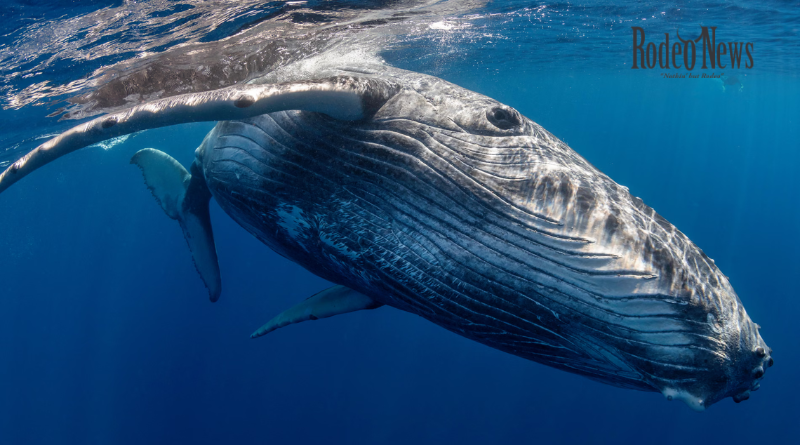
Researchers documented a female humpback whale remaining close to a stillborn calf, repeatedly approaching and touching the young whale and maintaining close proximity for an extended period.
The observation was made in July 2025 but has only now been formally described in a scientific paper published in Discover Animals. Researchers from Griffith University and the Sea World Foundation say the case represents the first detailed scientific documentation of post-mortem attentive behavior toward a stillborn calf in a humpback whale.
The discovery does not prove that humpback whales experience grief in exactly the same way humans do. Scientists cannot directly measure an animal’s subjective emotional state from behavior alone.
But the findings add an intriguing piece of evidence to a growing body of research showing that some highly social mammals respond to death in complex ways.
What Happened to the Humpback Whale Calf?
The incident occurred at Palm Beach Reef, near Australia’s Gold Coast, on July 17, 2025.
According to the researchers, two adult humpback whales were initially seen moving slowly near the surface about 1 kilometer from shore. One was later identified as the presumed mother, while the other was considered an escort whale.
The whales were not behaving aggressively. Instead, they remained in the same general area and made relatively short dives.
Around 8:30 a.m., an amniotic membrane was observed floating at the surface, suggesting that the whale had recently given birth.
Underwater footage later revealed a small calf lying on the seafloor.
The calf showed no visible movement or respiration and was estimated to be less than 4 meters long. Researchers therefore classified it as a stillborn calf.
What happened next attracted particular scientific attention.
The presumed mother repeatedly approached the calf. She touched it with her head and pectoral fin and positioned herself alongside it.
At times, she appeared to remain directly beside the calf and maintain an eye-to-eye position.
The researchers continued observing the whales until approximately 10 a.m., giving them around two hours of opportunity to document the behavior.
Why the Behavior Was So Unusual
Humpback whales are known for strong maternal investment.
Female humpbacks typically carry their young for roughly 11 to 12 months and then spend significant time caring for the newborn. The calves must learn how to swim, breathe efficiently and eventually feed independently.
However, scientists have historically had far fewer documented examples of humpback whales interacting with dead members of their species than they have for some toothed whales.
That difference matters.
The new study notes that post-mortem attentive behavior has been documented much more frequently in odontocetes, a group that includes dolphins and killer whales, than in baleen whales such as humpbacks.
In some documented cases involving dolphins and killer whales, adults have carried or supported deceased calves for prolonged periods.
One particularly well-known case involved an orca known as J35, which carried her dead calf for 17 days in 2018 while traveling more than 1,500 kilometers.
Humpback whales, by contrast, have provided far fewer scientifically documented examples.
The Gold Coast observation therefore fills an important gap.
Scientists Are Careful About Calling It Grief
The phrase “whales grieve” is compelling, but researchers emphasize that grief is difficult to establish scientifically in wild animals.
Humans can describe feelings such as sadness, loss and attachment. Scientists studying wild whales cannot ask the animals what they are experiencing.
There are also no straightforward physiological measurements that can conclusively demonstrate grief in a free-swimming humpback whale.
Instead, researchers examine behavior.
In this case, the mother did not simply swim away after giving birth. She remained near the calf, repeatedly returned to it and made physical contact.
Those behaviors are described scientifically as post-mortem attentive or epimeletic behavior.
Epimeletic behavior broadly refers to caregiving or attentive behavior directed toward another individual that is distressed, dying or dead.
The researchers say the behavior is consistent with responses observed in other socially complex mammals. However, they stop short of claiming that the whale’s internal emotional experience has been proven.
That distinction is important.
The evidence demonstrates behavior. Whether that behavior represents grief, maternal attachment, confusion, continued caregiving or another emotional or biological response remains an open question.
The Whale Did Not Try to Carry the Calf
One particularly interesting detail is what the mother did not do.
In several documented cases involving toothed whales, mothers have attempted to keep dead calves at the surface.
The Gold Coast humpback mother did not appear to lift or carry the calf.
Instead, she interacted with it while it remained on the seafloor.
Researchers suggest several possible explanations.
The behavior could reflect differences between baleen and toothed whales. It could also have been influenced by the position of the calf or by the physical circumstances surrounding the birth.
Another possibility is that the mother recognized that the calf was no longer responsive.
Scientists cannot determine which explanation is correct from this single observation.
That uncertainty is one reason the researchers describe the discovery as an important case study rather than definitive proof of whale grief.
Why Humpback Whales May Be Capable of Complex Responses
Humpback whales are among the most behaviorally complex marine mammals.
They undertake enormous migrations between feeding and breeding areas, communicate through sophisticated sounds and demonstrate extensive social interactions.
Females also display substantial maternal investment.
The Gold Coast region itself is an important area for humpback whales and mother-calf pairs. Previous Griffith University research found that the bay serves as an important stopover habitat for mothers and calves, with whales using the area for resting and other activities.
More recent Griffith research has also found that humpback whales regularly feed along Australia’s eastern coastline during migration, challenging older assumptions about when and where these whales feed.
Together, such studies demonstrate how much scientists are still learning about humpback behavior.
The new observation adds another dimension: how these animals respond when normal maternal behavior is interrupted by the death of a calf.
The Gold Coast Is an Important Whale Habitat
The location of the observation is significant as well.
The Gold Coast is not simply a place where whales pass by occasionally. Research has shown that its coastal waters provide important habitat for migrating humpbacks, including mother-calf pairs.
A Griffith University study analyzing thousands of whale observations found that the Gold Coast Bay is used by humpbacks for resting, socializing and other important activities.
Mother-calf pairs are particularly significant in the area.
This makes the region valuable for behavioral research.
Because humpbacks regularly move through coastal waters close to population centers, researchers and members of the public have opportunities to document unusual events that would otherwise be almost impossible to observe.
Citizen science has already contributed substantially to whale research in the region.
Long-term observations have helped researchers understand where whales travel, how they use coastal habitats and when mother-calf pairs are present.
The Study Also Raises Questions About Calf Mortality
The researchers recorded other deceased humpback neonates around the broader region during July 2025.
Their scientific paper documents seven deceased humpback neonates and one additional floating young whale of uncertain age during the month, stretching from K’gari in Queensland to Ballina in New South Wales.
The researchers also noted sightings of live newborn calves in the surrounding area.
However, the cause of the neonatal deaths remains uncertain.
The study does not establish that the stillborn calf died because of a particular environmental condition, disease or nutritional problem.
The researchers note that factors affecting humpback whale reproduction and calf survival require further investigation.
Understanding these mortality events is important because neonatal deaths can provide information about the health and environmental pressures affecting whale populations.
Could Whale Grief Be More Common Than Scientists Realize?
One of the most interesting implications of the research is that the behavior may not actually be as rare as the scientific literature suggests.
It may simply be difficult to observe.
Whales spend most of their lives underwater and can travel enormous distances. A dead newborn may sink quickly, disappear from human view or be consumed by scavengers.
Births are also rarely witnessed.
That creates a major observation problem.
If researchers are not present when a calf dies, they may never see what the mother does afterward.
The authors therefore argue that the apparent rarity of post-mortem behavior in baleen whales could partly result from limited observation rather than a complete absence of the behavior.
This is an important scientific distinction.
A behavior that is rarely recorded is not necessarily a behavior that rarely occurs.
What Other Animals Do After Death
The question of whether whales grieve is part of a much broader scientific debate about animal emotions.
Researchers have documented unusual responses to deceased companions in several highly social species.
Elephants, for example, have been observed approaching, touching and remaining around the bodies of dead members of their groups.
Primates have also demonstrated prolonged interactions with deceased offspring or social partners.
Among cetaceans, dolphins and killer whales provide some of the most frequently documented examples.
The common thread is social attachment.
Scientists are interested in whether complex social relationships create behavioral responses when those relationships are disrupted by death.
However, similar behavior does not automatically mean that every species experiences grief in an identical way.
Animal emotions are difficult to compare across species because different animals have different brains, social systems, sensory environments and evolutionary histories.
What Scientists Still Need to Learn
The Gold Coast observation is based on a single documented event.
That makes it scientifically valuable, but it also limits what researchers can conclude.
More observations are needed.
Scientists would ideally document additional cases involving different humpback populations, locations and circumstances.
Long-term monitoring could help determine whether mothers commonly remain near deceased calves or whether the Gold Coast event represents an unusual response.
Researchers could also investigate whether whales show measurable changes in movement, vocalization, social interactions or physiology after losing a calf.
Technology may make such research easier.
Underwater cameras, acoustic monitoring, photo-identification systems and non-invasive tags are already providing scientists with unprecedented access to whale behavior.
The more observations researchers collect, the better they can distinguish consistent behavioral patterns from isolated events.
A Rare Window Into the Emotional Lives of Whales
For now, the most accurate answer to the question “Do whales grieve?” is that scientists have found behavior that may be consistent with a grief-like response, but the emotional interpretation remains unproven.
The Gold Coast observation is nevertheless significant.
A mother humpback whale gave birth to a calf that appeared to be stillborn. Rather than immediately leaving the area, she remained close to the calf, repeatedly approached it and made physical contact.
The behavior continued for hours, while the adult whales were reportedly observed in the area again over the following days. The researchers caution that the later sightings cannot definitively establish that the same individuals remained there, but they add context to the unusual event.
The study ultimately raises more questions than it answers.
And that may be its greatest scientific value.
By documenting rare behavior instead of assigning a definitive emotional interpretation, researchers have opened another window into the social and cognitive lives of one of the ocean’s largest animals.
As scientists continue watching humpback whales along Australia’s coast and elsewhere, future observations may reveal whether this was an isolated example—or part of a broader pattern of maternal responses to death.
For now, the evidence shows something remarkable: when a humpback mother lost her calf, she did not simply disappear into the ocean.