Todd Boehly Chelsea Exit Marks Major Ownership Change
The Todd Boehly Chelsea exit has officially changed the ownership structure of one of the Premier League’s most closely watched clubs, with Clearlake Capital taking full control of Chelsea after acquiring the stakes held by Boehly and fellow investor Mark Walter.
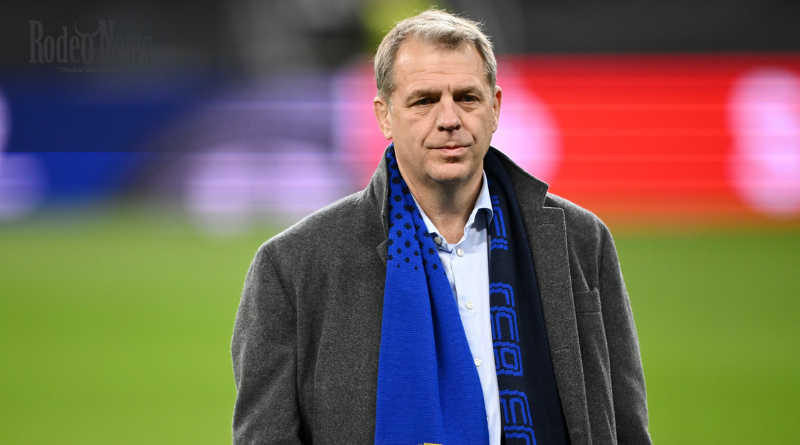
Chelsea confirmed the ownership transition on Wednesday, ending Boehly’s four-year involvement as chairman. Clearlake, which had already been the club’s majority owner, will now control the club outright, while Swiss billionaire Hansjörg Wyss remains an important stakeholder and partner in the ownership group.
The change represents the end of a highly visible chapter that began in 2022, when Boehly, Clearlake and other investors completed the £2.5 billion purchase of Chelsea from Roman Abramovich.
Although Boehly became the public face of the ownership group and chaired the club during a period of enormous spending and sporting change, his influence had diminished as Clearlake increasingly became the dominant force behind the club.
Now that the transaction has been completed, Chelsea says there will be no immediate changes to its day-to-day operations, leadership or strategy.
However, the ownership transition could still prove significant for the club’s long-term direction.
1. Clearlake Capital Takes Full Control of Chelsea
The biggest development surrounding the Todd Boehly Chelsea exit is the transfer of complete control to Clearlake Capital.
Before the transaction, Clearlake held 61.5% of Chelsea, while Boehly, Walter and Wyss each held approximately 12.8%. Clearlake’s purchase of Boehly and Walter’s interests removes the split that had existed since the 2022 takeover.
Clearlake co-founders Behdad Eghbali and José E. Feliciano have therefore moved from being majority partners within a consortium to having full control of the club.
Chelsea’s official statement said Clearlake intends to continue investing in infrastructure, sporting performance and player development.
That suggests the new structure is not being presented as a complete reset.
Instead, the club says the ownership group intends to continue the strategic direction already established over the past four years.
This distinction is important.
The change is substantial at the ownership level, but Chelsea is not announcing a wholesale change to its football operation.
2. Todd Boehly Leaves After Four Years at Stamford Bridge
Boehly’s departure closes a remarkable period in Chelsea’s modern history.
The American businessman became chairman after the 2022 takeover and was one of the most recognizable figures associated with the club’s new ownership.
The ownership group inherited Chelsea following Abramovich’s forced sale after the British government sanctioned the Russian billionaire. The consortium subsequently committed billions of pounds to the club and its operations.
Boehly’s tenure was defined by aggressive investment in the transfer market and a series of major changes to the squad and coaching structure.
Chelsea spent more than £1 billion on players during the early years of the new ownership, with high-profile signings including Enzo Fernández and Moisés Caicedo.
The spending attracted enormous attention across English football.
It also created expectations that Chelsea would quickly return to the top of the Premier League.
Instead, the club experienced significant instability in the dugout and sporting structure.
Thomas Tuchel was dismissed early in the new ownership era, while Graham Potter, Mauricio Pochettino and Enzo Maresca subsequently occupied the managerial position before the arrival of Xabi Alonso.
The Guardian has reported that Boehly’s influence over football operations had already diminished considerably before his formal departure.
That makes Wednesday’s announcement more of a formal conclusion than a sudden change in day-to-day power.
3. Chelsea’s Sporting Strategy Is Expected to Continue
One of the most important details in the announcement is what is not changing.
Chelsea explicitly stated that there will be no changes to the club’s day-to-day operations, leadership or strategy following the ownership transition.
That means manager Xabi Alonso remains central to the club’s sporting plans.
Alonso was appointed in the summer and has been tasked with leading Chelsea into another phase of development.
The ownership transition therefore does not automatically mean another managerial reset.
Instead, Clearlake appears intent on allowing the current football structure to continue.
That approach could provide greater continuity after several years in which Chelsea changed managers and reshaped its squad repeatedly.
The club has also invested heavily in its academy, training facilities, medical resources and player development infrastructure.
Clearlake said its focus would remain on infrastructure, sporting performance and player development as it assumes full control.
For Chelsea supporters, the key question will therefore be whether the more centralized ownership structure produces greater consistency.
4. Mark Walter Also Leaves the Ownership Group
The Todd Boehly Chelsea exit is not an isolated transaction.
Mark Walter, another major figure in the 2022 takeover, is also selling his stake to Clearlake.
Walter and Boehly each held approximately 12.8% of the club before the deal. Their combined departure significantly changes the makeup of the ownership group.
Walter had been closely associated with Boehly across several major sports investments.
The pair were part of the consortium that acquired Chelsea, and their business relationship extended beyond football.
With both investors now selling their Chelsea interests, Clearlake becomes the central financial power at Stamford Bridge.
Hansjörg Wyss is remaining involved, however.
Chelsea has described Wyss as an important stakeholder and partner in the ownership group.
That means the ownership structure is not simply being replaced by a completely new group.
Instead, the balance of power inside the existing ownership arrangement is shifting decisively toward Clearlake.
5. Chelsea’s Future Could Become More Centralized
The ownership change could also influence how Chelsea makes major decisions in the future.
During the early years after the 2022 takeover, the club became known for its aggressive recruitment strategy, huge transfer fees and frequent managerial changes.
The Guardian has highlighted the extent to which Boehly’s influence over sporting affairs declined as Clearlake became the dominant force.
With Clearlake now controlling the entire club, there is less need to manage competing ownership interests.
That could make long-term decision-making more straightforward.
At the same time, full control places greater responsibility on Clearlake.
The investment firm will now be directly associated with the club’s future sporting and financial direction.
Chelsea’s official statement emphasizes continuity, but supporters will inevitably judge the new ownership structure through results on the pitch.
What Does the Todd Boehly Chelsea Exit Mean for Fans?
For supporters, the immediate impact may be limited.
Chelsea has not announced changes to its football leadership or daily operations. The club’s existing sporting structure remains in place, and Alonso continues his work as head coach.
The more significant effects are likely to emerge over time.
Ownership influences major decisions involving recruitment, infrastructure, commercial strategy, stadium development and the overall direction of the club.
Clearlake has indicated that it intends to continue investing in these areas.
One particularly important issue is Chelsea’s stadium future.
The Guardian reported that Clearlake is considering options that could eventually involve a move away from Stamford Bridge to Earls Court, although that remains part of a broader long-term discussion rather than an immediate consequence of Boehly’s departure.
Any future stadium decision would be enormously significant for Chelsea supporters because Stamford Bridge has been the club’s home for more than a century.
Why Boehly’s Chelsea Era Attracted So Much Attention
Boehly’s time at Chelsea was unusually prominent because of the scale of the club’s spending and the visibility of the new ownership group.
The 2022 takeover was one of the biggest transactions in English football.
The subsequent transfer spending was equally eye-catching.
Chelsea paid more than £100 million for players such as Fernández and Caicedo, while the club continued to pursue young players on long-term contracts.
The strategy attracted both praise and criticism across football.
Some observers saw the investment as evidence of an ambitious attempt to rebuild the club for the long term. Others questioned the sustainability and sporting logic of repeatedly reshaping the squad.
The Guardian’s latest report describes Boehly as leaving after his influence had already diminished, while Chelsea’s own statement presents his departure in much more positive terms, emphasizing his contribution to the club and the investments made during the shared ownership period.
Those different perspectives are important when assessing the legacy of the four-year period.
Chelsea Enters a New Phase Under Clearlake
The Todd Boehly Chelsea exit closes one chapter but does not represent the end of the broader ownership project that began in 2022.
Clearlake was already the majority owner.
The difference now is that the investment firm has complete control.
That could allow Eghbali and Feliciano to pursue their long-term strategy without the same ownership division that existed previously.
Chelsea says the priority will remain investment in the club’s infrastructure, sporting performance and development systems.
The challenge is converting that investment into consistent sporting progress.
The club has already won major trophies during the current ownership era, including the UEFA Conference League and FIFA Club World Cup. However, the Premier League remains the central domestic benchmark for Chelsea’s long-term ambitions.
With Alonso now leading the team, the focus will shift back toward what happens on the pitch.
Final Takeaway: A New Chelsea Ownership Era
The Todd Boehly Chelsea exit is one of the biggest ownership developments at Stamford Bridge since the 2022 takeover.
Boehly and Walter have sold their stakes, while Clearlake Capital has moved from majority ownership to full control. Wyss remains involved as an important stakeholder and partner.
Chelsea insists that there will be no immediate changes to day-to-day operations, leadership or strategy.
That means the most visible effects of the ownership change may not arrive immediately.
Instead, the significance of the deal will be measured over the coming years through Chelsea’s recruitment strategy, infrastructure projects, financial management and sporting performance.
Boehly’s four-year chapter at Stamford Bridge is now officially over.
Clearlake’s era of complete control has begun.
For Chelsea, the central question is no longer who shares ownership of the club.