Trump Confronts Reporter Over Question About White House Press Access
President Donald Trump confronted a female reporter outside the White House on Saturday after she questioned whether his administration wanted only supportive news organizations represented in the presidential press corps.
The exchange came amid an escalating dispute between Trump and several major media organizations that have faced restrictions on access to the White House and presidential travel. The confrontation underscored the increasingly tense relationship between the administration and news organizations covering the president.
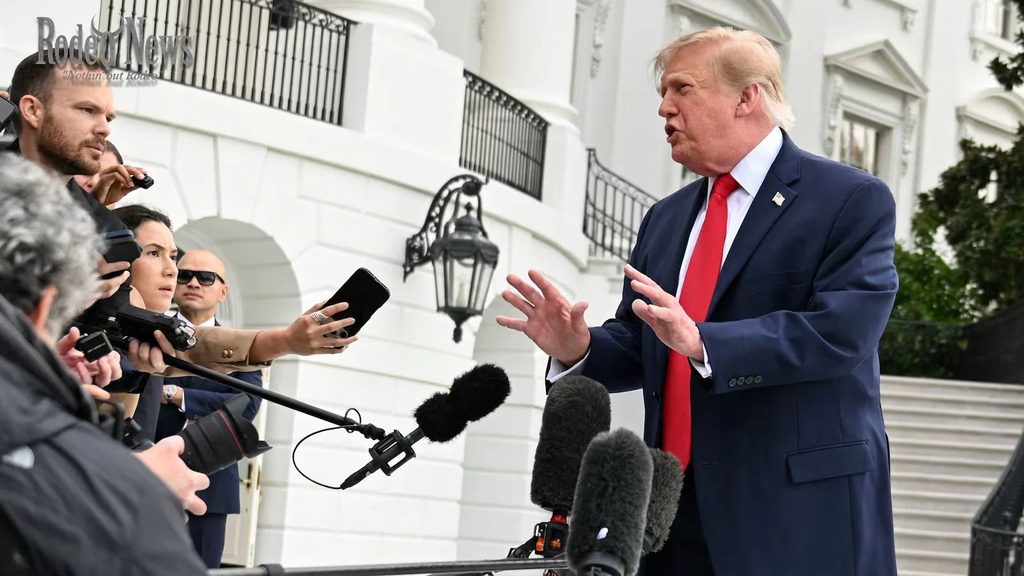
MS NOW reporter Akayla Gardner asked Trump whether he wanted only outlets that supported him to remain part of the White House press corps. Trump rejected the premise and responded by accusing Gardner and other news organizations of producing what he called “fake news.” He also interrupted the reporter and told her to be quiet during the exchange.
Gardner had continued reporting from near the White House during the week despite being denied entry as part of the administration’s media restrictions. Her question came as the courts and news organizations challenged the administration’s decisions involving press access.
Trump has repeatedly argued that some major news organizations treat his administration unfairly. During Saturday’s exchange, he singled out CNN and MS NOW while defending what he described as his preference for “real news.”
He also pointed to what he characterized as overwhelmingly negative coverage of his presidency, arguing that organizations he dislikes had failed to give his administration adequate credit despite his election victory.
Dispute Over Media Access
The confrontation followed a major legal dispute over the White House’s decision to restrict access for CNN, MS NOW and Politico.
The affected organizations sued the administration, arguing that the restrictions violated constitutional protections for the press. A federal judge appointed by Trump subsequently issued a temporary order requiring the administration to restore the journalists’ access while the legal dispute continues.
Trump reacted angrily to that decision in a post on his Truth Social platform Saturday morning. He questioned why organizations he accused of producing unfavorable coverage should have access to the White House, describing the presidential residence as a particularly important location.
The president has continued to criticize the media organizations even after the court ruling. His latest confrontation with Gardner reflected the broader dispute over how much control the administration should have over which journalists receive access to presidential events.
The White House had not immediately responded to a request for comment about Saturday’s confrontation, according to The Daily Beast.
Air Force One Restrictions
The dispute also expanded beyond the White House grounds.
On Friday night, Trump barred CNN from traveling with him aboard Air Force One, preventing the network from participating in the rotating press pool that covers presidential travel.
The White House press pool is designed to provide coverage when there is limited space for journalists. Participating organizations rotate responsibility for covering the president and sharing their reporting and observations with other members of the press corps.
Other news organizations had previously declined to participate in presidential coverage while their colleagues remained excluded from the White House. Coverage resumed after the court ordered the administration to restore access.
For Trump’s Saturday trip to Knoxville, Tennessee, where he was scheduled to attend a college football game, two conservative media organizations were invited to fill the space that CNN normally occupied, according to The Daily Beast.
Trump’s Long History of Clashes With Reporters
The confrontation with Gardner is part of a much longer pattern of tense exchanges between Trump and journalists.
During his presidency, Trump has frequently criticized reporters whose questions he considers hostile or unfair. Female journalists in particular have been involved in several highly publicized confrontations with the president.
In recent months, Trump has criticized reporters from ABC News, CNN, Bloomberg and other organizations after they asked questions about subjects including foreign policy, military operations and the administration’s handling of controversial issues.
One recent confrontation involved ABC News reporter Rachel Scott, who questioned Trump about his proposal to provide $5,000 payments to American adults if Republicans won the midterm elections. When Scott attempted to follow up, Trump told her, “Not you,” before directing criticism at her network.
Trump has also used Truth Social to criticize individual journalists and news organizations, extending conflicts that begin during press encounters onto his social media platform.
Questions About the Role of the Press
Saturday’s confrontation comes at a significant moment for the relationship between the Trump administration and the American press.
Presidents routinely criticize news coverage, and disagreements between administrations and journalists are a longstanding feature of American political life. The current dispute, however, has centered not simply on criticism of individual stories but on physical access to the White House and presidential travel.
News organizations have argued that access restrictions can affect their ability to perform their reporting responsibilities, while the administration has maintained that it should have greater authority over which outlets participate in presidential coverage.
Those competing positions are now being tested in court.
For Trump, the conflict has also become part of a broader argument about how his presidency is portrayed in the media. He has repeatedly maintained that much of the coverage is unfair and that organizations he criticizes should not automatically receive access simply because they are major news outlets.
For journalists covering the White House, the dispute raises questions about how press access should operate when the president strongly objects to the coverage produced by individual organizations.
As the legal fight continues, Saturday’s confrontation with Gardner provided another public example of the increasingly contentious relationship between Trump and sections of the American news media. The disagreement is no longer limited to individual exchanges between the president and reporters; it has developed into a wider dispute involving White House access, presidential travel and constitutional questions about the role of the press.