
Congress Investigates After F-35 Parts Were Diverted to Hong Kong
U.S. congressional officials are investigating how sensitive components from the F-35 fighter program ended up in Hong Kong after a shipment traveling from Australia was unexpectedly diverted, according to reporting published Friday.
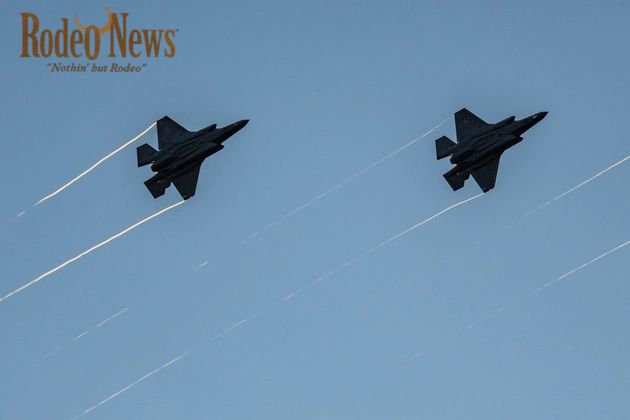
The incident has raised questions about the security of the international supply chain supporting the F-35 Lightning II, one of the Pentagon’s most sensitive and expensive weapons programs. The shipment was reportedly intended to reach the United States for repairs, but the cargo was rerouted while crossing the Pacific before components eventually arrived in Hong Kong.
The Pentagon has confirmed that some F-35 components disappeared from the expected shipping route. Officials have not publicly established why the shipment was redirected, who ultimately handled the equipment or whether Chinese authorities obtained access to any of the material.
The matter has prompted briefings for congressional staff and renewed attention to the protection of F-35 technology as the aircraft operates through a global network involving the United States, partner countries and private contractors.
Sensitive F-35 Components Under Investigation
According to people familiar with the matter cited in the reporting, the shipment was being transported by an intermediary working on behalf of Lockheed Martin, the manufacturer of the F-35.
The cargo reportedly included an aircraft canopy. Such components are not simply conventional aircraft parts. The F-35’s canopy forms part of the aircraft’s specialized design and incorporates technology associated with the aircraft’s low-observable characteristics.
The possibility that such material could have been examined by an unauthorized party is one reason the incident has attracted congressional attention.
There has been no public confirmation that China obtained or examined the components. The investigation is continuing, and officials have not disclosed the full inventory of the missing equipment or the circumstances surrounding its final destination.
The shipment reportedly originated in Australia, which operates the F-35A as part of its air force. Australia has received all 72 F-35A aircraft approved under its acquisition program and participates in the broader international F-35 support and industrial network.
The international nature of that network means aircraft parts can move between partner countries for maintenance, repair and other support activities. That arrangement is designed to keep aircraft operational, but it also creates complex logistics and security requirements.
Congressional Questions Focus on China
The diversion has become particularly sensitive because Hong Kong is part of China and because Beijing is viewed by Washington as a major strategic competitor.
Congressional staff from national security committees have received briefings concerning the incident. According to the reported account, initial briefings took place in June, with additional discussions expected as investigators establish what happened.
The central questions include how the shipment was rerouted, whether the diversion was authorized, what happened to the components after they reached Hong Kong and whether any sensitive technology was exposed.
Those questions are especially important for a weapons system whose capabilities depend on advanced engineering, software and low-observable technologies.
The F-35 program already operates under extensive international arrangements. Australia, for example, is one of several partner countries involved in the program and hosts regional maintenance capabilities for components used across the Asia-Pacific fleet.
F-35 Program Already Faces Supply Challenges
The investigation comes as the F-35 program is dealing with separate concerns involving maintenance, spare parts and aircraft availability.
A June report from the Government Accountability Office found that the F-35’s readiness had declined substantially between fiscal years 2021 and 2025. The overall mission-capable rate fell from 67% to 44%, while the rate at which aircraft were capable of performing all assigned missions fell from 38% to 25%.
The Pentagon has developed a $13.7 billion strategy intended to improve F-35 readiness through 2030. The GAO warned, however, that limited industrial capacity and other supply problems could make those efforts more difficult.
The watchdog also identified continuing concerns about the cost of sustaining the aircraft and the program’s reliance on contractors.
These broader logistical issues make the security of the F-35 parts network particularly significant. Components must be moved across borders while maintaining accurate records, protecting sensitive material and ensuring aircraft receive the equipment required for repairs.
Why the Canopy Matters
The F-35’s low-observable design is a major part of its military capability. Its shape, materials and specialized systems are intended to reduce its visibility to enemy radar and other detection systems.
That makes questions surrounding individual components more consequential than they might be for ordinary military equipment.
Investigators have not said publicly that the diverted canopy or other parts were compromised. Nor has there been a public determination that Chinese officials gained access to the shipment.
The investigation therefore remains focused on establishing what happened rather than confirming a technology transfer.
The distinction is important because the discovery of sensitive components in Hong Kong does not by itself establish that classified information was obtained by China.
Australia and the U.S. F-35 Network
Australia plays a significant role in the international F-35 support structure. The country has operated the aircraft since 2014 and has developed maintenance and training infrastructure around the fleet.
Australian companies have also received contracts connected to regional F-35 component maintenance, repair, overhaul and upgrade operations. The Australian government says the country’s F-35 program includes a regional support capability covering areas such as airframe maintenance, engine maintenance, component repair and warehousing.
The incident could therefore prompt closer scrutiny of how sensitive F-35 equipment is transported between partner nations and repair facilities.
For lawmakers, the investigation also comes at a time when Congress has been examining how the F-35 program manages government-owned equipment and spare parts.
Congressional legislation has included requirements concerning wartime spares, support equipment, depot capabilities and accounting for F-35 property.
The outcome of the current investigation could determine whether additional safeguards are needed.
For now, officials have not publicly attributed the diversion to China or explained why the shipment was redirected to Hong Kong. The Pentagon and congressional investigators are expected to continue examining the shipment’s route, the parties involved and the fate of the missing components.
The case highlights the increasingly complicated logistics behind the F-35 program, where aircraft operated by multiple countries depend on a shared network of parts, contractors and maintenance facilities.