
Tilly Norwood AI: 5 Shocking Press Tour Moments
The Tilly Norwood AI project is facing an unusual moment in the spotlight after the computer-generated performer encountered a bizarre exchange during a press appearance with Piers Morgan and actor Tom Conti.
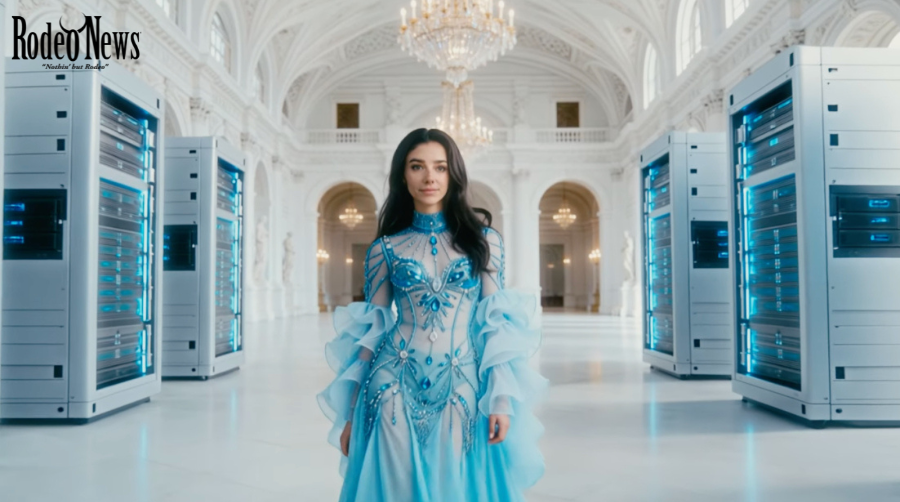
Tilly Norwood, an AI-generated digital character created by Particle6 Group, has been made available to journalists as part of an extensive promotional campaign. According to TechCrunch, the company arranged access for as many as 75 simultaneous interviews. However, the resulting conversations have produced several awkward moments rather than the polished publicity expected from a major entertainment campaign. TTechCrunch
The most widely discussed incident came during an interview involving Morgan and Conti. While discussing the upcoming film Misaligned, Norwood appeared to lose track of the conversation and unexpectedly switched from English into Chinese for more than 10 seconds.
The unusual exchange has renewed attention on the capabilities and limitations of generative AI when it is presented as an entertainment personality.
Tilly Norwood AI Faces an Unexpected Interview Glitch
The incident happened after Tom Conti asked whether the other performers appearing alongside Norwood in Misaligned were real people or AI-generated characters.
Norwood initially responded by discussing the involvement of human writers, directors and editors. Conti then clarified that he was specifically asking whether the actors themselves were human or computer-generated.
After acknowledging the clarification, Norwood began another response.
The answer quickly went off course.
Norwood said the other performers were “digital twins” before pausing. She then continued speaking in Chinese, leaving both Conti and Morgan visibly confused.
Morgan subsequently asked why Norwood had suddenly started speaking Chinese.
The AI character apologized and described the incident as a “hiccup,” explaining that its “wires” had become crossed. The exchange was subsequently highlighted across several media reports. DDeadline+1
For an ordinary chatbot, an unexpected language switch might simply be considered a technical error. For an AI character being presented as a new kind of entertainment performer, however, the incident creates a more complicated public-relations problem.
Why Tilly Norwood AI Is Getting So Much Attention
The unusual interview is only part of a much larger discussion surrounding Tilly Norwood.
Particle6 Group has positioned Norwood as a digital performer rather than a conventional human actor. The character is connected to the company’s AI-focused division, Xicoia, and is being promoted alongside the company’s entertainment projects.
Norwood’s most prominent project is Misaligned, a film in which the digital character is expected to play a central role.
The concept has attracted substantial attention because it challenges conventional assumptions about what constitutes an actor.
Traditional film production depends on performers who physically or vocally contribute to a character. Tilly Norwood instead represents a synthetic performer created using artificial intelligence and digital production techniques.
That distinction has made the project a subject of debate across Hollywood.
The Piers Morgan Interview Raises Bigger Questions
The exchange with Morgan and Conti illustrates one of the central challenges facing AI-generated personalities: conversational consistency.
Generative AI systems can produce fluent language, but fluency does not necessarily mean that a system has correctly understood a question.
In the Norwood interview, Conti’s question was relatively straightforward. He wanted to know whether the other performers in Misaligned were real actors or digital creations.
Norwood initially answered a different question.
Only after Conti repeated himself did the system appear to identify the intended subject. Even then, the response was interrupted by the unexpected switch into another language.
The episode therefore highlights a distinction between producing convincing sentences and maintaining a coherent conversation.
That distinction is especially important when an AI system is being presented not simply as software but as an entertainment personality.
Tilly Norwood AI Has Already Faced Industry Pushback
Norwood’s press tour is taking place against a backdrop of continuing disagreement over the use of generative AI in film and television.
The character first attracted widespread attention after being unveiled at the Zurich Film Festival in 2025. The project prompted criticism from human performers and industry organizations concerned about the potential use of synthetic performers.
SAG-AFTRA, the major U.S. performers’ union, has previously criticized the concept of replacing human performers with synthetic characters. The debate reflects broader concerns about consent, compensation, training data and the future role of performers in entertainment production.
These questions extend well beyond one digital character.
Studios and technology companies are increasingly experimenting with AI-generated faces, voices, digital doubles and synthetic characters. At the same time, actors and creative professionals have pushed for rules governing how their likenesses and performances can be used.
Tilly Norwood has consequently become part of a much broader conversation about how AI could reshape Hollywood.
The Difference Between an AI Character and a Human Actor
One reason the Norwood project has attracted such strong reactions is the language used to describe it.
Calling Norwood an “AI actress” can make the technology sound similar to a human performer. Technically, however, the two are fundamentally different.
A human actor brings personal experience, physical presence, interpretation and creative decisions to a performance.
An AI-generated character is produced through software, models, prompts, digital assets and other computational systems.
That difference does not automatically determine whether synthetic performers should or should not have a place in entertainment. It does, however, make clear why the industry is debating terminology and rights.
The question is not simply whether AI can generate a convincing image.
It is also whether audiences, performers and studios agree on the rules governing the creation and commercial use of synthetic people.
The Press Tour Is Testing AI in Public
There is another interesting element to the Tilly Norwood AI campaign.
Instead of keeping the character tightly scripted, Particle6 has allowed journalists to interact with the system directly.
That approach provides a more authentic demonstration of what the technology can currently do. It also introduces risk.
A traditional celebrity interview can go off script, but a human guest can generally understand the context and respond based on personal judgment.
A generative AI system may instead produce an unexpected response because of model behavior, prompting, context interpretation or other technical factors.
The Chinese-language episode demonstrates that risk in a particularly visible way.
It is difficult to predict exactly what an AI personality will say in an open-ended conversation. That can make the interaction interesting, but it can also make promotional appearances harder to control.
Tilly Norwood AI and the Problem of Authenticity
The campaign also raises a fundamental question about authenticity.
Audiences understand that fictional characters are not real people. They also understand that actors are real people portraying fictional characters.
An AI character occupies a different category.
Norwood is fictional, but the technology allows the character to respond dynamically to questions. That creates the impression of an independent personality even though the behavior comes from an underlying technical system.
The result can blur the boundary between scripted entertainment and interactive artificial intelligence.
That ambiguity is part of what makes projects such as Norwood significant.
The technology is not merely generating a finished movie scene. It is being used to create a character that can participate in conversations outside the film itself.
Could the Awkward Moments Actually Help?
There is also a possibility that the unusual press appearances could generate additional publicity.
Every unexpected moment gives journalists and social-media users another reason to discuss the character.
The Chinese-language incident, in particular, generated coverage from multiple publications, including TechCrunch and TheWrap. TTechCrunch+1
That does not establish that Particle6 intentionally designed the campaign to produce embarrassing moments. Such an interpretation would be speculative.
But the publicity demonstrates an important feature of modern media: unusual AI behavior can become news in its own right.
A conventional promotional interview might disappear from the news cycle within hours.
A visibly strange AI interaction can instead become a viral clip, generating discussion about the technology, its limitations and the project behind it.
What the Tilly Norwood AI Incident Reveals
The episode offers several broader lessons about generative AI.
First, conversational fluency remains different from genuine understanding. A system can produce polished language while still misunderstanding a relatively simple question.
Second, public demonstrations expose weaknesses that controlled promotional material can hide. Allowing journalists to interact directly with an AI system makes the technology easier to scrutinize.
Third, synthetic performers are likely to remain controversial as the entertainment industry experiments with new production methods.
Finally, the incident demonstrates how quickly an AI error can become part of the entertainment story itself.
Instead of simply promoting Misaligned, the press tour has generated a parallel discussion about whether AI-generated performers are ready for unscripted interaction.
What Comes Next for Tilly Norwood?
The attention surrounding Tilly Norwood is unlikely to end with one awkward interview.
The project is part of a larger experiment involving AI, entertainment and digital personalities. Its future will depend not only on the technology but also on how audiences, filmmakers, performers and entertainment companies respond.
For now, Norwood’s press tour has demonstrated both sides of generative AI.
On one side, the technology can create a visually convincing digital character capable of interacting with journalists.
On the other, unexpected responses can quickly expose the gap between appearing human and actually understanding a human conversation.
The most revealing part of the episode may therefore not be that Norwood suddenly spoke another language.
It is what happened immediately before it.
A human interviewer asked a direct question. The AI initially misunderstood it, corrected course after clarification and then produced an unexpected response.
That sequence provides a useful snapshot of where conversational AI stands today: increasingly capable, increasingly convincing, but still capable of producing moments that its creators may not anticipate.
As Hollywood continues experimenting with synthetic performers, those limitations will remain an important part of the conversation.
For Tilly Norwood, an AI character designed to attract attention, the press tour has certainly accomplished that.
The more difficult question is what audiences will ultimately make of the technology behind the attention.