The Last Photograph Rotten Tomatoes: 23% Score
The Last Photograph Rotten Tomatoes score is giving movie fans plenty to discuss after Zack Snyder’s long-awaited action thriller premiered at the Toronto International Film Festival. The 2026 movie, which has been in development for years, arrived with considerable interest because it represents another major project from the filmmaker behind 300, Watchmen, Man of Steel and Zack Snyder’s Justice League.

Early reviews, however, have been largely negative.
Rotten Tomatoes currently lists The Last Photograph with a 23% Tomatometer score, according to its current Zack Snyder filmography page. The score can change as additional reviews are added, meaning it should be regarded as an early critical snapshot rather than necessarily the film’s final rating.
The movie currently has a 2-hour-and-15-minute runtime and is classified as an action, crime and drama film. Snyder directed the project, with Stuart Martin, Fra Fee, Costanza Andrade and Marlon Moreno among the principal cast.
The Last Photograph Rotten Tomatoes score explained
The current The Last Photograph Rotten Tomatoes score reflects a small but increasingly visible group of professional reviews.
Rotten Tomatoes’ movie page lists six critics’ reviews in its current snapshot, including reviews from IndieWire, The Hollywood Reporter, TheWrap, Region Free, Deadline Hollywood Daily and ScreenRant. The individual responses range from sharply negative assessments to more measured criticism.
Rotten Tomatoes’ TIFF 2026 scorecard has also listed the movie at 21% at one point, illustrating how quickly the percentage can move while the review count remains low.
That distinction is important when looking at a movie immediately after a festival premiere.
A Rotten Tomatoes score represents the percentage of tracked critics who give a movie a positive rather than negative review under the site’s classification system. It does not represent an average rating out of 100, nor does a 23% score mean that every critic gave the movie exactly 23 out of 100.
As more reviews arrive, the Tomatometer can move significantly.
What is The Last Photograph about?
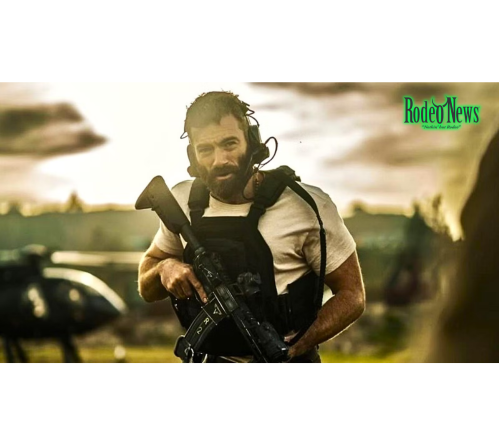
The Last Photograph follows an ex-DEA agent who becomes involved in a dangerous search for missing family members in South America.
Stuart Martin plays the central character, while Fra Fee plays a war photographer. The story places the two characters together during a violent journey that combines elements of an action thriller, revenge drama and survival story.
The project has a particularly long history.
Snyder has been associated with The Last Photograph for many years. Rotten Tomatoes reported back in 2007 that Snyder was developing a project based on an original idea involving a photograph that becomes the catalyst for a journey through war-torn Afghanistan.
The finished 2026 film is therefore the result of a project that has spent a substantial amount of time moving through development.
That history adds another layer of interest to the movie’s current reception.
Critics have raised concerns about the story
The early reviews focus heavily on the movie’s storytelling, tone and execution.
Rotten Tomatoes currently lists an IndieWire review that gives the movie a D+ and argues that the film explores familiar ideas about the psychological burden associated with witnessing and perpetrating violence.
The Hollywood Reporter review also criticizes the movie’s dialogue and symbolism, describing the film as overstuffed and questioning the effectiveness of its presentation.
Meanwhile, TheWrap gives particular attention to the film’s 135-minute runtime, criticizing what the reviewer sees as repetition and an underdeveloped story.
These reviews suggest that the critical response is not centered on one isolated technical issue. Instead, several critics have raised concerns about the movie’s pacing, dialogue, thematic approach and overall construction.
The Last Photograph Rotten Tomatoes reviews are not entirely identical
Despite the low The Last Photograph Rotten Tomatoes score, the critical response is not completely uniform.
Deadline Hollywood Daily’s review offers a more positive observation, noting that Snyder’s move away from superhero spectacle gives him an opportunity to work in a different environment and sharpen his storytelling.
That perspective is useful because The Last Photograph is deliberately different from some of Snyder’s best-known projects.
There are no superheroes, comic-book mythology or giant-scale fantasy battles at the center of the film. Instead, the movie focuses on an action-driven story involving ordinary people operating in a dangerous environment.
For some critics, that change of direction may be interesting even when they find problems with the execution.
Zack Snyder takes a different approach
Snyder has built his career around visually distinctive filmmaking.
Movies such as 300, Watchmen, Man of Steel and Batman v Superman: Dawn of Justice have helped establish a recognizable visual style featuring dramatic compositions, heightened action and strong stylistic choices.
The Last Photograph gives him an opportunity to apply that approach to a more grounded story.
The movie’s premise revolves around violence, loss, survival and revenge rather than superheroes. That makes its reception especially interesting because critics are effectively evaluating Snyder outside one of the genres most closely associated with his career.
At the same time, some early reviewers have suggested that elements of Snyder’s familiar style remain prominent.
The question for audiences will be whether those stylistic choices complement the more grounded story or compete with it.
The Last Photograph premiered at TIFF
The movie’s first major public reception came at the Toronto International Film Festival.
Its festival premiere generated immediate reactions from critics and attendees, with several particularly harsh assessments appearing online shortly afterward. GamesRadar reported that some critics described the movie in extremely negative terms, while other viewers defended its action sequences and cinematography.
That split is worth noting.
Festival reactions are not necessarily representative of the eventual response from the general moviegoing audience. Critics watch films under particular circumstances, while general audiences can respond differently once a movie receives a wider release.
At present, there is also a distinction between the professional Tomatometer response and audience reaction. Rotten Tomatoes’ current movie page is focused on critic reviews, while the audience score may not yet provide a comparable picture.
Why the score matters for Zack Snyder
The current The Last Photograph Rotten Tomatoes score is also attracting attention because of Snyder’s previous filmography.
Rotten Tomatoes’ Zack Snyder page currently lists The Last Photograph at 23%. For comparison, Sucker Punch is listed at 23%, Batman v Superman: Dawn of Justice at 28%, Justice League at 39% and Man of Steel at 57%.
Those numbers provide historical context, but they should not be treated as a definitive judgment on the new movie.
Snyder’s filmography also contains projects with substantially higher Tomatometer scores. Zack Snyder’s Justice League is listed at 71%, while Watchmen stands at 64%.
The filmmaker has therefore experienced a wide range of critical responses throughout his career.
That history is one reason each new Snyder release tends to generate significant discussion among both supporters and critics.
A long-awaited project finally reaches audiences
One of the most remarkable aspects of The Last Photograph is simply how long it has taken to reach the screen.
Rotten Tomatoes’ own historical coverage shows that Snyder was developing the project as far back as 2007. At the time, the film was described as a drama involving a photograph and a journey through Afghanistan.
Nearly two decades later, the project has finally become a completed feature.
That makes its festival premiere a significant milestone for Snyder regardless of the eventual critical score.
The movie also represents a different phase of his career. After working extensively with major superhero properties and developing the Rebel Moon universe for Netflix, Snyder is returning to a more grounded action story.
The critical response will therefore be closely watched as audiences assess whether the change in genre produces a different result.
The runtime could become part of the discussion
At 135 minutes, The Last Photograph is not a short action thriller.
The runtime gives Snyder considerable space to develop characters, atmosphere and the film’s central journey. However, some early critics have argued that the movie does not use that time efficiently.
TheWrap specifically criticized the film’s length and repetition, while other reviews have similarly raised concerns about pacing and the amount of material packed into the story.
Runtime itself is not inherently a problem.
Long action movies can use additional time to establish characters and build tension. The important question is whether the pacing keeps audiences engaged throughout the entire journey.
That will ultimately be a matter for individual viewers to decide.
What audiences should know before watching
Anyone approaching The Last Photograph should be aware that the current critical reception is based on a relatively early group of reviews.
The Rotten Tomatoes percentage is therefore subject to change.
This is especially important for a festival premiere because additional reviews can arrive rapidly as the movie moves beyond its first screenings. A score reported immediately after a premiere may look different once dozens of critics have submitted their assessments.
The movie also appears to be particularly divisive.
Some critics have criticized the story, dialogue and pacing, while other responses acknowledge Snyder’s attempt to move beyond the superhero genre.
Early audience reactions have likewise included both strong criticism and praise for the action and cinematography.
The Last Photograph Rotten Tomatoes score could still change
For now, the The Last Photograph Rotten Tomatoes score stands in the low 20s on the site’s current Zack Snyder filmography listing.
That number tells only part of the story.
The film has just entered the public conversation following its TIFF premiere, and more reviews can alter the Tomatometer. Rotten Tomatoes’ own TIFF scorecard has already shown the percentage moving as new reviews are counted.
What is already clear is that Snyder’s latest movie has generated a strong critical conversation.
Some reviewers see it as an ambitious attempt to move into a more grounded form of action filmmaking. Others have found the execution unsuccessful, particularly in areas such as dialogue, pacing, symbolism and storytelling.
For audiences familiar with Snyder’s work, that makes The Last Photograph an especially interesting release.
After years of development, the filmmaker’s long-awaited thriller has finally arrived. Its current Rotten Tomatoes score provides an early measure of the critical response, but the full picture will become clearer as more reviews and audience reactions emerge.