
Crypto Regulation: 5 Reasons the Big Push Failed
Crypto regulation suffered a major setback in Washington after a landmark bill designed to establish a federal framework for digital assets collapsed in the U.S. Senate. The failure marked a critical moment for the cryptocurrency industry, which had spent years pushing for clearer rules and greater acceptance within mainstream finance.
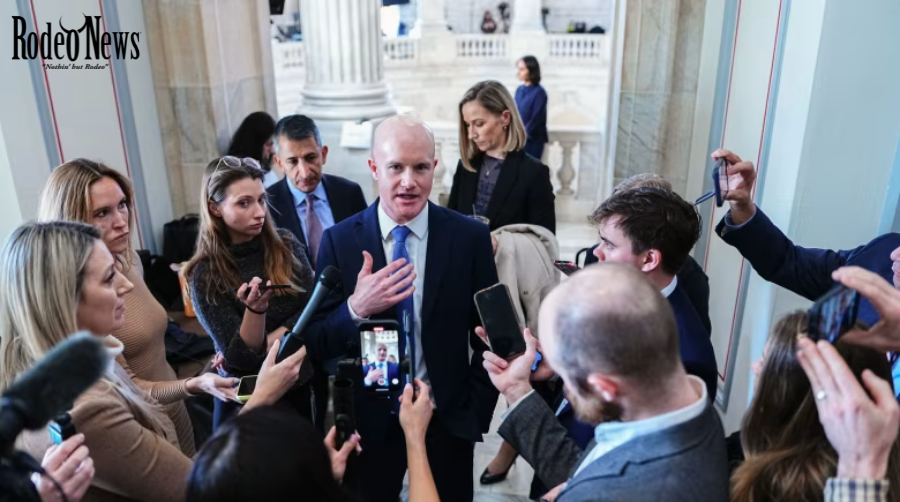
According to The Wall Street Journal, the breakdown followed an intense clash involving the banking industry, congressional negotiators and major cryptocurrency companies. The dispute centered in part on provisions of the proposed Clarity Act, including restrictions related to token rewards. TThe Wall Street Journal
The collapse also triggered a broader blame game among industry participants and political stakeholders.
For crypto companies, the episode represents a significant setback. Instead of delivering a comprehensive federal framework, lawmakers remain divided over how digital assets should be regulated and how much influence the cryptocurrency industry should have over the rules governing it.
Crypto Regulation Hits a Major Roadblock
The proposed legislation was expected to provide greater clarity for companies operating in the digital-asset sector.
For years, cryptocurrency businesses, investors and financial institutions have argued that the United States needs clearer rules defining which digital assets fall under federal securities and commodities laws.
The Clarity Act became an important part of that effort.
However, negotiations broke down after disagreements over several provisions. The Wall Street Journal reported that Coinbase Chief Executive Brian Armstrong strongly opposed restrictions involving interest-like rewards on tokens. His opposition contributed to difficulties among lawmakers and industry supporters trying to reach an agreement. TThe Wall Street Journal
The dispute demonstrated how complicated crypto regulation has become.
Rather than facing a simple debate between supporters and opponents of cryptocurrency, lawmakers are confronting competing interests inside the financial system itself.
Why the Clarity Act Became So Important
The Clarity Act was intended to establish a clearer regulatory framework for digital assets.
That objective has broad implications.
Cryptocurrency companies have frequently complained that uncertainty makes it difficult to determine which regulator has jurisdiction over particular products and services. Traditional financial institutions, meanwhile, have their own concerns about competition, consumer protection and the potential risks created by digital assets.
A federal framework could potentially provide businesses with more certainty about the rules they must follow.
However, reaching consensus requires agreement over issues ranging from token classification to consumer protections and the role of financial intermediaries.
The latest Senate breakdown showed how difficult that consensus remains.
Crypto Regulation Exposed a Growing Industry Divide
One of the most important lessons from the failed legislation is that the cryptocurrency industry does not necessarily speak with one voice.
Large exchanges, financial companies, token issuers, investors and blockchain developers can have different commercial interests.
That can become particularly important when legislation includes detailed rules governing how tokens can be issued, traded or rewarded.
In the case of the Clarity Act, disagreement over token rewards became one of the flashpoints.
The WSJ reported that Armstrong’s opposition to certain provisions frustrated lawmakers and other industry participants. TThe Wall Street Journal
The episode illustrates a broader challenge for the industry: securing regulation requires companies with different business models to agree on a common legislative strategy.
Banks Also Played a Central Role
The debate was not limited to cryptocurrency companies.
Traditional banks and other established financial institutions also pushed back against parts of the proposed framework.
That conflict reflects the increasingly blurred line between traditional finance and the digital-asset industry.
Banks have invested heavily in payment systems, custody services, trading infrastructure and other financial products. At the same time, cryptocurrency companies have increasingly sought to compete in areas historically dominated by banks.
As crypto becomes more integrated with mainstream finance, regulatory decisions can affect both sectors.
The result is a complicated policy environment in which rules designed to encourage innovation can also create competitive concerns.
Political Pressure Added Another Complication
The crypto regulation debate also unfolded against a politically sensitive backdrop.
The Wall Street Journal reported that Democratic lawmakers raised questions about President Donald Trump’s reported $1.4 billion in crypto income. TThe Wall Street Journal
That scrutiny added another layer to an already difficult legislative process.
Cryptocurrency has become increasingly intertwined with American politics, campaign fundraising and policy debates. As a result, legislation involving digital assets can attract attention far beyond traditional financial-policy circles.
For lawmakers, that means regulatory negotiations can involve not only technical questions about markets and technology but also broader concerns about conflicts of interest, political influence and transparency.
What the Failure Means for Crypto Companies
The immediate consequence of the failed legislation is continued uncertainty.
Companies operating in the United States still face a regulatory environment involving multiple agencies and different categories of digital assets.
Without a comprehensive legislative framework, businesses may continue to seek guidance through existing regulations, agency decisions and individual enforcement actions.
That can make long-term planning more difficult.
A company deciding whether to launch a new token, expand a trading service or offer rewards to customers may need to consider regulatory questions before making commercial decisions.
For investors, uncertainty can also complicate assessments of individual cryptocurrency businesses.
Crypto Regulation Could Still Move Forward
The collapse of one legislative effort does not necessarily mean that U.S. crypto regulation is finished.
Congress can revisit the legislation, rewrite controversial provisions or pursue narrower bills addressing specific areas of the digital-asset market.
The Wall Street Journal’s coverage indicates that the industry’s failure to secure the expected legislative breakthrough has shifted attention toward other regulatory paths. FFinance Interviews
That could include further action by federal regulators or renewed congressional negotiations.
The timeline, however, remains uncertain.
What Investors Should Watch Next
The failed bill gives investors several developments to monitor.
First, future congressional negotiations could reveal whether lawmakers are willing to compromise on controversial provisions.
Second, regulatory agencies could continue developing rules affecting cryptocurrency businesses.
Third, large financial institutions may expand their involvement in digital assets regardless of the legislative outcome.
Finally, cryptocurrency companies may reconsider how aggressively they lobby for particular provisions.
The debate over crypto regulation is therefore unlikely to disappear simply because one bill failed.
The Bigger Issue Behind Crypto Regulation
The latest setback raises a fundamental question about cryptocurrency’s place in the American financial system.
The industry has spent years seeking mainstream acceptance. That process has brought digital assets closer to traditional finance, but it has also exposed the sector to the same political, regulatory and competitive pressures faced by established financial institutions.
Greater legitimacy can therefore bring greater scrutiny.
The failed legislation demonstrates that regulatory clarity is not simply a matter of writing rules for cryptocurrency companies. It also requires decisions about competition, consumer protection, financial stability and the boundaries between different types of financial institutions.
Those questions are difficult to resolve.
What Happens After the Crypto Bill Collapse?
For now, the cryptocurrency industry must operate without the comprehensive federal framework it had hoped to secure.
The failure of the Senate effort is particularly significant because the legislation represented one of the industry’s clearest opportunities to establish broader rules for digital assets.
Instead, disagreements between crypto companies, banks and lawmakers prevented the legislation from reaching the expected breakthrough. TThe Wall Street Journal
The episode may also change the industry’s strategy.
Rather than presenting crypto regulation as a straightforward battle between innovation and government oversight, future negotiations may increasingly focus on the specific commercial interests affected by individual provisions.
That could make the legislative process slower, but it may also force the industry to confront disagreements within its own ranks.
Bottom Line
The latest setback for crypto regulation highlights how far the cryptocurrency industry still has to go before securing a comprehensive federal framework.
The collapse of the Clarity Act effort exposed disagreements among cryptocurrency executives, traditional banks and lawmakers. It also demonstrated how political considerations can complicate financial legislation.
For crypto businesses, the immediate result is continued regulatory uncertainty.
For investors, the episode reinforces the importance of watching policy developments U.S. Capitol alongside cryptocurrency symbols, or a licensed photo of a congressional crypto-regulation hearing. The original WSJ article identifies alongside market trends.
And for Washington, the failed bill leaves the central question unresolved: how should the United States regulate an industry that increasingly overlaps with traditional finance?
That debate is likely to continue well beyond the latest Senate setback.