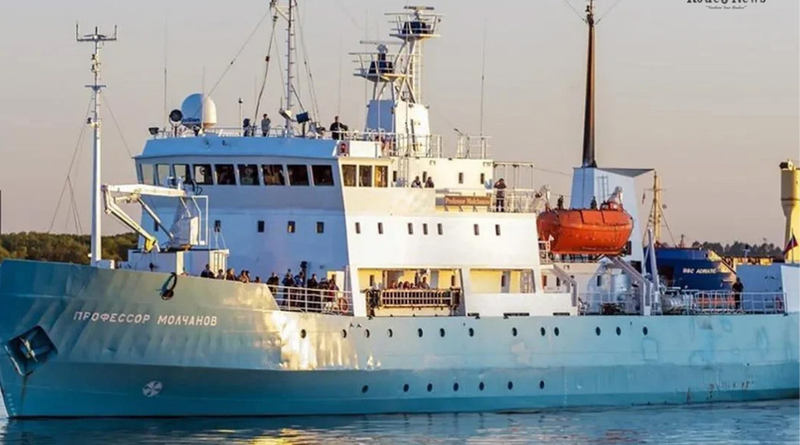
Norway seizes Russian ship in the Arctic as Ukrainian state energy company Naftogaz steps up a global campaign to recover billions of dollars awarded over assets taken by Russia following its 2014 annexation of Crimea.
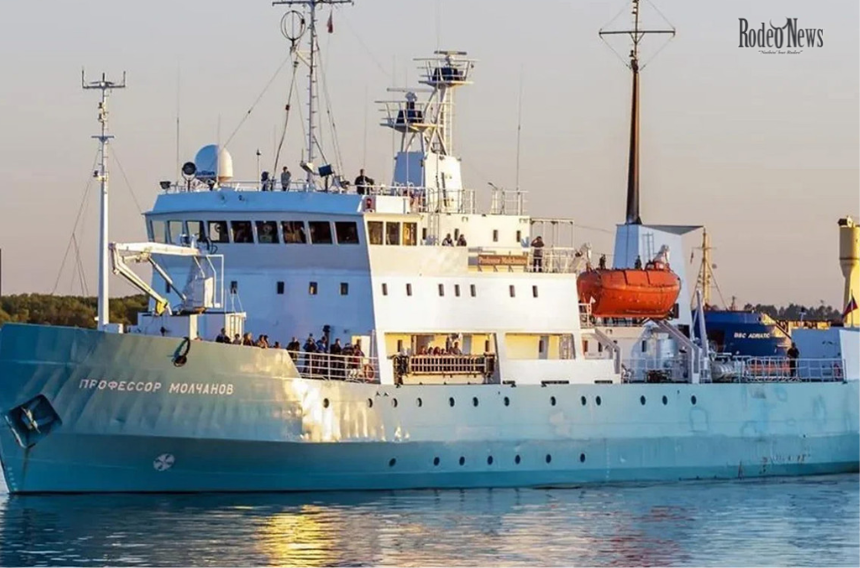
Norwegian authorities took control of the Russian vessel Professor Molchanov at Barentsburg on the Svalbard archipelago on Wednesday, September 2, following a court order obtained at Naftogaz’s request. The action is linked to a $4.22 billion arbitration award that Russia has not paid. SSysselmesteren på Svalbard+1
The seizure adds a significant new chapter to a years-long legal battle between Naftogaz and Russia. It also demonstrates how Ukrainian companies are increasingly using courts in foreign jurisdictions to pursue Russian commercial assets rather than relying solely on diplomatic pressure.
Norway Seizes Russian Ship After Court Order
The Norway seizes Russian ship action followed a ruling by the Nord-Troms and Senja District Court. According to the Governor of Svalbard, the court granted Naftogaz the right to seize the Professor Molchanov, which was already docked in Barentsburg.
The court decision was issued on August 31, while the seizure was carried out two days later. The governor’s office said the vessel must remain in Barentsburg until further instructions are issued by the governor or the court. SSysselmesteren på Svalbard
Naftogaz said the ship is owned by the Russian Federation and is used for commercial expedition cruises, including voyages to Svalbard. The company said the seizure was part of its broader effort to enforce an international arbitral award worth approximately $4.22 billion, plus interest and legal costs. NNaftogaz
The case therefore differs from a conventional government sanctions operation. Norway has said the dispute is between Naftogaz and Russia, while Norwegian authorities are acting to enforce a local court order.
Reuters reported that Norway’s Justice Ministry said Russia could ask the district court to reassess the case. RReuters
Why the Professor Molchanov Matters
The Professor Molchanov is not simply a vessel caught in a geopolitical dispute. Its location was central to the enforcement effort.
The ship had arrived in Barentsburg, a Russian-operated mining settlement on Svalbard. Reuters reported that the vessel had arrived with a group of Russian scientists, while expedition participants and crew remained free following the seizure. RReuters
The Governor of Svalbard said authorities would take care of the passengers and crew in cooperation with Trust Arktikugol, the Russian company responsible for Moscow’s assets on the archipelago. SSysselmesteren på Svalbard
The ship itself, however, was prevented from leaving.
According to Reuters, the vessel had been tracked by lawyers representing Naftogaz for months. Its expected arrival in Svalbard gave the Ukrainian company an opportunity to seek a Norwegian court order before the vessel could depart again. RReuters
That strategy illustrates the increasingly international nature of the compensation battle. Instead of attempting to collect directly from Russia, Naftogaz is looking for commercial assets located in countries where courts may recognize and enforce the arbitration award.
The $4.22 Billion Naftogaz Award
At the center of the dispute is a massive arbitration award issued in The Hague.
Naftogaz has pursued compensation from Russia since 2016 over the expropriation of its assets in Crimea. Those assets were taken following Russia’s annexation of the peninsula in 2014.
In April 2023, an arbitration tribunal in The Hague ordered Russia to pay Naftogaz approximately $4.22 billion, in addition to interest and legal expenses. RReuters+1
The award represents compensation for losses suffered by Naftogaz and other companies within its group after their Crimean assets were taken.
Naftogaz’s current leadership argues that Russia cannot avoid the financial consequences of the ruling simply by refusing to make payment.
“Russia cannot evade responsibility simply by refusing to comply with an international arbitral award,” Acting CEO Sergii Fedorenko said, according to Reuters. RReuters
The Ukrainian company has consequently shifted its attention toward enforcement.
Norway Seizes Russian Ship as Legal Pressure Grows
The Norway seizes Russian ship development is part of a much broader campaign.
Naftogaz said it is pursuing enforcement measures in several countries, including the United States, France, Britain and Finland. The company is looking for Russian assets that could potentially be used to satisfy the outstanding award. RReuters+1
This approach is important because winning an international arbitration case does not automatically guarantee that the losing party will voluntarily pay.
Enforcement usually requires identifying assets that can legally be targeted in jurisdictions where those assets are located. Local courts then determine whether the foreign award can be recognized and enforced under applicable law.
In Norway’s case, Naftogaz said the arbitration award had already been recognized as enforceable in the country. That recognition provided the legal foundation for the latest action against the Professor Molchanov. NNaftogaz
The case therefore highlights the distinction between an arbitration victory and actually collecting the money.
For Naftogaz, the latter remains the central objective.
Russia Demands the Ship’s Release
Moscow has strongly rejected the seizure.
Russia’s ambassador to Norway, Nikolai Korchunov, said Russia would pursue the vessel’s release through legal channels and demanded that the ship be returned immediately. Moscow also called for the safety of the passengers and crew to be protected. RReuters
Russian state media quoted a Foreign Ministry spokesperson describing the seizure as an act of “piracy,” reflecting the Kremlin’s rejection of the legal basis for the move. TThe Moscow Times
Russia has also been challenging the wider enforcement process. Reuters reported that Moscow is appealing and has argued that it was not properly notified. RReuters
That means the dispute is unlikely to end with the initial seizure.
The Norwegian court system could now become the next arena for arguments over ownership, enforcement rights and the treatment of the arbitration award.
Why Svalbard Is Especially Sensitive
The location of the seizure adds another layer of geopolitical significance.
Svalbard is a Norwegian Arctic archipelago governed under the 1920 Svalbard Treaty. The islands have a special legal status that permits citizens of treaty signatory countries, including Russia, to engage in certain activities and settle there under treaty provisions. RReuters
Russia maintains a long-standing presence in Svalbard, particularly through its mining operations at Barentsburg and Pyramiden.
Barentsburg, where the Professor Molchanov was held, is one of two Russian settlements in the archipelago. Reuters reported that the two Russian settlements together account for 392 residents out of Svalbard’s total population of 2,914. RReuters
The region has also become increasingly sensitive amid wider tensions between Russia and Western countries.
Russia has repeatedly accused Norway of militarizing Svalbard, allegations Oslo rejects. The Svalbard Treaty restricts certain military activities on the islands, although the archipelago is not formally a demilitarized zone. RReuters
Against that backdrop, the detention of a Russian-owned vessel naturally carries significance beyond the immediate financial dispute.
Norway, however, has emphasized the legal nature of the action.
Norway Seizes Russian Ship, but This Is Not a Sanctions Operation
One of the most important details is that the seizure was not announced as a new Norwegian government sanction against Russia.
Instead, Norwegian authorities are enforcing a court decision arising from Naftogaz’s efforts to collect a private arbitration award.
The Governor of Svalbard explicitly stated that the office was acting under the authority of the Norwegian court. Naftogaz obtained the right to seize the ship, while the governor’s office carried out the order as the enforcement authority. SSysselmesteren på Svalbard
Norway’s Justice Ministry likewise characterized the matter as a dispute between Naftogaz and Russia rather than a direct action by the Norwegian government against Moscow. RReuters
That distinction could become important if Russia challenges the seizure through Norwegian courts.
The legal argument will ultimately focus on whether the conditions for enforcing the arbitration award were satisfied and whether the particular Russian asset can lawfully be detained and potentially sold.
Naftogaz Targets Russian Assets Around the World
The seizure of the Professor Molchanov shows how Naftogaz is expanding its enforcement strategy beyond Ukraine.
The company has already secured legal measures involving Russian properties in Svalbard. Reuters reported that previous court orders targeted two properties connected with Trust Arktikugol, including a rental guest house. Russia has challenged those actions. RReuters
The company says it intends to continue searching for assets until the compensation is paid.
That could create further legal disputes in countries where Russian state-owned or commercially used property is located.
The wider effort also reflects an important change in the financial dimension of the Russia-Ukraine conflict. Legal battles over frozen or seized assets are increasingly running alongside military and diplomatic developments.
For Ukraine, recovering compensation from Russia is not only about money. It is also part of an effort to establish accountability for property losses resulting from Russia’s actions in Crimea.
What Happens to the Russian Ship Next?
The immediate future of the Professor Molchanov will depend on the Norwegian legal process.
For now, the ship is being held in Barentsburg and has been ordered not to move. The Governor of Svalbard is responsible for enforcing the court’s instructions. SSysselmesteren på Svalbard
Naftogaz’s original application sought an arrest and compulsory sale of the vessel. If the legal process proceeds in the company’s favor, a sale could potentially contribute toward satisfying the outstanding arbitration award.
However, Russia is contesting the process and has said it will seek legal remedies.
That means the ship could remain at the center of a prolonged court battle before any final decision is reached.
The case also raises broader questions about how international arbitration awards involving states can be enforced when the losing government refuses to pay.
A Significant New Test for International Enforcement
The Norway seizes Russian ship case could ultimately become more important than the value of the vessel itself.
The $4.22 billion Naftogaz award is enormous, and collecting such a judgment requires enforcement across multiple jurisdictions. Each court must consider its own laws, treaty obligations and rules governing state assets.
The Professor Molchanov provides a concrete example of how that process can work.
A Ukrainian company obtained an international arbitration award. The award was recognized as enforceable in Norway. Lawyers then identified a Russian-owned commercial vessel operating within Norwegian jurisdiction, sought a local court order and secured the vessel’s detention.
The result is a highly visible demonstration of international legal pressure on Russia.
Naftogaz has made clear that it does not regard the Svalbard seizure as an isolated event. The company says it will continue pursuing Russian assets around the world until its compensation is paid. NNaftogaz
For Russia, meanwhile, the case represents another challenge to its position that such asset seizures are unlawful.
The dispute is therefore likely to continue through the courts, even as the vessel remains stationary in the Arctic.