Anker Sleep Earbuds 4 Pro: 5 Powerful New Upgrades
The Anker Sleep Earbuds 4 Pro are bringing a new level of technology to the growing market for sleep-focused audio devices. Anker has officially unveiled the Soundcore Sleep Earbuds 4 and the more advanced Sleep Earbuds 4 Pro, introducing improved active noise cancellation, longer battery life, wireless charging and a redesigned form factor intended to make sleeping with earbuds more comfortable.
The standout feature, however, belongs to the premium model. The Anker Sleep Earbuds 4 Pro come with a charging case featuring an integrated OLED display, allowing users to control certain functions without reaching for a smartphone. The Pro model also adds biometric monitoring designed to track aspects of the user’s sleep and relaxation.
The new earbuds represent a significant expansion of Anker’s sleep technology lineup. Both models build on features from the previous Soundcore Sleep A30 while introducing hardware and software upgrades aimed at people who want to block environmental noise, listen to relaxing soundscapes or enjoy audio content while falling asleep.
1. Anker Sleep Earbuds 4 Pro Get an OLED Display
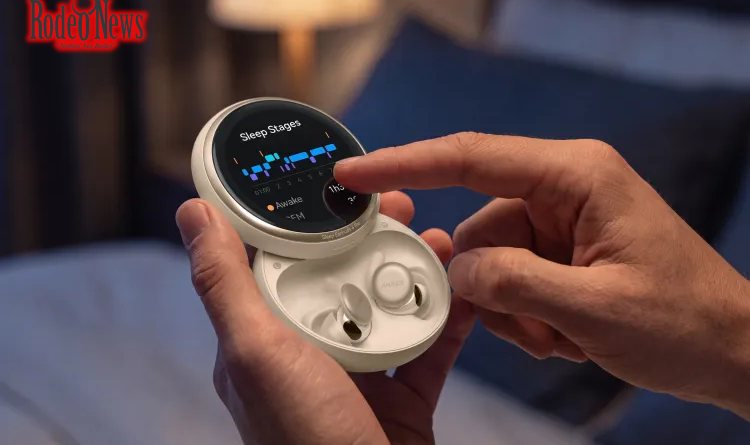
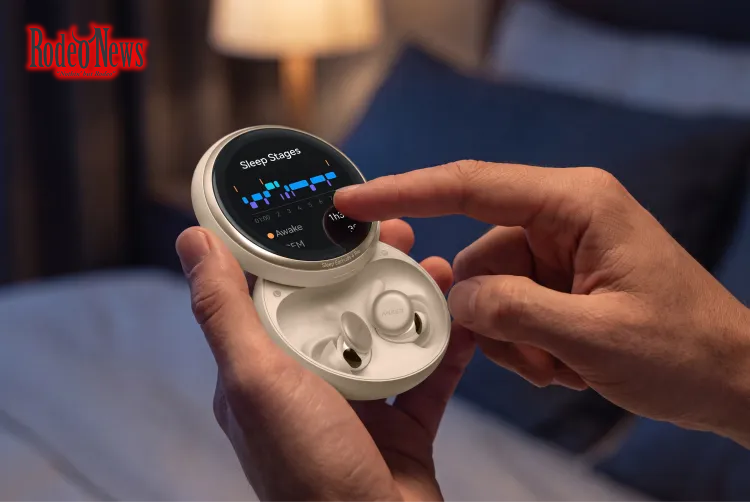
One of the most distinctive additions to the Anker Sleep Earbuds 4 Pro is the SleepHub charging case.
Unlike a conventional earbud case, the Pro model’s case features an integrated OLED display. This screen allows users to interact directly with the earbuds and access several functions without depending entirely on a connected smartphone.
According to the product announcement, users can browse preset soundscapes, review sleep-related information and set alarms from the display. The concept could appeal to people who want to keep their phones away from the bed while still maintaining control over their nighttime audio experience.
The standard Sleep Earbuds 4 also include a redesigned charging case, but the regular model does not have the OLED screen. Users of that version will need to rely more heavily on a phone for controls.
This difference could become one of the most important factors for buyers deciding between the two versions.
2. A Smaller Design Could Help Side Sleepers
Sleeping while wearing traditional wireless earbuds can be uncomfortable, particularly for people who sleep on their side. Pressure from the earbud against a pillow can cause discomfort and may force users to remove their earbuds during the night.
Anker says the new Sleep Earbuds 4 and 4 Pro have a 20 percent smaller contact area compared with the earlier Sleep A30 design.
That reduction is intended to reduce pressure and improve comfort during sleep. The design is specifically targeted at side sleepers, who are among the most likely users to experience discomfort with conventional earbuds.
Comfort is particularly important in the sleep technology category. A pair of earbuds may offer excellent audio quality or advanced noise cancellation, but those features have limited value if the user cannot comfortably wear the device throughout the night.
The slimmer design therefore represents more than a cosmetic change. It could be central to the practical appeal of the Anker Sleep Earbuds 4 Pro.
3. Improved ANC and Audio Masking Target Nighttime Noise
The new earbuds continue to use audio masking technology found in the previous generation. This feature is designed to make disruptive sounds, including environmental noise and a partner’s snoring, less noticeable.
Anker has also improved the active noise cancellation capabilities of the new models. Together, ANC and audio masking are intended to create a quieter listening environment for users trying to fall asleep or remain asleep.
Noise is one of the most common challenges for people living in busy cities, sharing bedrooms or dealing with inconsistent nighttime environments. Traffic, conversations, household sounds and other disturbances can make it difficult to relax.
The approach taken by the Anker Sleep Earbuds 4 Pro combines physical earbud design with electronic noise management and audio content. Rather than functioning simply as ordinary music earbuds, the devices are designed specifically around nighttime use.
That specialization could make them appealing to users who already own standard wireless earbuds but find those products uncomfortable or unsuitable for sleeping.
4. Longer Battery Life Supports Overnight Listening
Battery performance is another important upgrade for the new Anker sleep earbuds.
When streaming music, podcasts or audiobooks over Bluetooth 6.0, Anker estimates that the earbuds can provide up to eight hours of battery life with ANC enabled. With ANC turned off, the estimated battery life rises to 11 hours.
For locally stored audio and soundscapes, the figures can be higher. Anker estimates approximately 9.5 hours with ANC enabled and up to 14.5 hours with ANC disabled.
These numbers are important because sleep-focused earbuds need to survive long listening sessions. A user who starts playing relaxing audio before bed may want the device to continue functioning throughout the night.
The expanded battery performance could also make the earbuds useful for long-haul travel, meditation and extended relaxation sessions, although their primary purpose remains nighttime listening.
Bluetooth 6.0 Brings Updated Connectivity
Both new models use upgraded Bluetooth 6.0 connectivity for streaming music, podcasts and audiobooks.
The new wireless standard is part of a broader effort to modernize the earbuds beyond their specialized sleep functions. Users are not limited to preloaded soundscapes and can also stream their preferred content directly to the earbuds.
For many buyers, this flexibility will be important. Some people may prefer white noise or environmental sounds, while others may fall asleep listening to audiobooks, podcasts or music.
The ability to combine these different forms of content with improved battery life and noise management gives the Anker Sleep Earbuds 4 Pro a broader set of potential uses.
5. The Pro Model Adds Biometric Sleep Tracking
The biggest difference between the standard and premium versions is the additional biometric technology in the Anker Sleep Earbuds 4 Pro.
The Pro earbuds include an in-ear PPG sensor. PPG, or photoplethysmography, is a sensing technology used in many modern wearable devices to measure physiological signals.
Anker says the sensor will monitor information related to the user’s sleep state, heart rate and heart rate variability, also known as HRV. The company also plans to use the data to assess indicators related to stress, fatigue and recovery.
The biometric information will work alongside Soundcore’s BioSync system, which is designed to deliver adaptive soothing audio intended to support relaxation.
The concept is ambitious. Instead of simply playing the same sound for every user, the system is intended to adapt the audio experience based on information gathered during use.
However, the real-world effectiveness of these features will need to be independently tested. Consumer sleep technology can provide useful insights, but users should be cautious about treating data from consumer devices as equivalent to professional medical evaluation.
Wireless Charging Comes to Both Models
Convenience is another major part of the updated lineup.
Both the standard Sleep Earbuds 4 case and the SleepHub case included with the Pro version support wireless charging. Users can therefore place the cases on compatible wireless charging pads rather than connecting a cable each time.
Wireless charging has become increasingly common among premium consumer electronics, and its arrival in the sleep earbud lineup could make the products easier to integrate into a bedside setup.
The feature may seem relatively minor compared with the OLED display or biometric tracking, but convenience can matter significantly for a device designed to be used every night.
A product that requires minimal effort to charge and prepare may be more likely to become part of a consistent bedtime routine.
Anker Sleep Earbuds 4 Price and Release Date
The standard Soundcore Sleep Earbuds 4 will arrive first.
Anker plans to release the regular model in October 2026 at a price of $229.99 in the United States and £199.99 in the United Kingdom.
The earbuds will initially be available in white and blue, with a pink version expected to arrive later.
The more advanced Anker Sleep Earbuds 4 Pro will follow in November 2026.
The Pro model will cost $349.99 in the United States and £299.99 in the United Kingdom. It will also be offered in white and blue color options, although the shades differ slightly from those used for the standard model.
The $120 difference between the two versions is substantial. Buyers will therefore need to determine whether the OLED case, biometric sensors and adaptive audio features justify paying significantly more for the Pro model.
Anker Sleep Earbuds 4 vs. Sleep Earbuds 4 Pro
The two products share several important features, including:
- A design intended for side sleepers
- A smaller contact area than the previous generation
- Improved active noise cancellation
- Audio masking technology
- Bluetooth 6.0
- Longer battery life
- Wireless charging support
The Pro model adds several premium features:
- Integrated OLED display on the charging case
- Phone-free controls through the SleepHub case
- In-ear PPG sensor
- Sleep and heart-related monitoring
- HRV tracking
- Stress, fatigue and recovery assessments
- Soundcore BioSync adaptive audio
For users primarily interested in blocking noise and listening to audio comfortably in bed, the standard model may offer the core experience at a lower price.
However, people interested in sleep tracking and a more independent device experience may find the Anker Sleep Earbuds 4 Pro more compelling.
Anker Expands Its Sleep Technology Strategy
The new earbuds arrive as Anker continues to broaden its technology portfolio beyond charging accessories.
The company’s latest product announcements have included expanded audio technology, smart home products and new sleep-focused devices. Anker has also introduced a separate SleepLab speaker lineup designed around sleep monitoring and relaxation.
This broader strategy suggests that sleep technology could become an increasingly important category for the company.
The sleep device market has expanded significantly in recent years as consumers have shown greater interest in tracking sleep patterns and using technology to improve relaxation.
Anker’s approach is different from traditional sleep trackers because the company is integrating sensing technology directly into an audio device. The Anker Sleep Earbuds 4 Pro are designed not only to collect information but also to provide sound intended to help users relax.
Whether this combination becomes a major selling point will depend on real-world performance.