Daisy Chain Fields: 10 Stunning 2026 Moments
Daisy Chain Fields turned Irvine, California, into a major celebration of women in music on Aug. 29, bringing together Olivia Rodrigo, Chappell Roan, Doechii, Bikini Kill, Garbage, Mitski, Santigold and a remarkable collection of established and emerging artists.
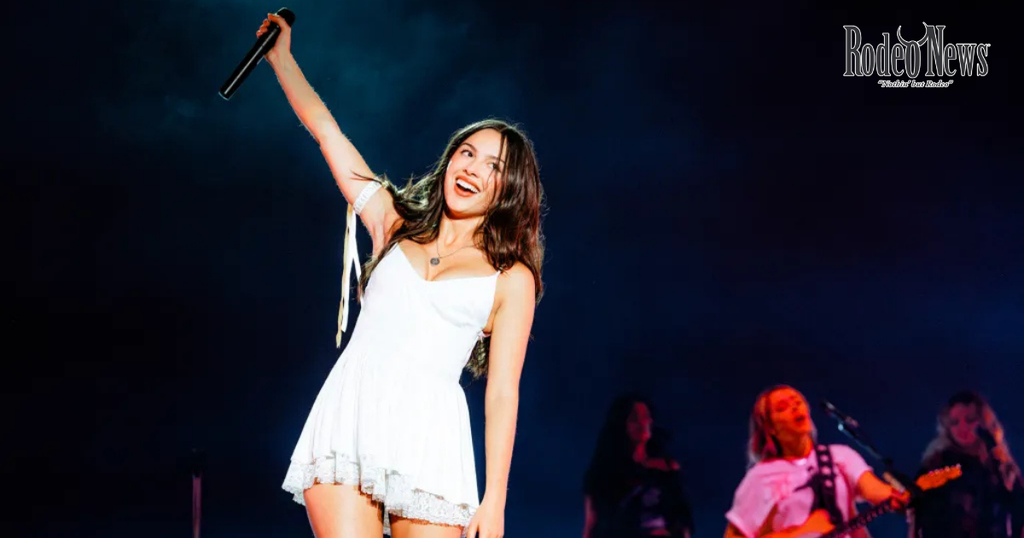
The inaugural festival, created and headlined by Rodrigo, was designed as more than a conventional music event. It combined live performances with a charitable mission focused on women and girls. The festival’s performers appeared without competing set times, while nonprofit organizations were given a visible role throughout the day.
By the time Rodrigo closed the event, Daisy Chain Fields had produced some of the weekend’s most memorable musical images and performances. The night also delivered surprise appearances from Stevie Nicks, Sarah McLachlan and Alanis Morissette.
Daisy Chain Fields brought generations together
One of the most striking elements of Daisy Chain Fields was its intergenerational lineup.
Rodrigo drew inspiration from Lilith Fair, the influential women-led festival founded by Sarah McLachlan in the 1990s. That influence was visible in the way the 2026 event placed artists from different eras and genres alongside one another.
The result was a lineup that moved freely between alternative rock, pop, hip-hop, punk and singer-songwriter traditions.
Chappell Roan represented contemporary pop’s theatrical side. Doechii brought a sharply energetic hip-hop performance. Bikini Kill connected the festival to the history of the riot grrrl movement, while Stevie Nicks and McLachlan represented earlier generations of influential women songwriters.
That range gave Daisy Chain Fields an identity beyond a typical pop festival.
Olivia Rodrigo made the biggest statement
Rodrigo’s headline performance served as the emotional center of the festival.
The singer performed material from across her career while also using the stage to celebrate the artists and organizations connected to the event. Her set reportedly lasted around 80 minutes and included songs from Sour, Guts and her newer material.
Rather than treating the headline slot as a solo showcase, Rodrigo used it as an opportunity to bring other generations of musicians into the spotlight.
That approach became particularly powerful when she welcomed Sarah McLachlan to the stage.
McLachlan is one of the key figures behind the festival’s historical inspiration, making her appearance feel like a direct connection between Lilith Fair’s legacy and Rodrigo’s new project.
The festival also raised $10 million for organizations supporting women and girls, with Melinda French Gates matching the amount and bringing the total to $20 million. Multiple reports highlighted the charitable component as one of the defining features of the event.
Stevie Nicks delivered a major surprise
The appearance of Stevie Nicks was among the night’s biggest moments.
Nicks joined Rodrigo during the headline set for a performance of “Landslide,” creating one of the festival’s clearest examples of its generational mission.
The pairing was significant because Nicks has spent decades influencing generations of women musicians, while Rodrigo represents a younger generation of artists who have grown up with that music as part of the cultural landscape.
Their performance therefore worked on two levels. It was an unexpected concert collaboration, but it also illustrated the central idea behind Daisy Chain Fields: artists do not have to compete across generations to command attention.
Instead, they can share the same stage.
The performance was subsequently highlighted by multiple music publications, including Pitchfork and NME.
Chappell Roan brought theatrical energy
Chappell Roan was another major visual and musical highlight.
Known for turning performances into elaborate theatrical experiences, Roan arrived at Daisy Chain Fields with a dramatically different look. She debuted a short, sharp bob and paired it with a futuristic lavender-inspired outfit.
The styling quickly became part of the conversation surrounding the festival.
However, the performance itself remained the main attraction. Roan’s increasingly distinctive stage persona made her a natural fit for a festival that emphasized individuality and self-expression.
Her appearance also demonstrated how quickly contemporary pop stars can create cultural moments outside the traditional confines of a concert.
The combination of music, fashion and performance art helped make her set one of the event’s most photographed appearances.
Doechii delivered another standout set
Doechii brought a completely different energy to the festival.
The rapper and performer has built a reputation for unpredictable live shows, and her Daisy Chain Fields appearance continued that tradition. Her set added a hip-hop dimension to a lineup otherwise heavily associated with pop and alternative music.
Photographs from the festival captured Doechii performing with dancers as the crowd responded around her.
Her presence was important to the broader identity of the event because Daisy Chain Fields was never intended to represent only one style of women-led music.
Instead, the lineup demonstrated how wide that category can be.
From punk to pop and from alternative rock to hip-hop, the festival gave different artists room to define what their own version of empowerment looked like.
Bikini Kill connected the festival to punk history
Bikini Kill provided one of the strongest links between Daisy Chain Fields and the history of feminist music.
Led by Kathleen Hanna, the band has long been associated with the riot grrrl movement, which helped reshape the relationship between punk music, gender and political expression.
Photographs from the festival showed Hanna performing alongside Tobi Vail and Kathi Wilcox.
Their appearance added historical weight to the event.
While younger performers such as Rodrigo and Roan represent the current generation of music stars, Bikini Kill represents an earlier period when women in punk were actively challenging the industry’s expectations about who could perform, speak and lead.
Their inclusion therefore made the festival feel less like a collection of current chart names and more like a musical timeline.
Garbage brought alternative-rock power
Garbage also contributed to the festival’s rock side.
Frontwoman Shirley Manson has been one of alternative rock’s most recognizable female voices since the 1990s. At Daisy Chain Fields, she performed with the band and interacted with younger fans in the audience.
That interaction reflected another recurring theme of the festival: connection.
The event was not simply about watching famous performers from a distance. Its design emphasized community and shared experiences.
That became especially meaningful given the festival’s charitable purpose.
The heat became part of the story
Daisy Chain Fields was also held under challenging weather conditions.
Temperatures in Irvine climbed significantly during the day, creating difficult conditions for people attending the outdoor festival. Reports from the event described intense heat, with some coverage noting temperatures above 100 degrees.
Despite the conditions, crowds remained engaged.
Photographs captured festivalgoers dancing, gathering for group pictures and moving between performances and activities across the Great Park grounds.
The heat also underscored an important reality about large outdoor events: a successful lineup does not eliminate logistical challenges.
Water, shade, food access and crowd comfort can become just as important as the entertainment when temperatures rise.
The audience became part of the visual story
The most memorable Daisy Chain Fields photographs were not limited to performers.
Images from the event also showed fans dressing for the occasion, creating flower-themed looks, dancing and gathering together throughout the festival grounds.
That visual atmosphere helped reinforce the festival’s identity.
Daisy Chain Fields was deliberately designed around the idea of collective experience. The audience was therefore not simply a backdrop for the artists. Fans were part of the event’s larger visual and emotional narrative.
The flower imagery was particularly fitting.
The festival’s name and branding created an aesthetic that felt youthful and optimistic, while the nonprofit component gave the imagery a deeper purpose.
Sarah McLachlan helped close the generational circle
McLachlan’s participation was especially meaningful because of her connection to Lilith Fair.
Her festival helped establish a major platform for women musicians at a time when the mainstream touring industry often struggled to provide comparable opportunities.
Decades later, Rodrigo’s Daisy Chain Fields attempted to create a new version of that community for a different generation.
McLachlan joining Rodrigo onstage therefore represented more than a guest appearance.
It connected two different eras of women-led music festivals.
The pair performed together during Rodrigo’s headline set, adding another emotional highlight to a night already filled with unexpected collaborations.
Alanis Morissette added another surprise
Alanis Morissette was another major surprise during Rodrigo’s performance.
She stepped in after Karen O was unable to appear because of a family emergency and joined Rodrigo for “Ironic.”
The performance added another major name from the 1990s alternative and singer-songwriter landscape to an event already featuring Nicks, McLachlan and Bikini Kill.
It also reinforced one of the festival’s defining characteristics: the past and present of women’s music could occupy the same stage without one overshadowing the other.
Rodrigo’s role as host made that possible.
Daisy Chain Fields was bigger than a photo gallery
At first glance, Daisy Chain Fields can be viewed simply as a collection of spectacular concert photographs.
There were colorful outfits, dramatic performances, famous musicians and thousands of fans.
But the festival’s significance went further.
Rodrigo created the event around a charitable mission, and its proceeds were directed toward organizations working on issues affecting women and girls. The festival also brought artists from different generations together at a moment when live music is increasingly shaped by major commercial festivals and algorithm-driven pop culture.
That combination gave Daisy Chain Fields a distinctive identity.
It was simultaneously a music festival, a philanthropic event and a statement about community.
Why Daisy Chain Fields could become a lasting festival
The biggest question now is whether Daisy Chain Fields will return.
Rodrigo appeared to hint at another edition during her closing remarks, telling the audience she would see them next year. That has naturally fueled speculation about a possible 2027 festival.
If the event returns, its first edition has already established a strong blueprint.
The formula is clear: bring together major contemporary artists, influential musicians from previous generations, emerging performers and organizations working directly with communities.
The inaugural festival demonstrated that there is an audience for that model.
More importantly, it demonstrated that a major music event can use its cultural visibility to direct attention toward issues beyond the stage.
Daisy Chain Fields therefore ended its first chapter with more than memorable photographs.
It created a new meeting point between generations of women musicians, gave fans a day centered on music and community, and raised significant funds for organizations supporting women and girls.
For Olivia Rodrigo, that makes the festival more than another entry on an already impressive résumé.
It could become one of the most important projects of her career.
And for the thousands of people who spent the day in Irvine, Daisy Chain Fields offered something increasingly rare in modern festival culture: the feeling that everyone onstage and in the crowd was participating in the same idea.