Jennie Fallen Angel Video Sparks Shocking Backlash
The Jennie Fallen Angel video has triggered a heated online debate after viewers questioned the use of children in several of its darker scenes. The BLACKPINK star’s latest solo release was designed around a surreal and symbolic visual world, but some viewers have criticized the imagery as disturbing and accused the production of using children in imagery they interpreted as ritualistic or “satanic.”
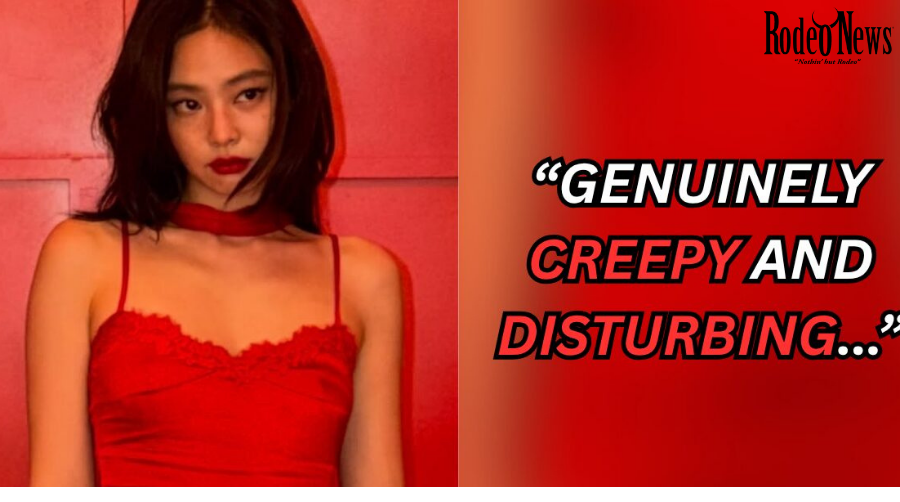
The controversy emerged shortly after Jennie released her new digital EP, Fallen Angel, on August 28. The project contains three songs: “Fallen Angel,” “Heaven” and “Less Than A Lover.” The title track arrived with an elaborate music video that combines fantasy, nature, fire and religiously suggestive imagery.
While some fans praised the video for its cinematic atmosphere and symbolism, others focused on its final sequence. That scene has quickly become the most controversial part of the release.
Jennie Fallen Angel Video Draws Attention Over Children’s Scenes
The biggest discussion surrounding the Jennie Fallen Angel video involves a sequence near the end of the production.
In the scene, several children appear dressed in white outfits with red veils covering their faces. They carry candles while moving toward a burning structure. The sequence then shows Jennie alongside a young girl before the camera reveals more children surrounding her with candles.
The imagery is intentionally dark and theatrical.
However, some viewers said the combination of children, candles, red veils and fire created associations with occult or sacrificial rituals. Those interpretations spread rapidly across social media, turning a visual-art discussion into a wider controversy.
Some critics questioned why children were included in such a dark setting at all.
Others defended the artistic direction and argued that viewers were interpreting symbolic imagery too literally.
That disagreement has become a major part of the conversation surrounding Jennie’s new release.
Why the Fallen Angel MV Is So Divisive
The Jennie Fallen Angel video does not rely on a conventional pop-video narrative. Instead, it uses surreal images and fantasy-style scenes to represent emotional ideas.
According to coverage of the project, the video moves through imagery involving swans, water, nature, fire and a child with angel-like symbolism. The visual language has been interpreted as a story about loneliness, transformation and reconnecting with a more vulnerable part of oneself.
That context is important because the most controversial sequence can be viewed differently depending on how the entire video is interpreted.
Some viewers see the children as part of a dark fairy-tale world.
Others see the same images as intentionally unsettling.
The disagreement does not necessarily mean that one interpretation is definitively correct. Music videos often use symbolism that allows audiences to develop their own interpretations. In this case, however, the combination of religious imagery and children has made the response particularly intense.
Jennie’s “Fallen Angel” Has a Dark Fairy-Tale Aesthetic
Jennie’s latest solo project represents a noticeable change in visual direction.
Rather than relying entirely on the polished glamour associated with mainstream K-pop, Fallen Angel presents a more mysterious and introspective atmosphere.
The video has been described as resembling a dark fairy tale, with imagery that draws attention to transformation, vulnerability and emotional isolation. Other coverage has highlighted possible references to classic fantasy and literary imagery, including the use of water and swans.
The title itself also adds another layer to the discussion.
A “fallen angel” can represent someone who has moved away from innocence or perfection. It can also symbolize emotional conflict, rejection, loneliness or transformation.
For Jennie, the concept appears to move away from a simple good-versus-evil narrative.
Instead, the imagery can be read as an exploration of the complicated emotions behind a glamorous public identity.
That interpretation has led some fans to defend the video against the accusations spreading online.
Fans Defend Jennie Against the Criticism
Not everyone agrees with the backlash.
Some fans have argued that calling the video “satanic” ignores the broader artistic context. They point out that dark imagery, fire, veils and religious symbolism are common elements in fantasy and music videos.
Supporters have also emphasized that a visual concept should be considered as a complete work rather than through one isolated scene.
The presence of children, however, remains the central point of disagreement.
For critics, the issue is not simply whether the video is dark. They believe the production crossed a line by placing children in imagery they found disturbing.
For supporters, the children are part of the video’s symbolic storytelling and should not automatically be interpreted as representing a real-world ritual.
At this stage, the public debate remains largely interpretive.
There is no established evidence that Jennie or her team intended the children to represent an actual satanic ritual. The claims circulating online are largely based on viewers’ interpretations of the visual material.
What the Children May Symbolize
One of the more interesting aspects of the Jennie Fallen Angel video is the presence of a young girl alongside Jennie.
Rather than simply functioning as background characters, the children appear to contribute to the video’s symbolic narrative.
Other interpretations of the project have suggested that the child figure may represent Jennie’s younger or more vulnerable self. The video’s broader themes of emotional isolation and self-discovery support that reading.
Under that interpretation, the child is not necessarily connected to anything occult.
Instead, the imagery could represent innocence, memory or a younger identity.
The burning house may then represent destruction or the end of an old emotional state, while the surrounding nature imagery suggests transformation.
These interpretations are not confirmed explanations from Jennie herself, so they should be treated as possible readings rather than official meanings.
That distinction is especially important when discussing viral accusations.
Jennie’s New EP Arrived Amid Several Online Debates
The controversy over the Jennie Fallen Angel video is not the only online debate surrounding the release.
Jennie faced criticism even before the EP arrived. Promotional artwork for Fallen Angel was compared online with other album artwork, leading to accusations of copying. However, those claims were based on visual comparisons made by internet users, and there has been no established evidence proving that Jennie intentionally copied another artist’s work.
The release of the music video therefore came during an already active period of online discussion around the project.
Once the video appeared, the conversation shifted from artwork comparisons to the meaning of the visual concept.
That helped push Jennie’s name back into trending K-pop discussions.
The Song Itself Has Also Divided Listeners
The controversy is not limited to the visuals.
Jennie’s “Fallen Angel” has also received mixed reactions from listeners.
Some fans praised the song’s emotional tone and the more vulnerable side of Jennie’s performance. Others were less convinced by the musical direction, resulting in a sharply divided response online.
The song reportedly takes a more stripped-down approach, with an emphasis on vocals and guitar rather than an aggressively produced pop arrangement. Korean media coverage described the track as a minimalist acoustic pop song with a lyrical guitar melody.
That musical direction fits the broader concept of the project.
Jennie is presenting an image that feels more introspective and emotionally exposed than some of her previous solo material.
The result is a release that appears deliberately designed to provoke discussion.
Online Reactions Continue to Split
Social media has amplified both sides of the debate.
Critics have described the final scenes as uncomfortable, disturbing or inappropriate. Some have specifically objected to the combination of children and ritual-like imagery.
Meanwhile, supporters have argued that the criticism is exaggerated and that the video’s fantasy aesthetic is being taken out of context.
This split is not unusual for a major pop release with a provocative visual concept.
When an artist deliberately moves into darker territory, audiences can react very differently depending on their cultural background, personal beliefs and expectations.
The Jennie Fallen Angel video is a particularly strong example because its symbolism leaves considerable room for interpretation.
No Official Confirmation of the Online Accusations
One important point should not be overlooked: online accusations are not the same as confirmed facts.
The current controversy stems from reactions to the video’s imagery. There is no confirmed evidence establishing that Jennie intended to promote satanic rituals or any form of harmful activity involving children.
The available reporting describes the controversy as a debate among netizens over how the scenes should be interpreted.
That distinction matters.
Jennie’s agency, OA Entertainment, has also recently taken a strong position against malicious content targeting the singer. In an August 18 statement, the company said it was pursuing civil and criminal legal action over false information, defamation, manipulated images and videos, privacy violations and other malicious content.
The agency’s broader legal response does not specifically establish its position on the Fallen Angel music-video controversy, but it demonstrates that the company is actively monitoring malicious online content involving Jennie.
Why the Controversy Could Keep Growing
The debate surrounding the Jennie Fallen Angel video is unlikely to disappear immediately.
The music video contains enough visual symbolism to encourage continued analysis. As more fans discuss individual scenes, different interpretations are likely to emerge.
At the same time, social media algorithms tend to amplify the most extreme reactions.
A viewer describing a scene as “dark fantasy” may receive far less attention than someone making a dramatic accusation. That can quickly turn a relatively narrow artistic debate into a much larger controversy.
For Jennie, that attention may have both positive and negative consequences.
On one hand, controversy can drive additional interest in a song and increase discussion around a release.
On the other, repeated accusations can shape public perception even when the claims remain unproven.
Jennie’s Fallen Angel Era Is Already Making an Impact
Whatever viewers think of the controversial imagery, Fallen Angel has clearly generated conversation.
Jennie’s decision to move into a darker and more symbolic visual world has created a very different discussion from the typical promotional cycle surrounding a K-pop release.
The video asks viewers to interpret images rather than simply watch a straightforward performance.
That approach has produced praise from people who appreciate the cinematic concept while simultaneously attracting criticism from viewers who find the imagery unsettling.
The presence of children has become the clearest dividing line.
For some, it makes the video more emotionally powerful.
For others, it makes the imagery difficult to watch.
The Bigger Picture Behind the Jennie Fallen Angel Video
Ultimately, the Jennie Fallen Angel video controversy appears to be driven by a clash between artistic symbolism and audience interpretation.
Jennie’s video uses children, fire, veils, candles and fantasy imagery to create an intentionally unsettling atmosphere. Some viewers interpret those elements as part of a dark fairy tale about emotional transformation, while others associate them with religious or ritualistic imagery.
Neither interpretation should automatically be presented as an established fact without an official explanation from the artist or creative team.
What is clear is that the visual concept has succeeded in getting people talking.
Jennie’s Fallen Angel era is presenting a more vulnerable and mysterious side of the BLACKPINK star. Whether audiences ultimately embrace that artistic direction or continue debating its darker imagery, the release has already become one of the more discussed K-pop music-video moments of the week.
As the conversation continues, the most important distinction will remain between what the video actually shows, what its creators intended, and what individual viewers believe it means.
For now, the controversy remains an online debate rather than proof of the serious accusations being made against Jennie.
Suggested External Sources
- Koreaboo — Original report on the controversy
- Sports Kyunghyang — Coverage of the divided reaction to the music video
- ELLE — Analysis of the symbolism in “Fallen Angel”
- Soompi — OA Entertainment’s statement on malicious content targeting Jennie
Suggested Internal Links
For WordPress, add internal links to existing articles on your site using natural anchor text such as:
- BLACKPINK Jennie latest news
- Jennie’s solo music career
- BLACKPINK members’ solo projects
- Jennie’s latest comeback
- K-pop controversies and viral news