
Power of Siberia 2: 5 Major Xi-Putin Signals
Chinese President Xi Jinping and Russian President Vladimir Putin are preparing for a closely watched meeting in Bishkek, with Power of Siberia 2 expected to be one of the key issues on the agenda. The talks come as China and Russia seek to deepen energy and strategic cooperation while the long-delayed gas pipeline remains unresolved.
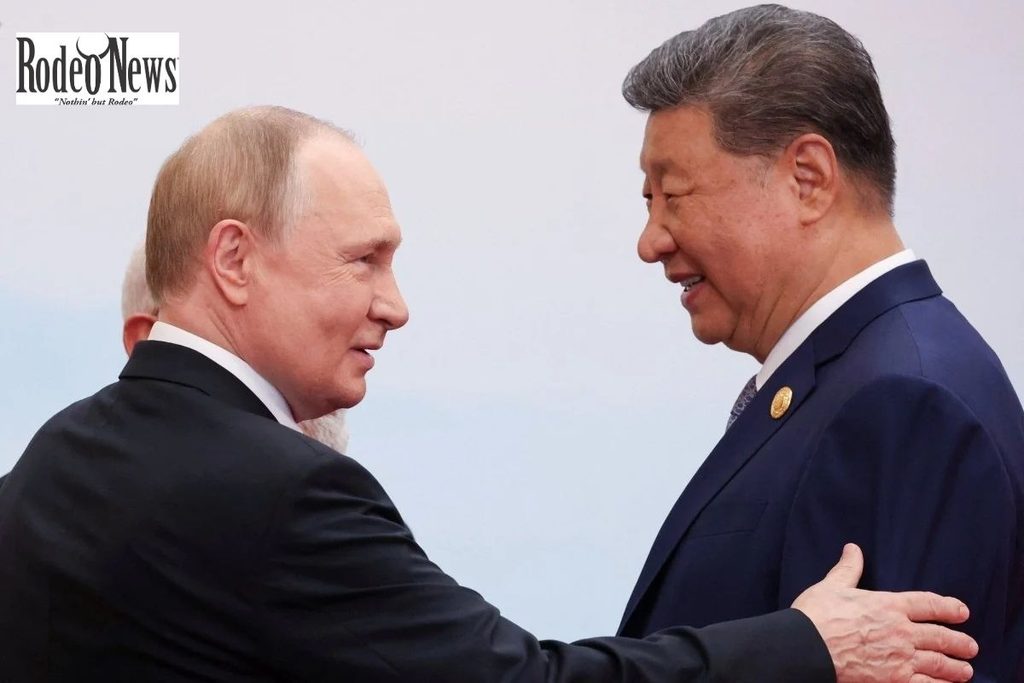
Xi and Putin are scheduled to meet on August 31 on the sidelines of the Shanghai Cooperation Organisation summit in Kyrgyzstan. According to the Kremlin, the two leaders will discuss the proposed pipeline bilaterally rather than leaving the issue solely to broader economic meetings.
The meeting could become an important moment for the future of Power of Siberia 2. However, there is still no confirmation that China and Russia have reached a final agreement.
Power of Siberia 2 Returns to the Spotlight
The proposed Power of Siberia 2 pipeline has been discussed between Moscow and Beijing for years. The project is designed to expand Russian natural-gas exports to China and create another major energy route between the two countries.
Russian presidential aide Yury Ushakov said the project would be discussed during Putin’s August 31 meeting with Xi.
Ushakov was responding to questions about whether Moscow and Beijing could finalize agreements on the long-stalled project. He said the issue would be discussed directly with the Chinese leader as well as at the Eastern Economic Forum in Vladivostok.
That statement has renewed attention on a project that has faced prolonged negotiations.
The South China Morning Post reported that the pipeline is intended to strengthen Russian gas deliveries to China while further consolidating relations between the two countries.
For Moscow, the project offers a potentially important long-term market for Russian gas. For Beijing, it could add another major source of pipeline gas and increase the diversification of its energy supply.
Power of Siberia 2 Could Transform China-Russia Energy Ties
Power of Siberia 2 is far more than a conventional infrastructure project.
If completed as planned, the pipeline would represent another major step in the development of China-Russia energy relations. The proposed system is expected to stretch roughly 2,600 kilometres and could carry as much as 50 billion cubic metres of natural gas annually to China through Mongolia.
The route is designed to connect Russian gas resources with China’s growing energy market.
That scale makes the project strategically important for both sides.
Russia has been seeking to expand its energy relationships in Asia, while China remains one of the world’s largest energy consumers. A major new pipeline could therefore create a long-term commercial relationship that extends well beyond the immediate political climate.
The project would also add to existing Russian pipeline gas exports to China.
Russia’s existing Power of Siberia pipeline has already established a major energy connection between the two countries. Power of Siberia 2 would potentially broaden that relationship and give Moscow another significant route into the Chinese market.
Power of Siberia 2 Has Faced Years of Delays
Despite its strategic importance, Power of Siberia 2 has not moved quickly.
One of the biggest obstacles has been disagreement over commercial terms, including gas pricing. Negotiations have continued for years without producing a final deal that allows the project to move decisively into construction.
That history is important when assessing the latest Xi-Putin meeting.
The fact that the project is on the agenda does not automatically mean that a final contract will be signed. The Kremlin has said the leaders will discuss the possibility of finalizing arrangements, but no completed agreement has been publicly confirmed.
Interfax reported that Ushakov described the pipeline as a subject for bilateral discussion at the Bishkek meeting and noted that the issue would also be addressed around the Eastern Economic Forum.
The distinction between discussion and finalization matters.
Markets and energy companies will likely watch for any announcement involving pricing, financing, construction schedules, transit arrangements or binding supply commitments.
Xi and Putin Meet as SCO Summit Draws Global Attention
The pipeline talks will take place during a much larger diplomatic gathering.
Xi is traveling to Kyrgyzstan for the 2026 Shanghai Cooperation Organisation summit in Bishkek. China’s Foreign Ministry said Xi will attend the summit from August 30 to September 3 and will also make a state visit to Kyrgyzstan and Egypt.
The SCO summit brings together leaders from across Eurasia.
For China and Russia, the gathering provides an opportunity to discuss bilateral issues alongside wider regional and international developments. The Xi-Putin meeting is therefore likely to cover more than energy.
Still, Power of Siberia 2 has attracted particular attention because it combines economics, energy security and geopolitics.
The two leaders’ meeting will also be their second face-to-face talks of 2026, according to the South China Morning Post.
That makes the encounter significant in its own right.
Power of Siberia 2 Gives Moscow Another Asian Energy Option
For Russia, the economic logic behind the pipeline is especially important.
Russian energy exports have undergone major changes in recent years as Moscow has sought to strengthen relationships with Asian buyers. China has become an increasingly important destination for Russian energy, making long-term pipeline infrastructure strategically valuable.
Power of Siberia 2 could reinforce that shift.
A large pipeline connecting Russian gas fields with China would provide Moscow with a potentially stable market for decades. Unlike spot-market transactions, pipeline infrastructure creates a physical connection that can support long-term supply contracts.
However, building such infrastructure also requires enormous capital investment.
Russia and China would need confidence that the commercial terms justify the cost of construction. China, meanwhile, has significant bargaining power because of the size of its domestic energy market.
That dynamic helps explain why negotiations have taken so long.
Beijing Has Its Own Reasons to Move Carefully
China also has strong reasons to approach Power of Siberia 2 cautiously.
Additional pipeline gas could improve energy security and diversify China’s supply sources. Pipeline deliveries can also provide a different risk profile from seaborne liquefied natural gas.
Yet China has multiple energy options.
Beijing has invested heavily in LNG infrastructure, domestic energy production, renewable power and other pipeline connections. Therefore, China does not necessarily need to accept every condition proposed by Moscow.
Price will remain crucial.
If the pipeline gas is commercially attractive, Beijing has an incentive to support the project. If the price is too high compared with alternative supplies, negotiations could continue despite the political relationship between the two governments.
That is why any announcement from Bishkek regarding pricing or binding commitments could be more important than general statements about closer cooperation.
Power of Siberia 2 Could Strengthen Mongolia’s Strategic Role
Another important factor is Mongolia.
The proposed Power of Siberia 2 route is expected to pass through Mongolian territory before reaching China. That gives Mongolia a potentially important role in a major Eurasian energy corridor.
A completed pipeline could generate transit-related economic benefits while also increasing Mongolia’s importance in regional infrastructure.
At the same time, a project of this scale would require extensive coordination.
Russia, Mongolia and China would need to address construction, transit arrangements, environmental issues, financing and long-term operational requirements.
Therefore, even if Xi and Putin reach a political understanding, implementation would still require additional negotiations and agreements.
What to Watch After the Xi-Putin Meeting
The most important question is whether the August 31 meeting produces something concrete.
Observers should watch for several possible developments.
First, China and Russia could announce that negotiations have reached a new stage.
Second, the two sides could reveal progress toward a final supply agreement.
Third, they could provide information about pricing or commercial terms.
Fourth, the governments could announce a construction timetable.
Finally, they could simply reaffirm their commitment to the project without resolving the outstanding issues.
Each outcome would send a different signal.
A final agreement would represent the biggest development and could accelerate preparations for construction. A new framework could indicate that negotiations are progressing but that commercial details remain unresolved.
By contrast, another broad political statement without specific contractual details would suggest that major obstacles remain.
Power of Siberia 2 Is About More Than Gas
The strategic significance of Power of Siberia 2 extends beyond energy.
For Moscow, a stronger pipeline relationship with China would reinforce the country’s economic pivot toward Asia. For Beijing, deeper energy ties with Russia could strengthen supply diversification while expanding its broader relationship with one of its most important strategic partners.
The project also reflects the changing structure of Eurasian trade.
Energy infrastructure can shape economic relationships for decades. Once a major pipeline is built, the countries connected to it develop long-term commercial interests around its operation.
That is why Power of Siberia 2 has attracted attention well beyond the energy industry.
The project sits at the intersection of energy security, trade, infrastructure and geopolitics.
A Potential Turning Point for Power of Siberia 2
Xi and Putin’s Bishkek meeting could provide the clearest indication yet of whether Power of Siberia 2 is moving toward reality.
The Kremlin has confirmed that the project will be discussed bilaterally. China’s participation in the SCO summit also creates an important diplomatic setting for the two leaders to address their wider relationship.
Still, expectations should remain measured.
The pipeline has been delayed for years, and commercial disagreements have been a major obstacle. A meeting between the two presidents can provide political momentum, but the final success of the project will depend on detailed economic agreements.
For now, the most important development is that the pipeline has returned to the center of the Xi-Putin agenda.
If the two sides announce a breakthrough, Power of Siberia 2 could become one of the most consequential energy infrastructure projects linking Russia and China.
If no agreement emerges, the Bishkek meeting will nevertheless show how far Beijing and Moscow are prepared to go in expanding their long-term energy partnership.
The next signal will come from the leaders themselves.
Sources and Further Reading
The original report was published by the South China Morning Post on August 29, 2026.
China’s Foreign Ministry has also confirmed Xi Jinping’s attendance at the 2026 SCO summit in Bishkek.
Interfax reported the Kremlin’s comments on the planned Xi-Putin discussion and the possibility of finalizing arrangements for Power of Siberia 2.
Internal link suggestions: Add links to your site’s existing articles on China-Russia relations, global energy markets, the Shanghai Cooperation Organisation, and Russian gas exports.
Editorial note: Power of Siberia 2 should be described as a proposed or long-delayed project unless and until an official final agreement is announced.