Venezuela Oil Deal: Trump’s Shocking 65bn-Barrel Move
President Donald Trump has announced a Venezuela oil deal that he says gives the United States majority control of more than 65 billion barrels of proven Venezuelan oil reserves, calling it the “biggest oil deal in world history.” The agreement could reshape Venezuela’s damaged energy industry, increase US access to crude and influence oil markets across the Western Hemisphere.
The announcement was made Friday, August 28, as Trump said the agreement had been negotiated by US Secretary of State Marco Rubio, Defense Secretary Pete Hegseth and Venezuela’s acting President Delcy Rodríguez.
Trump said the arrangement was reached through a partnership with private business and would come at no cost to American taxpayers. Rodríguez’s government separately confirmed an agreement involving the development of 17 strategic oil fields.
The scale of the announcement is enormous. Venezuela holds the world’s largest proven oil reserves, and the 65 billion barrels covered by the agreement represent a major share of that resource base.
However, the deal is also surrounded by important questions. The full agreement has not been publicly released, and the timeline for developing the fields remains uncertain.
What Is the Venezuela Oil Deal?
The Venezuela oil deal is an agreement between the United States and Venezuela focused on developing a large group of Venezuelan oil fields.
According to Venezuela’s government, the agreement covers 17 strategic fields with proven potential of 65 billion barrels. Caracas says the project could attract more than $100 billion in investment into the country’s oil industry and generate more than $209 billion in taxes for the Venezuelan state.
Trump described the arrangement differently, emphasizing the US position.
He said the United States had secured majority control of more than 65 billion barrels through a partnership involving private business. The president also argued that the agreement would increase American oil supplies and eventually reduce gasoline prices for US consumers.
The distinction is important because control over oil reserves does not automatically mean that millions of barrels will immediately begin flowing into US markets.
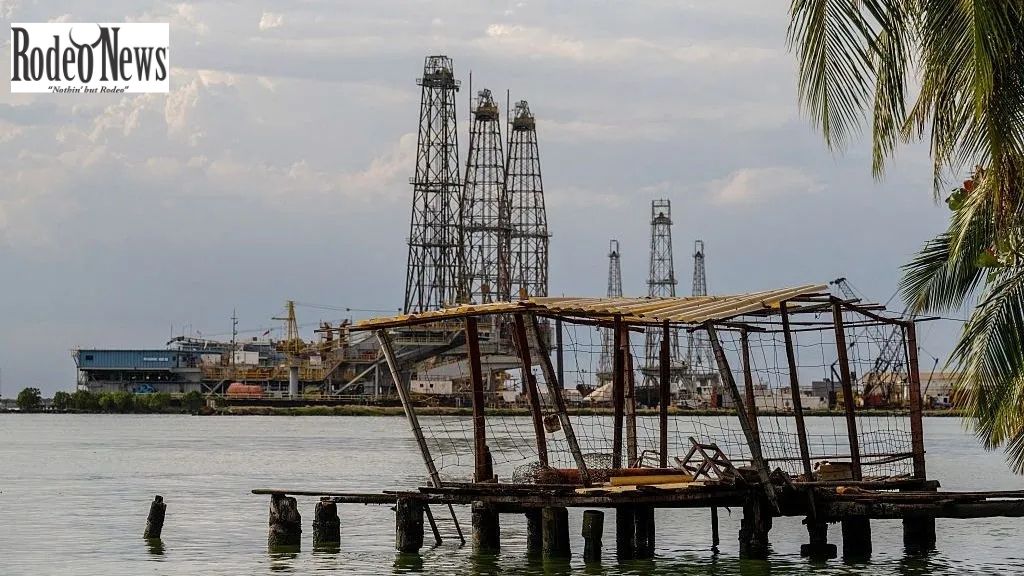
Oil reserves still have to be developed, extracted, processed and transported. Venezuela’s energy infrastructure has suffered years of underinvestment and deterioration, creating a significant obstacle to rapid production growth.
Why Is 65 Billion Barrels So Important?
The figure of 65 billion barrels is central to the Venezuela oil deal.
Venezuela has enormous oil resources, but its production capacity is far below what its reserves might suggest. Years of economic crisis, sanctions, political instability and deteriorating infrastructure have damaged the country’s petroleum industry.
The new agreement could therefore represent a major attempt to turn Venezuela’s underground reserves into commercially viable production.
For Washington, the strategic attraction is obvious.
Greater access to Venezuelan crude could diversify the sources of oil available to the United States and reduce some dependence on other major producing regions. For Caracas, foreign investment could provide the capital needed to rebuild facilities, increase production and generate government revenue.
That makes the deal potentially significant for both countries.
But the benefits will depend heavily on implementation.
Trump Says the Deal Could Lower Gas Prices
One of Trump’s most important claims is that the Venezuela oil deal will eventually help lower gasoline prices in the United States.
The argument is straightforward: more oil production can increase global supply, while greater access to Venezuelan crude could provide additional barrels for US-linked markets.
Trump has made lower energy prices a major political priority. US gasoline prices have been under pressure, while disruptions connected to the conflict involving Iran have complicated global energy markets. AP reported that the average US gasoline price was about $4.09 a gallon on Friday, compared with roughly $3.21 a year earlier.
Yet consumers should not expect an immediate drop simply because the agreement has been announced.
Developing oil fields takes time.
Venezuela needs investment, equipment, skilled workers, transportation infrastructure, pipelines and functioning production facilities. Analysts cited by AP have warned that a substantial increase in Venezuelan output could take years.
That means the immediate effect on gasoline prices may be limited.
The longer-term impact could be much larger if the agreement succeeds in bringing substantial additional Venezuelan crude to market.
What Happens to Venezuela’s Oil Industry?
For Venezuela, the agreement could become a turning point.
The country’s petroleum sector was once the foundation of its economy. However, production has declined dramatically over the years as infrastructure deteriorated and investment weakened.
The Rodríguez government has been opening the energy sector to greater private participation.
The new agreement could accelerate that shift by bringing large amounts of foreign capital into fields that require extensive development.
Venezuelan officials say the project could generate more than $100 billion in investment and more than $209 billion in taxes for the state. If those projections are achieved, the financial impact could extend well beyond the oil industry.
Additional oil revenue could help Venezuela rebuild infrastructure, support public finances and revive industries connected to energy production.
However, there are also significant risks.
Investors must be confident that contracts will be respected, political conditions will remain stable and infrastructure projects can be completed. American oil companies have previously been cautious about Venezuela because of political uncertainty and the condition of its energy infrastructure.
The 100-Year Question
One of the most striking details reported about the Venezuela oil deal concerns its potential duration.
An unnamed US official familiar with the agreement told AP that the new private company would receive rights to develop the oil fields for 100 years. The same official said the United States would have a 55% effective share of the new company’s output, including an ownership interest and rights to purchase oil at cost.
That would make the arrangement unusually long-term.
However, the complete legal structure has not been publicly released. AP reported that many important questions remain unanswered, including exactly how the investment would work and who would ultimately pay for the massive infrastructure requirements.
This is why the practical details may matter more than the headline figure.
The agreement could become one of the most consequential energy partnerships in the world if the promised investments materialize. But the outcome will depend on contracts, financing, production targets and political stability.
Why the Deal Matters to the Global Oil Market
The Venezuela oil deal is not only a US-Venezuela story.
It could have consequences for the global oil market.
Venezuela possesses some of the world’s largest proven reserves. If production increases substantially, additional crude could eventually enter international markets.
More supply can put downward pressure on prices, particularly if the new production arrives at a time when global demand is weak or other producers are maintaining high output.
However, the opposite is also possible in the short term.
Markets may treat the agreement cautiously because production increases are not immediate. Oil traders are likely to focus on actual investment commitments and evidence that Venezuela can increase output.
The deal therefore represents more of a long-term supply story than an overnight production shock.
The Iran Conflict Adds Another Dimension
The announcement comes at a particularly sensitive moment for global energy markets.
The United States and Israel have been involved in a prolonged conflict with Iran, while disruptions around the Strait of Hormuz have affected the movement of oil through one of the world’s most important energy routes.
AP reported that the conflict had significantly slowed Gulf oil shipments and that the United States had been drawing down its strategic petroleum reserves.
Against that background, Venezuelan oil becomes strategically more attractive.
Venezuela offers a large resource base in the Western Hemisphere, relatively close to the United States compared with major Middle Eastern suppliers.
If Venezuelan production can be restored on a large scale, Washington could gain an additional source of crude at a time when energy security has become increasingly important.
What Does the Deal Mean for Venezuela’s Acting President?
For Delcy Rodríguez, the agreement represents an opportunity to present Venezuela as open for major international investment.
Rodríguez described the agreement as historic and said it could contribute to the modernization and recovery of Venezuela’s oil industry.
Her government estimates that the project could generate more than $209 billion in taxes for the Venezuelan state.
That would provide Caracas with a powerful potential source of revenue.
The political implications, however, are more complicated.
The agreement gives US interests a significant role in a resource that has long been central to Venezuelan national identity and economic policy. Supporters can portray the arrangement as a practical route to economic recovery, while critics may question whether Venezuela is giving too much control over its natural resources to foreign interests.
The debate is therefore likely to continue long after the initial announcement.
Why Americans Should Not Expect Cheap Gas Immediately
The biggest consumer question is simple: will this deal make gasoline cheaper?
Probably not immediately.
The reason is the difference between oil reserves and oil production.
A reserve is oil that is believed to exist and be commercially recoverable. Production requires wells, pipelines, processing facilities, workers, electricity, transportation and billions of dollars in capital.
Venezuela needs to rebuild much of that system.
AP reported that experts do not expect a substantial increase in Venezuelan production to happen quickly. Infrastructure repairs and expansion could take years.
Therefore, the Venezuela oil deal should be viewed as a potential long-term supply strategy rather than an instant solution to high gasoline prices.
If production eventually rises sharply, the effect could be more meaningful.
What Remains Unknown?
Despite the dramatic announcement, several important details remain unclear.
The full text of the agreement has not been released publicly. That makes it difficult to independently assess the exact ownership structure, investment responsibilities and legal protections surrounding the project.
Other questions include:
- Which private company will participate?
- How much capital will be invested initially?
- Who will finance infrastructure repairs?
- How quickly can the 17 fields begin producing?
- How will existing oil-sector agreements be handled?
- What will Venezuela receive from each barrel produced?
- How will sanctions and regulatory restrictions affect operations?
- How much oil will ultimately be available to US buyers?
Those details will determine whether the announcement becomes a genuine transformation of Venezuela’s oil industry or remains primarily a political and strategic framework.
A Potential Turning Point for Global Energy
The Venezuela oil deal is undeniably significant.
Trump says the United States has secured majority control of more than 65 billion barrels of Venezuelan proven reserves. Venezuela says the project could attract more than $100 billion in investment and generate more than $209 billion in taxes.
The agreement also reportedly gives the new private venture long-term development rights and provides the United States with a 55% effective share of output.
Yet the biggest story may still be ahead.
The reserves already exist. The challenge is turning those reserves into reliable production.
If the investment arrives, infrastructure is rebuilt and production rises substantially, Venezuela could once again become a much more important force in global energy markets.
For the United States, that could mean greater access to Western Hemisphere crude and potentially more energy security.
For Venezuela, it could mean billions of dollars in investment and government revenue.
For consumers, however, the impact is likely to take longer to appear.
The headline is about 65 billion barrels. The real test will be how many barrels can actually be produced, how quickly they reach the market and who ultimately benefits from them.
The Venezuela oil deal has created a historic headline. Now the world will be watching to see whether it can deliver historic results.
Sources: BBC News, Associated Press, ABC News, Al Jazeera/Reuters and other reporting.