Iran War Economy Faces Mounting Pressure as Trade Slumps
Iran’s war economy is coming under increasing pressure as six months of conflict with the United States take a heavy toll on trade, prices and domestic economic activity. Iranian President Masoud Pezeshkian said foreign trade had fallen by nearly 35 percent, blaming US sanctions and a naval blockade for the sharp decline.
The admission highlights a growing challenge for Tehran. While Iranian leaders continue to emphasize military resistance and national sovereignty, they are also increasingly acknowledging the economic consequences of a prolonged conflict.
The situation places Iran in a difficult position. The government wants to demonstrate that it can withstand external pressure, yet it must also address inflation, unemployment, trade disruption and the rising cost of everyday goods.
Meanwhile, Tehran continues to signal that diplomacy remains possible. Iranian officials have presented negotiations and military defence as complementary parts of the country’s strategy rather than opposing choices.
Iran War Economy Hit by Sharp Trade Decline
The most striking warning came from President Pezeshkian, who said Iran’s imports and exports had declined by nearly 35 percent because of sanctions and the US naval blockade.
Trade is particularly important for an economy already operating under years of international restrictions. The latest disruption adds another layer of pressure by making it harder for Iranian businesses to obtain goods, move products and access foreign markets.
The decline also demonstrates how military conflict can affect an economy beyond direct physical destruction.
When shipping becomes more difficult, insurance costs rise, supply chains become less predictable and businesses face greater risks. Those pressures can eventually reach consumers through higher prices and shortages.
For Iran, the consequences are especially significant because the country depends on international trade for industrial inputs, consumer products and revenue from energy exports.
The latest figures therefore provide an important indication of how the conflict is reshaping economic conditions inside the country.
Inflation Adds to Iran’s Economic Pressure
Trade disruption is only one part of the problem facing Iran.
Inflation has become another major concern. Reuters reported that Iran’s annual inflation rate reached about 66 percent in the latest month, adding to the pressure on households and businesses.
Such a high inflation rate can rapidly reduce purchasing power.
For ordinary Iranians, the consequences can be seen in food prices, household expenses and the cost of essential goods. Businesses also face higher operating costs, making it harder to maintain production or retain employees.
Inflation can become particularly damaging during wartime because supply disruptions and currency pressure can reinforce each other.
If imported goods become more expensive or difficult to obtain, domestic prices can rise. At the same time, uncertainty can make companies and consumers more cautious about spending and investment.
Iranian authorities therefore face a difficult economic balancing act.
They need to maintain essential supplies, protect employment and stabilize prices while simultaneously dealing with the consequences of sanctions and military confrontation.
Tehran Signals That Diplomacy Remains Possible
Despite the worsening economic situation, Iran’s leadership has not presented the crisis as a reason to surrender.
Instead, officials have continued to emphasize diplomacy.
Iranian Foreign Minister Abbas Araghchi has indicated that diplomatic channels remain important, while Tehran has also maintained a strong military posture. Recent discussions with Qatar have been described by Iranian officials as potentially productive, suggesting that regional intermediaries may still have a role to play.
The message coming from Tehran is therefore two-sided.
On one hand, Iran wants to show that economic pressure will not force it into accepting terms it considers unacceptable. On the other, the government appears aware that diplomacy could provide a path toward reducing the economic burden.
That combination could become increasingly important if the conflict continues.
Strait of Hormuz Remains at the Center of the Crisis
The Strait of Hormuz remains one of the most important strategic issues in the confrontation.
Iran has claimed that it maintains control over the waterway, while the United States has said the strait remains open. Reuters reported that Iran’s Revolutionary Guards Navy declared “full control” over the strategic passage and said restrictions would continue until Washington ends military operations and meets related commitments.
The dispute matters far beyond Iran.
The Strait of Hormuz is a critical route for global energy shipments. Any prolonged disruption can affect oil markets, shipping companies and economies that depend on energy imports.
For Tehran, the waterway is also a source of strategic leverage.
Maintaining influence over the strait gives Iran an important bargaining position. However, restrictions on shipping can also worsen Iran’s own economic difficulties by limiting trade and reducing access to international markets.
This creates a complicated strategic calculation.
A measure that increases pressure on foreign governments can simultaneously deepen economic pressure inside Iran.
Iranian Leaders Face a Difficult Domestic Challenge
The economic consequences of the war could eventually become a more important political issue inside Iran.
The government must convince citizens that it can protect the country while also addressing deteriorating living conditions.
Iran’s Supreme Leader Mojtaba Khamenei has called for efforts to address inflation, unemployment and the country’s dependence on the dollar, according to Reuters. He has remained largely out of public view after reportedly being injured during an earlier attack.
The focus on economic problems is significant.
For a government operating during wartime, national security traditionally dominates the political agenda. However, economic hardship can create pressure that is much more difficult to contain if it continues for an extended period.
Higher prices, fewer jobs and shortages can affect people regardless of their political views.
That makes economic management a central part of Iran’s broader strategy for maintaining domestic stability.
Sanctions Are Increasing the Pressure
US sanctions remain one of the principal mechanisms being used to pressure Tehran.
Washington has intensified economic restrictions while attempting to limit Iran’s ability to generate revenue and conduct international business. Reuters reported that additional sanctions have targeted financial institutions and individuals connected to Iran.
The objective is to increase the cost of continuing the conflict and encourage Iran to return to negotiations.
However, sanctions do not automatically produce political concessions.
Iran has spent years developing ways to operate under restrictions. Its economy has adapted through alternative trade channels, regional partners and informal financial networks.
The latest conflict nevertheless creates a different level of pressure because sanctions are being combined with military disruption.
That combination could make the current economic challenge more severe than previous periods of sanctions alone.
Iran’s Military Strategy Remains Firm
Economic pressure has not ended Iran’s military resistance.
Iranian officials continue to insist that the country’s missile and drone capabilities remain operational. Tehran has also warned that it retains military options despite the damage inflicted during the conflict.
This indicates that Iranian leaders are trying to prevent the economic crisis from being interpreted as military weakness.
The government appears determined to maintain deterrence while exploring diplomatic opportunities.
That strategy could continue as long as Iranian officials believe they can withstand the economic costs of the conflict.
However, the longer the war lasts, the more difficult that calculation could become.
A prolonged conflict increases infrastructure costs, reduces trade opportunities and places additional pressure on government finances.
Qatar and Regional Diplomacy Could Become More Important
Regional countries are increasingly important to the diplomatic equation.
Qatar has maintained contacts with Tehran and has been involved in efforts connected to the wider conflict. Pakistan has also previously played a role in facilitating communication between the United States and Iran.
Such regional diplomacy could provide a channel for indirect negotiations at a time when direct talks remain difficult.
The broader Gulf region also has a major interest in preventing the conflict from expanding.
Any prolonged disruption around the Strait of Hormuz could affect energy markets, shipping and regional economies.
Consequently, countries that have relationships with both Washington and Tehran may attempt to encourage a negotiated solution.
What the Economic Crisis Means for the War
The worsening Iran war economy does not necessarily mean that Tehran is close to changing its strategic position.
Instead, it shows that the cost of the conflict is becoming increasingly visible.
Iranian leaders are now openly discussing trade, inflation, unemployment and domestic production while continuing to emphasize military defence.
That combination suggests the government recognizes that economic resilience is essential to its ability to continue resisting external pressure.
The central question is how long Iran can maintain that balance.
If inflation remains extremely high and trade stays depressed, pressure on households and businesses could increase. If diplomatic efforts produce progress, however, even limited easing of sanctions or shipping restrictions could provide significant economic relief.
A Critical Moment for Iran’s Economy and Diplomacy
Iran enters the next phase of the conflict facing a difficult combination of economic and strategic challenges.
Foreign trade has fallen sharply. Inflation has reached extremely high levels. Sanctions continue to restrict international transactions, while the dispute over the Strait of Hormuz threatens to keep shipping and energy markets under pressure.
Yet Tehran is not signaling that it intends to abandon its broader objectives.
Instead, Iranian leaders are presenting diplomacy and defence as parallel strategies.
That approach could give negotiators room to explore a political settlement without publicly portraying talks as a retreat.
For ordinary Iranians, however, the economic consequences are already becoming harder to ignore.
The future of the Iran war economy will depend heavily on whether diplomatic channels can produce meaningful reductions in military and economic pressure.
If negotiations remain stalled, Iran could face deeper inflation, weaker trade and growing economic uncertainty.
If diplomacy gains momentum, the country could potentially begin reversing some of the damage.
For now, Tehran appears determined to demonstrate that economic hardship will not force an immediate capitulation. But the latest admissions from Iranian leaders show that the financial cost of the war is becoming an increasingly important factor in the country’s strategic calculations.
Image Recommendation
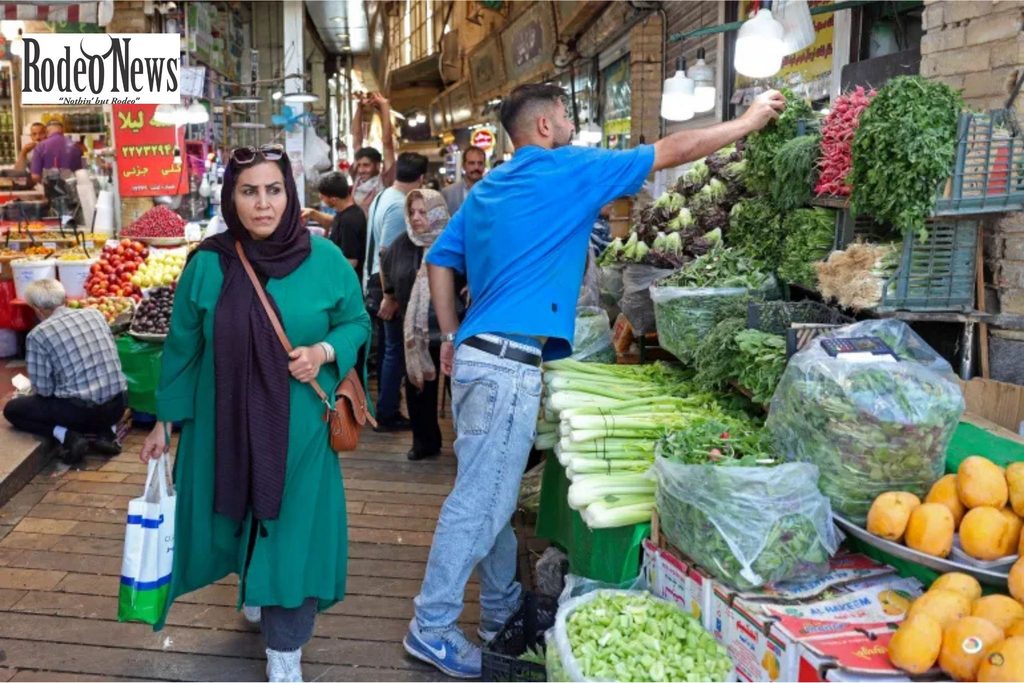
Suggested image: People shopping at Tehran’s Tajrish Bazaar, reflecting the impact of inflation and economic pressure on ordinary consumers.
Image ALT Text:
Iran war economy: shoppers face rising prices at Tehran market
Suggested image caption:
Iranian shoppers at a market in Tehran as the country’s economy faces mounting pressure from war and sanctions.
External Sources
- Al Jazeera — Iran’s leaders acknowledge economic toll of war
- Reuters — War weighs on Iran’s economy as US intensifies sanctions
Internal Link Suggestions
Add 2–3 links from your own website using relevant anchor text such as:
- Iran-US conflict latest developments
- Impact of the Iran war on global oil prices
- Strait of Hormuz crisis explained
- US sanctions against Iran explained