Nepal Floods: 579 Dead as New Threat Emerges
The Nepal floods have become one of the country’s deadliest recent disasters, with the confirmed death toll rising to 579 as rescue teams continue searching for people missing after catastrophic flash floods and landslides struck the Himalayan border region.
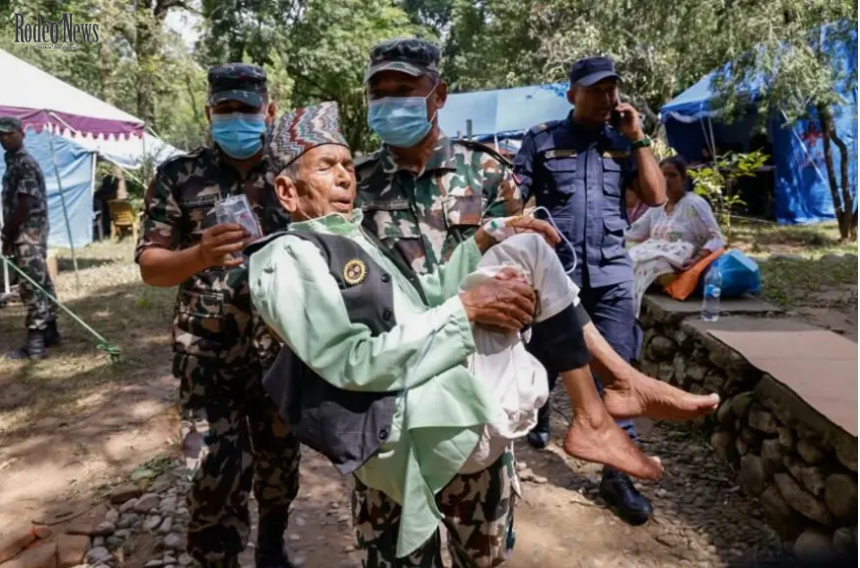
Nepal’s disaster authorities reported the latest toll on Friday, while nearly 2,000 people remained unaccounted for. Across the border in Tibet, Chinese authorities reported additional deaths and hundreds of missing people, including foreign nationals.
The scale of the destruction has made rescue operations extremely difficult. Roads have been washed away, bridges destroyed and entire sections of communities covered by mud and debris.
At the same time, authorities are warning that the disaster may not be over.
A newly formed lake created by debris from the flooding has raised fears of another major surge if the natural barrier holding back the water fails. That risk has forced rescuers to suspend or modify operations in some of the most dangerous areas.
Nepal floods leave hundreds dead and thousands missing
The latest figures show how rapidly the humanitarian crisis has expanded.
Nepal’s National Disaster Risk Reduction and Management Authority reported 579 deaths and 1,924 people missing in its latest update cited by international reporting. More than 3,700 people have been rescued, while thousands of security personnel have been deployed to affected areas.
Earlier reports from Nepal Police had put the death toll at 489, illustrating how quickly the number of confirmed victims has changed as rescue workers reach previously inaccessible areas.
The number of missing people is particularly concerning because many affected communities remain difficult to reach.
Some victims were swept downstream by the Bhote Koshi and Trishuli river systems. Others may still be trapped beneath mud and collapsed structures.
Search teams are using helicopters, drones, excavators and other equipment to locate survivors and recover bodies.
However, the mountainous terrain has severely slowed the response.
A disaster across the Nepal-Tibet border
The Nepal floods did not affect Nepal alone.
On the Chinese side of the border, authorities reported five deaths and 558 people missing in Tibet’s Gyirong County. Chinese state media said 260 of those missing were foreign nationals.
The floods struck the area around the Gyirong border crossing, an important route between China and Nepal.
The crossing and surrounding infrastructure suffered extensive destruction. Reuters reported that Chinese rescuers who reached the disaster zone found the border area reduced to ruins, with roads and other access routes severely damaged.
The disaster has therefore created both a humanitarian emergency and a major transportation crisis.
The affected region is strategically important for trade, tourism and pilgrimage. Its destruction could have consequences beyond the communities immediately hit by the floodwaters.
What caused the Nepal floods?
Early assessments indicate that the disaster was linked to a sudden glacial collapse or ice-and-rock avalanche in the Himalayan region.
The initial event sent huge quantities of water, ice, rock and debris into river channels.
That surge then moved rapidly downstream, overwhelming communities along the Bhote Koshi River and other waterways.
The precise sequence of events is still being examined, but reports have described a combination of glacial material, landslides and temporary natural dams that dramatically changed the flow of water.
Unlike conventional seasonal flooding, the event appears to have developed with little warning.
That made it especially dangerous for communities located along narrow Himalayan valleys.
Once the surge entered the river system, there was little time for residents to escape.
New lake creates a second major danger
One of the most worrying developments following the initial disaster has been the formation of a debris-dammed lake.
When landslides and enormous quantities of rock and mud block a river, water can accumulate behind the natural barrier. Such lakes can become extremely unstable.
If the barrier breaks, the stored water can suddenly move downstream in another powerful flood.
Authorities on both sides of the border have been monitoring such risks closely.
Al Jazeera reported that a newly formed barrier lake contained around two million cubic metres of water and could receive several million cubic metres more.
That possibility has complicated rescue operations.
Teams cannot simply move into the worst-hit areas without considering whether another flood could arrive.
For people waiting for relatives to be found, the situation has created a painful dilemma: rescuers must search quickly, but they also have to protect themselves from another potentially deadly surge.
Rescue operations face extreme conditions
The physical damage caused by the Nepal floods is one of the biggest obstacles facing rescue workers.
Mountain roads have disappeared under landslides. Bridges have been destroyed or swept downstream. Communication systems have also been disrupted in some areas.
Reuters reported that rescue workers faced an almost unrecognizable landscape around the devastated border crossing.
Helicopters have therefore become crucial for reaching isolated communities and evacuating survivors.
Ground teams are also working through thick mud and piles of debris.
The search is particularly difficult because floodwaters carried material far from the original disaster zone.
Bodies have been recovered downstream, including from the Narayani River. Nepalese security forces have continued searching waterways and riverbanks for people swept away by the flood.
Foreign nationals among the missing
The disaster has also triggered an international search for tourists, pilgrims and workers who were in the region when the floods struck.
Hundreds of foreign nationals have been reported missing across Nepal and Tibet.
On the Tibetan side alone, Chinese authorities said 260 foreign nationals were among the 558 missing people reported in Gyirong County.
The situation has created anxiety for families around the world.
Several countries have been working to determine whether their citizens were in the affected areas.
The region attracts visitors for trekking, religious pilgrimages and cross-border travel. The sudden nature of the flooding meant that many people had little opportunity to leave before the rivers became dangerous.
Thousands need urgent humanitarian assistance
The immediate rescue effort is only the first stage of the crisis.
Once the search operation slows, authorities will face the enormous task of providing shelter, food, clean water and medical assistance to survivors.
The International Red Cross estimates that at least 93,000 people are in need of assistance following the disaster.
Healthcare facilities and schools have also been damaged.
That means communities could face serious problems even after floodwaters recede.
Clean water is particularly important after major floods because damaged sanitation systems can increase the risk of disease.
Displaced families may also be forced to remain in temporary shelters while authorities assess whether their homes and villages are safe.
Nepal receives international support
The scale of the disaster has prompted offers of assistance from several countries.
India, Japan and Pakistan have been among the countries offering support, while China has deployed professional rescue teams on its side of the border.
The United States has also sent emergency supplies to Nepal, including blankets, mosquito nets and insulating foam sheets, according to reporting cited in live coverage.
Nepal has previously indicated that it did not immediately require foreign rescue teams, although international technical assistance has been discussed.
As the situation develops, the priority remains locating missing people and delivering emergency supplies to isolated communities.
Why Himalayan flooding is becoming a growing concern
The disaster has also renewed attention on the growing risks faced by Himalayan communities.
The region contains thousands of glaciers and glacial lakes. As temperatures rise, glaciers can lose mass and previously stable landscapes can become more vulnerable to sudden changes.
That does not mean every Himalayan flood is directly caused by climate change. Scientists need to examine each event individually.
However, the growing number and size of some glacial lakes have increased concern about future glacial lake outburst floods.
A sudden collapse can release enormous quantities of water and debris into valleys below.
For communities living along rivers, the consequences can be catastrophic.
The latest Nepal floods demonstrate why early-warning systems, hazard mapping and emergency evacuation plans are becoming increasingly important in mountain regions.
A long recovery ahead
Even as rescue teams continue their search, the scale of reconstruction is becoming clearer.
Roads and bridges will need to be rebuilt. Homes and businesses have been destroyed. Border infrastructure has suffered major damage.
The economic impact could extend well beyond the immediate disaster zone.
Communities that depend on tourism, trade, transportation and agriculture may lose income for months.
Families who have lost relatives will also face a much longer emotional recovery.
For those still waiting for news about missing loved ones, the uncertainty is particularly painful.
The coming days will be critical.
Authorities must continue searching for survivors while monitoring the unstable lakes and damaged river systems.
At the same time, emergency planners will need to determine which communities can safely return home and which areas remain at risk.
Nepal floods remain an unfolding emergency
The latest death toll provides only part of the picture.
The number of missing people remains exceptionally high, while the threat of additional flooding continues to complicate rescue operations.
Across Nepal and Tibet, communities are dealing with destroyed infrastructure, lost livelihoods and families waiting for information about loved ones.
The Nepal floods have demonstrated how quickly a disaster in the Himalayas can cross borders and overwhelm communities separated by difficult terrain.
For now, rescue teams remain focused on the immediate task: finding survivors, recovering victims and preventing another tragedy.
But the recovery will take far longer.
As floodwaters recede, Nepal and its neighbors will face the difficult work of rebuilding communities while confronting a larger question about how to protect people living in increasingly fragile Himalayan environments.
Sources and further reading
This article is based on the BBC live coverage supplied by the user and cross-checked against current reporting from Reuters, Associated Press, Al Jazeera and Nepalese authorities.