Ratko Mladic Dies at 84: Final Chapter of Bosnia War
Ratko Mladic dies at the age of 84, bringing to an end the life of one of the most notorious military commanders of the Bosnian War. Mladić, the former commander of the Bosnian Serb Army, died on August 27, 2026, while hospitalized in The Hague, where he was serving a life sentence for genocide, crimes against humanity and war crimes.
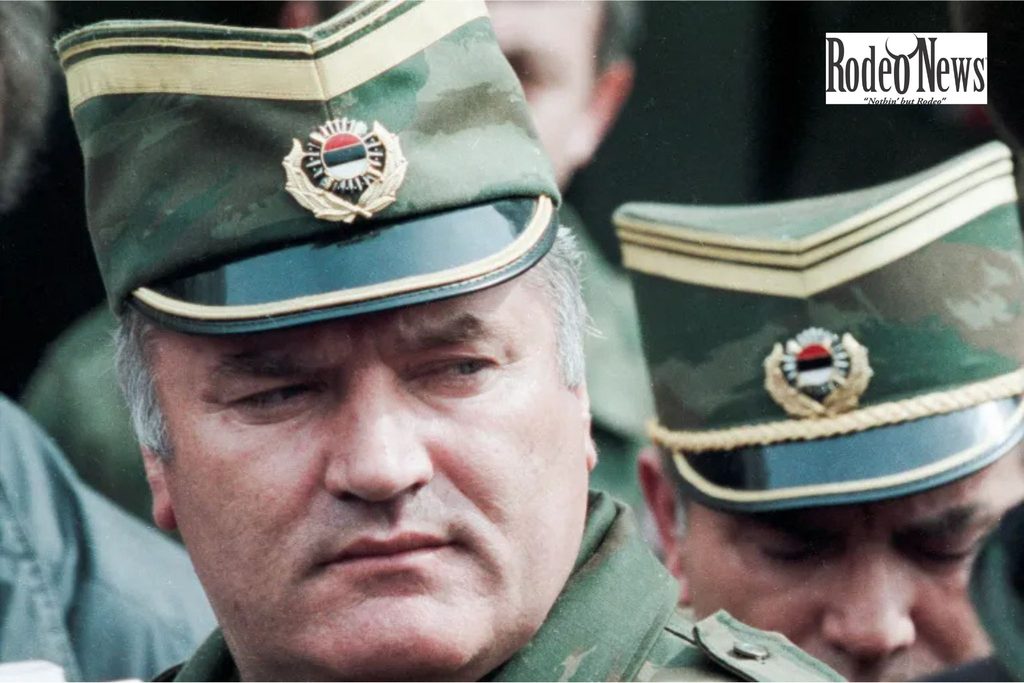
The death was confirmed by the International Residual Mechanism for Criminal Tribunals, the United Nations body responsible for continuing important functions of the tribunals that prosecuted crimes committed during the conflicts in the former Yugoslavia and Rwanda. The Mechanism said Dutch authorities had begun standard procedures and investigations following his death.
Mladić became internationally known for his role in some of the worst atrocities of the 1992–1995 Bosnian War. His forces were responsible for campaigns that included the prolonged siege of Sarajevo and the 1995 Srebrenica genocide, where more than 8,000 Bosniak Muslim men and boys were killed.
His death therefore closes a major chapter in the international prosecution of crimes committed during the breakup of Yugoslavia. However, it does not end the debate over the war, the suffering of survivors or continuing disputes over historical memory in Bosnia and Herzegovina and Serbia.
Ratko Mladic Dies in UN Custody
When Ratko Mladic dies, he does so after more than 15 years in international custody.
The UN tribunal said Mladić died while hospitalized in The Hague. At the time, he remained under a life sentence imposed after his conviction by the International Criminal Tribunal for the former Yugoslavia, or ICTY.
The Mechanism said its president had ordered a full inquiry into the circumstances surrounding his death. Judge Iain Bonomy was assigned to conduct that inquiry, while Dutch authorities began procedures required under national law.
The circumstances are particularly notable because Mladić had suffered serious health problems during his years in detention. His lawyers had repeatedly sought his early or compassionate release, but those requests were rejected.
The UN Mechanism’s case records show that an application for early release was considered in August 2026, shortly before his death.
Reuters reported that Mladić had spent his final months in the hospital ward of the UN detention facility and that his lawyer confirmed his death. The exact cause of death was not immediately disclosed.
Who Was Ratko Mladic?
Ratko Mladić rose through the ranks of the Yugoslav military before becoming the commander of the Bosnian Serb Army during the Bosnian War.
According to the UN tribunal’s case record, he was appointed commander of the Main Staff of the Army of the Serbian Republic of Bosnia and Herzegovina on May 12, 1992. He remained in command until at least November 1996.
The Bosnian War began after Bosnia and Herzegovina declared independence from Yugoslavia. The conflict quickly became a brutal struggle involving Bosniaks, Bosnian Serbs and Bosnian Croats.
Mladić emerged as one of the most powerful military figures on the Bosnian Serb side. His forces controlled large areas of territory and fought to establish and maintain a Bosnian Serb state.
The conflict produced widespread killings, forced displacement, detention camps, sexual violence and the destruction of communities.
For survivors, Mladić became a symbol of the military campaign that caused enormous civilian suffering.
Srebrenica Became the Defining Crime
The most infamous episode associated with Mladić was the Srebrenica genocide in July 1995.
Srebrenica had been designated a UN “safe area” during the war. Yet Bosnian Serb forces captured the enclave in July 1995.
Thousands of Bosniak men and boys were subsequently separated from women and children. More than 8,000 men and boys were ultimately killed.
The killings were followed by efforts to conceal the evidence, including the removal and reburial of bodies from mass graves.
The UN tribunal later established Mladić’s responsibility for genocide at Srebrenica. Its case records describe a joint criminal enterprise aimed at eliminating the Bosnian Muslim population of Srebrenica.
The Mechanism’s historical materials also document the sequence of events surrounding the attack on Srebrenica and the Bosnian Serb leadership’s preparations for the operation.
The massacre is widely regarded as the worst atrocity in Europe since the Second World War.
For families who lost relatives, the legal recognition of the genocide was an important part of the search for justice.
The Siege of Sarajevo
Mladić’s legacy is also closely tied to Sarajevo.
The Bosnian capital endured a siege lasting almost four years during the war. Civilians faced artillery fire, mortar attacks and sniper attacks while much of the city was surrounded by Bosnian Serb forces.
The UN tribunal convicted Mladić of crimes connected to the campaign against Sarajevo. Those convictions included terror, unlawful attacks against civilians and murder.
The siege became one of the most visible symbols of the Bosnian War.
Residents struggled with shortages of food, water and electricity while attempting to move through a city exposed to constant danger. The conflict transformed Sarajevo, once known for its multicultural character, into a symbol of the destructive consequences of ethnic nationalism and war.
Mladić’s role in the siege was central to the prosecution’s case against him.
Arrest After Years as a Fugitive
Despite being indicted by the ICTY during the war, Mladić avoided arrest for years.
He remained a fugitive for almost 16 years after the tribunal issued its indictment. His ability to remain at large became an important issue in international relations, particularly as Serbia sought closer ties with the European Union.
Mladić was finally arrested in Serbia on May 26, 2011.
He was transferred to the Hague detention facility several days later.
His arrest was considered a major development in efforts to prosecute senior figures accused of atrocities during the Yugoslav wars.
At that point, many of the most important suspects had already been arrested or tried. Mladić, however, remained one of the tribunal’s most prominent fugitives.
His eventual capture allowed prosecutors to bring one of the most consequential cases arising from the Bosnian War to trial.
The 2017 Genocide Conviction
Mladić’s trial began in 2012 and lasted several years.
On November 22, 2017, the ICTY found him guilty of genocide, crimes against humanity and violations of the laws and customs of war. He was sentenced to life imprisonment.
The conviction covered multiple categories of crimes.
They included genocide at Srebrenica, persecution, extermination, murder, deportation and forcible transfer. The tribunal also convicted him over crimes committed during the campaign against Sarajevo and the taking of UN personnel hostage.
However, the court did not find him guilty of genocide in several municipalities in Bosnia in 1992. That distinction is important because the judgment was based on specific legal findings rather than a blanket determination covering every alleged crime attributed to Bosnian Serb forces.
The trial itself was one of the most extensive proceedings conducted by the ICTY.
The tribunal heard evidence from hundreds of witnesses and examined thousands of exhibits before reaching its verdict.
Life Sentence Upheld in 2021
Mladić appealed his conviction.
On June 8, 2021, the Appeals Chamber of the UN Mechanism rejected his appeal and affirmed both his convictions and his life sentence.
The ruling meant there was no realistic prospect of Mladić returning to freedom.
His lawyers continued to argue that his declining health justified humanitarian release. But the international tribunal maintained that his sentence should continue.
By 2026, Mladić was an elderly and seriously ill prisoner rather than the powerful wartime commander seen in footage from the 1990s.
His final years were spent under international detention and medical care in The Hague.
What Ratko Mladic’s Death Means
The death of Ratko Mladic does not erase the legal findings against him.
His convictions remain part of the historical and judicial record of the Bosnian War. The UN Mechanism has also emphasized that his case was completed following the 2021 appeal judgment.
His death may nevertheless reopen difficult debates across the Balkans.
In Bosnia and Herzegovina, especially among survivors and families of Srebrenica victims, Mladić is remembered primarily as a commander responsible for devastating crimes.
In parts of Serbia and Bosnia’s Republika Srpska entity, however, Mladić continued to have supporters who viewed him through a very different political and nationalist lens.
That divide illustrates why the legacy of the Bosnian War remains unresolved decades after the conflict ended.
Justice and Memory After Mladic
The international prosecution of Mladić was never simply about one individual.
The trials arising from the Yugoslav wars were designed to establish individual criminal responsibility and create a permanent judicial record of atrocities.
The ICTY indicted 161 people for serious violations of international humanitarian law committed during the conflicts in the former Yugoslavia. Its work was later continued by the International Residual Mechanism for Criminal Tribunals.
The Mladić case became one of the most important of those proceedings.
His death means survivors will no longer see him appear in court or pursue further legal motions. Yet the questions raised by his case remain.
How should societies remember genocide? How should schools teach the war? How should governments respond to denial? And how can victims’ families preserve evidence and memory for future generations?
Those questions will remain long after the last major defendants have died.
The End of a Dark Chapter
Ratko Mladic dies after spending the final years of his life in prison for crimes committed during one of Europe’s most devastating conflicts since the Second World War.
His military career became inseparable from the siege of Sarajevo, the Srebrenica genocide and the wider campaign of persecution and forced displacement carried out during the Bosnian War.
The UN tribunal convicted him in 2017, and the Appeals Chamber upheld his life sentence in 2021.
Now, his death closes the personal story of one of the conflict’s most prominent perpetrators.
But for survivors and families of those killed, the end of Mladić’s life is not the end of their search for truth.
The names of the victims, the locations of mass graves, the testimony of survivors and the judgments of international courts remain part of the historical record.
The final chapter of Ratko Mladić’s life has ended in a prison hospital in The Hague. The broader story of Bosnia’s war, however, continues to shape the region’s politics, identity and collective memory.
Credible External Sources
- International Residual Mechanism for Criminal Tribunals — statement on Ratko Mladić’s death
- UN case file — Ratko Mladić (MICT-13-56)
- ICTY — 2017 conviction of Ratko Mladić
- Reuters — Ratko Mladić dies in UN custody
- Al Jazeera — Ratko Mladić dies at 84
Internal Link Recommendation: Because no target website/domain was supplied, an internal URL cannot be created safely without inventing a destination. Add 2–3 relevant existing articles from your own site, ideally covering Srebrenica, the Bosnian War, or Sarajevo, using descriptive anchor text.
Image Credit Recommendation: The courtroom image should be used only with the appropriate editorial/license permissions. The available image result identifies the photograph as a Reuters/AFP-distributed courtroom image from the 2021 appeal proceedings.