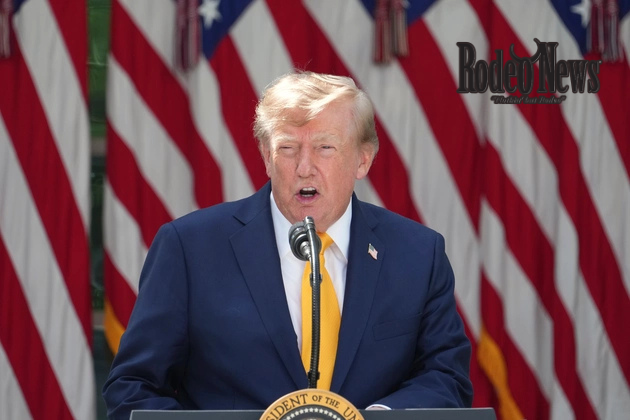
President Donald Trump has signed the Trump beef import plan, temporarily expanding the amount of lean beef trimmings that can enter the United States under lower in-quota tariff rates. The move is designed to address sharply elevated beef prices, but it has triggered a fierce response from American ranchers, agricultural groups and some Republicans.
The White House said Wednesday that Trump signed a proclamation increasing the in-quota quantity for certain lean beef trimmings by 300,000 metric tons for 2026. The additional volume will be administered in three 100,000-metric-ton tranches beginning September 1.
The decision comes as the U.S. cattle industry faces a difficult supply environment. The Department of Agriculture reported that the nation had 94.2 million cattle and calves on farms as of July 1, 2026, while the number of beef cows fell 1% from a year earlier to 28.5 million.
For consumers, the central question is straightforward: Will the Trump beef import plan actually make ground beef cheaper?
For ranchers, however, the concern is different. They fear that cheaper imported beef could weaken cattle prices at precisely the moment producers are trying to rebuild the domestic herd.
Trump beef import plan officially takes effect
The Trump beef import plan follows an announcement earlier in August that the administration wanted to bring more foreign beef into the U.S. market.
The formal proclamation signed August 26 increases the aggregate in-quota quantity for specified lean beef trimmings by 300,000 metric tons. The White House says the action is temporary and is intended to provide additional supply while the American cattle herd recovers.
The additional quota will be divided into three stages:
- 100,000 metric tons from September 1 through September 30.
- 100,000 metric tons from October 1 through October 30.
- 100,000 metric tons beginning October 31 and continuing until the quantity is filled or November 30, whichever comes first.
The government will administer the additional quota on a first-come, first-served basis.
The measure applies specifically to lean beef trimmings used in products such as ground beef. It does not represent a blanket removal of tariffs on every type of imported beef.
That distinction matters because lean trimmings serve a different role in the U.S. beef market than premium steaks or other higher-value cuts.
Why Trump wants more imported beef
The administration’s argument centers on supply.
Beef prices have climbed as the U.S. cattle inventory remains historically tight. The White House says drought and wildfires have increased pressure on cattle producers, while restrictions affecting livestock imports from Mexico have also limited supplies available to U.S. processors.
The USDA’s July cattle inventory report provides evidence of the industry’s difficult position. Although total cattle and calves increased slightly to 94.2 million head, the beef-cow herd remained smaller than a year earlier. The calf crop was also estimated at 32.5 million head, down 2% from 2025.
The result is a complicated market.
Consumers want more affordable beef. Ranchers want stronger prices that make it worthwhile to retain breeding cattle and expand herds. Meat processors need enough lean beef to maintain production of ground beef and other products.
Those interests do not always point in the same direction.
Internal link suggestion: Add a link here to your site’s related article about U.S. food prices, inflation or grocery costs.
Trump beef import plan comes as cattle supplies remain tight
The domestic cattle shortage is one of the most important pieces of the story.
According to USDA data, the number of U.S. beef cows stood at 28.5 million on July 1, down 1% from the previous year. The smaller breeding herd limits how quickly the industry can increase beef production.
Rebuilding a cattle herd is also a slow process.
A rancher cannot immediately respond to higher beef prices by producing thousands of additional cattle. Breeding decisions made today can take years to translate into a substantially larger supply of market-ready animals.
That creates a difficult policy choice.
The administration wants to provide consumers with additional beef now. Ranchers, meanwhile, are focused on the long-term economics of rebuilding domestic production.
The White House argues that temporary imports can help bridge the gap while producers rebuild their herds. Critics argue that the policy could reduce the price signals that encourage ranchers to expand.
Ranchers push back against the Trump beef import plan
The strongest opposition has come from the cattle industry itself.
The National Cattlemen’s Beef Association has criticized the policy, arguing that increasing imports of cheaper beef could undermine American producers rather than strengthen the domestic cattle industry. Other farm groups have raised similar concerns.
The American Farm Bureau Federation has also warned that reducing tariff barriers could hurt U.S. ranchers. Reuters reported that the organization wrote to Trump arguing that the move would undermine American ranchers.
The conflict is particularly striking because cattle producers have traditionally been an important constituency for Republicans.
The issue therefore goes beyond grocery prices.
It has become a debate about whether Washington should prioritize immediate consumer relief or protect the market conditions that producers say are necessary for long-term domestic production.
Republicans also turn against the beef plan
The backlash is not limited to agriculture groups.
Several Republican lawmakers have criticized the policy, creating an unusual political problem for the White House.
Republicans representing cattle-producing states have argued that imported beef could hurt American ranchers. Senators and other lawmakers have raised concerns about the impact on domestic producers and the broader cattle market.
That criticism reflects a broader political challenge facing the administration in 2026.
Food prices remain a highly visible issue for American households. At the same time, rural voters and agricultural producers expect policies that support domestic farming and ranching.
The beef dispute puts those two priorities directly against each other.
Trump is presenting the policy as a consumer-focused response to high prices. His critics see it as a short-term intervention that could create longer-term problems for the American cattle industry.
Will the Trump beef import plan lower grocery prices?
This may be the biggest unanswered question.
Trump has argued that imported beef will be sold below prevailing market prices and will help substantially reduce the cost of ground beef.
However, the final retail price consumers pay depends on more than the wholesale cost of beef.
Transportation, processing, labor, packaging, distribution and retailer margins all contribute to the price of a pound of ground beef.
Economists and industry experts have therefore questioned whether the full benefit of cheaper imported beef will reach consumers. Food & Wine, citing agricultural economists, reported skepticism that the tariff change alone would produce the dramatic price reduction suggested by the administration.
The size of the import increase also matters.
Three hundred thousand metric tons sounds enormous. Yet the additional volume represents only a fraction of total U.S. beef consumption. The practical impact will depend on how quickly importers can source the beef and how processors and retailers respond.
The policy could still put downward pressure on prices.
But that does not automatically mean consumers will see a 25% reduction at the supermarket.
What are lean beef trimmings?
Understanding the product covered by the Trump beef import plan helps explain the controversy.
Lean beef trimmings are pieces of beef used extensively in ground-beef production. Imported lean beef can be blended with domestic beef to achieve a desired lean-to-fat ratio.
The U.S. International Trade Commission has previously described imported lean beef as an important component of products such as ground beef and other processed foods.
That means the policy is not primarily about importing more expensive steaks.
Instead, it targets a part of the supply chain that directly affects ground beef production.
This distinction could make the measure more targeted than a general opening of the U.S. beef market.
Still, ranchers argue that additional imports can affect the broader cattle market by giving processors another source of lean beef.
Tariffs are at the center of the dispute
The Trump beef import plan also highlights the complicated structure of U.S. beef tariffs.
The United States uses a tariff-rate quota system for many beef imports. Under this system, specified quantities can enter under lower tariff rates, while imports above the applicable quota can face significantly higher duties.
The USITC has documented the use of tariff-rate quotas for beef and the distinction between in-quota and over-quota treatment.
Trump’s new proclamation does not simply eliminate all beef tariffs.
Instead, it temporarily expands the amount of qualifying lean beef trimmings eligible for the lower in-quota treatment.
The administration says this approach provides additional supply without permanently changing the structure of the U.S. beef market.
Internal link suggestion: Add a link here to your site’s article covering Trump tariffs, U.S. trade policy or agricultural tariffs.
Mexico adds another layer to the beef shortage
The beef debate is also connected to animal-health concerns.
The White House cited restrictions on live cattle imports from Mexico as one factor affecting U.S. cattle supplies. The restrictions were imposed in response to concerns about New World screwworm, a livestock pest that can cause serious damage.
The administration has begun a phased reopening of southern livestock ports, according to the White House and Reuters.
That could eventually improve cattle supplies.
But reopening trade channels does not instantly solve the production problem. The cattle industry still has to rebuild inventories, and that process takes time.
This helps explain why the administration is looking at imported beef as a temporary supply measure.
Ranchers fear the policy could send the wrong signal
For cattle producers, prices are more than a grocery-store statistic.
They influence whether ranchers retain heifers, expand herds, invest in feed and equipment, and remain in the cattle business.
If additional imported beef pushes wholesale prices lower, producers could receive weaker financial incentives to rebuild the herd.
That is the central argument behind much of the industry’s opposition.
The administration, however, sees the situation differently.
The White House says domestic beef production is already constrained and that consumers should not have to absorb extremely high prices while the cattle herd recovers. The proclamation specifically describes the additional import quota as temporary.
The disagreement is therefore less about whether beef prices are high and more about how the government should respond.
Food prices versus farm protection
The Trump beef import plan captures a much broader economic debate.
American consumers want relief from high grocery bills. Ranchers want protection from policies that could weaken the value of their cattle.
Neither objective is inherently contradictory. But achieving both at the same time is difficult when domestic supply is constrained.
More imports can increase available supply and potentially reduce prices.
At the same time, lower prices can reduce the revenue available to domestic producers.
The administration is betting that a temporary increase in imports can solve the immediate supply problem without preventing the long-term recovery of the U.S. cattle herd.
Whether that calculation is correct will become clearer over the next several months.
What happens next?
The first 100,000-metric-ton tranche of the Trump beef import plan opens September 1.
That makes the coming weeks important for importers, meat processors, ranchers and consumers.
Officials will have to monitor how quickly the quota is filled, where the beef comes from, how processors use it and whether wholesale prices actually decline.
Retailers will also play an important role.
Even if imported beef enters the country at a lower cost, the savings do not necessarily have to appear immediately or proportionally on supermarket shelves.
Meanwhile, ranchers will be watching cattle prices closely.
If domestic cattle prices weaken significantly, pressure on the administration to modify the policy could increase.
If grocery prices fall without a major disruption to cattle markets, Trump will have a stronger argument that the temporary imports are accomplishing their intended purpose.
The results will ultimately matter more than the political rhetoric.
The bigger question for American beef
The Trump beef import plan is ultimately an attempt to manage a supply problem with trade policy.
That can provide short-term relief, but it cannot by itself rebuild the U.S. cattle herd.
The USDA’s latest figures show that the industry remains in a tight supply environment, even though total cattle inventories have shown modest improvement. The beef-cow herd is still smaller than it was a year earlier, and the calf crop has declined.
That means the long-term solution will depend on production.
Ranchers need favorable economic conditions to rebuild herds. Consumers need affordable food. Processors need reliable supplies. Policymakers need to balance all three interests.
The new import quota may help bridge part of the gap.
But it is unlikely to settle the larger argument over America’s cattle industry.
For now, the Trump beef import plan represents a high-stakes experiment: bring more lean beef into the country, ease pressure on consumers and give domestic ranchers time to rebuild.
Whether that strategy produces cheaper burgers without damaging American cattle producers will be one of the most closely watched food-policy questions of the fall.
Credible External Sources
- White House — Beef Proclamation
- White House — Beef Fact Sheet
- USDA — 2026 Cattle Inventory Report
- U.S. International Trade Commission — Tariff Information
Internal Link Placements
- U.S. food prices and inflation →
[INSERT YOUR INTERNAL URL] - Trump tariff policy →
[INSERT YOUR INTERNAL URL] - U.S. agriculture and ranching →
[INSERT YOUR INTERNAL URL]