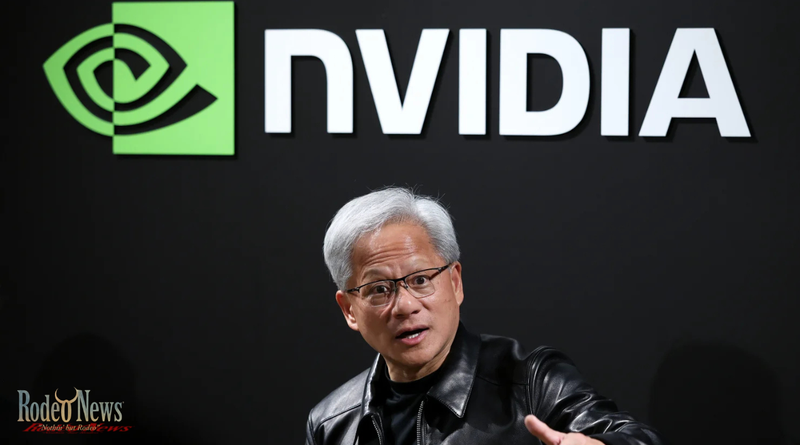
Nvidia AI Chips Demand Remains a Major Market Force
Nvidia AI chips demand is once again at the center of Wall Street’s attention as the artificial intelligence infrastructure boom shows few signs of slowing. Nvidia is preparing to report its latest quarterly results, with investors looking beyond the headline numbers to determine whether demand for AI computing can continue supporting the company’s extraordinary growth.
Analysts expect Nvidia to report quarterly revenue of roughly $92 billion, almost twice the level from the same period a year earlier. Expectations for the following quarter are even higher, with revenue forecasts around $104 billion.
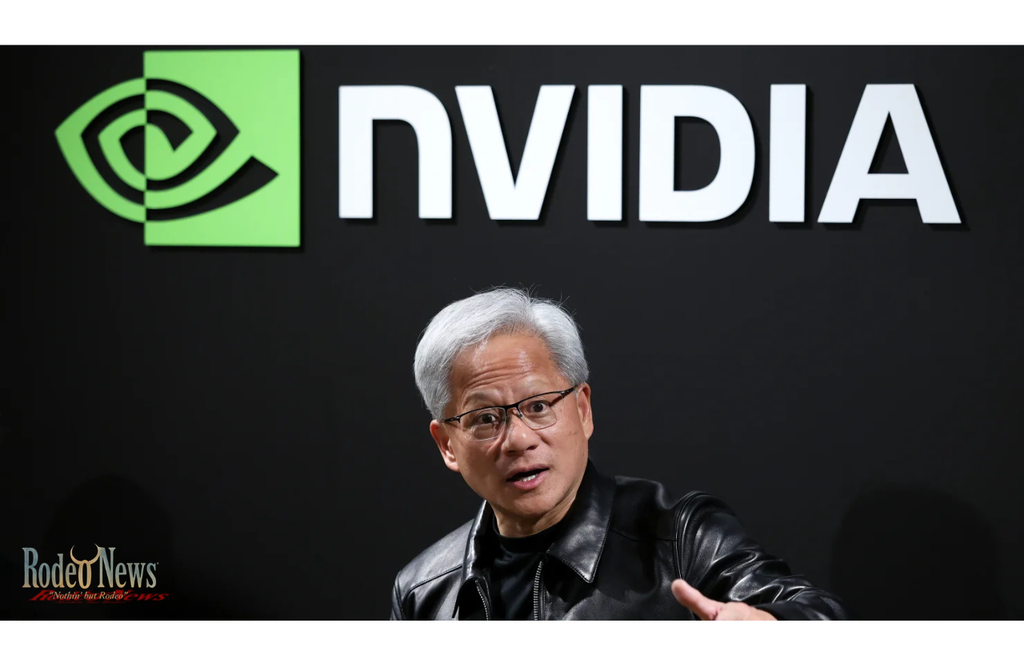
That puts enormous pressure on the world’s leading AI-chip company.
The issue is no longer simply whether Nvidia can beat expectations. Investors increasingly want evidence that customers will continue spending aggressively on AI infrastructure, including GPUs, networking equipment, memory and data-center systems.
At the same time, Nvidia faces a changing competitive landscape. AMD, Intel, cloud providers and major technology companies are investing heavily in alternative AI accelerators and custom silicon.
The result is a critical moment for Nvidia and the broader AI industry.
Nvidia AI Chips Demand Is Being Driven by Massive Data-Center Spending
The biggest force behind Nvidia’s growth remains the global construction of AI data centers.
Technology companies are spending enormous amounts of money on computing infrastructure because generative AI models require far more processing power than traditional software workloads. Training large models is only one part of the equation. Once AI systems are deployed, inference—the process of generating responses and completing tasks—also requires substantial computing capacity.
That creates a potentially durable source of demand for Nvidia’s processors.
Nvidia’s advantage is that it does not sell only individual chips. Its platforms combine GPUs, CPUs, networking, software and complete computing systems designed for large-scale AI workloads.
This ecosystem has helped Nvidia become one of the most important suppliers to the AI infrastructure buildout.
Recent industry forecasts suggest that demand remains exceptionally strong. BMO Capital Markets, for example, described Nvidia’s AI systems as effectively booked for the coming year because demand continues to exceed supply.
That type of visibility is unusual in the semiconductor industry.
However, strong demand does not automatically eliminate risk. The next stage of the AI boom will depend on whether customers can generate enough economic value from their investments to justify continued capital spending.
Blackwell and Rubin Could Define Nvidia’s Next Growth Phase
Another major factor behind Nvidia AI chips demand is the company’s transition between chip generations.
Nvidia’s Blackwell platform has become a central component of the current AI infrastructure cycle. Investors are now increasingly focused on Rubin, Nvidia’s next-generation architecture, and whether it can extend the company’s growth trajectory.
Reuters reported that investors are watching closely to determine whether Rubin can support another period of rapid expansion.
The transition matters because Nvidia cannot depend indefinitely on a single generation of hardware.
AI models are becoming larger and more sophisticated. Customers also want better performance per watt because electricity and cooling have become major costs for data centers.
A successful new architecture therefore needs to deliver more than raw computing power. It must provide better performance, efficiency and scalability.
If Rubin meets those expectations, Nvidia could have another powerful product cycle ahead.
The AI Chip Market Is Becoming More Competitive
Nvidia’s position remains extremely strong, but competition is intensifying.
AMD has been investing aggressively in its Instinct AI accelerators. Meanwhile, Google, Amazon and Microsoft are developing custom chips designed to reduce their dependence on third-party hardware.
OpenAI and other major AI companies are also exploring specialized silicon.
This does not necessarily mean Nvidia’s market leadership is about to disappear.
Nvidia’s biggest advantage is its broader ecosystem. Its CUDA software platform, developer tools and extensive library of optimized applications have created significant switching costs for customers.
Companies choosing AI hardware are therefore not simply comparing chip specifications.
They are evaluating software compatibility, developer productivity, networking, system design, availability and total cost of ownership.
That makes Nvidia’s competitive position more difficult to challenge than a conventional semiconductor market share comparison might suggest.
Still, competition could gradually put pressure on Nvidia’s pricing power.
For investors, this makes management commentary about future market share particularly important.
Nvidia AI Chips Demand Faces a New Memory Constraint
One of the more immediate challenges for the AI industry is the rising cost and limited availability of memory.
Advanced AI systems require enormous amounts of high-bandwidth memory. As demand for AI accelerators has increased, memory suppliers have faced growing pressure to expand production.
Recent reports indicate that customers have been warned about price increases for AI servers containing Nvidia chips, with some systems expected to become more than 15% more expensive as memory costs rise.
That creates a complicated situation.
On one hand, higher prices could increase revenue per system. On the other hand, rising infrastructure costs could eventually make customers more cautious about expanding their AI budgets.
The impact could extend well beyond Nvidia.
Memory manufacturers, server companies, networking suppliers, cooling providers and data-center operators are all increasingly connected to the AI spending cycle.
If Nvidia AI chips demand remains high, those companies could continue benefiting from the infrastructure boom.
If spending eventually slows, however, the effects could spread across the entire semiconductor ecosystem.
Nvidia Is Taking a Bigger Role in Financing AI Infrastructure
Perhaps the most unusual development in Nvidia’s current growth story is its increasing involvement in financing the AI infrastructure ecosystem.
Nvidia has announced or arranged financing initiatives involving hundreds of billions of dollars in potential AI infrastructure investment. Reuters reported that the company has committed significant financial support while also facing questions about whether such arrangements could create circular demand within the AI ecosystem.
The strategy has a straightforward rationale.
If customers need more computing capacity but face financing constraints, Nvidia can help make infrastructure projects possible. More infrastructure means more Nvidia chips.
The approach could accelerate the AI buildout.
However, it also creates new financial questions.
Investors want to understand how much of future AI infrastructure demand is being generated naturally by customers and how much is being supported by Nvidia’s own financial commitments.
That distinction could become increasingly important if economic conditions weaken.
The $100 Billion Revenue Question
Wall Street’s expectations have moved to a level where extraordinary growth is becoming normal.
Analysts expect Nvidia’s quarterly revenue to approach $92 billion, while the next-quarter forecast is around $104 billion.
Crossing the $100 billion quarterly revenue threshold would be another milestone for the company.
But the bigger question is what happens afterward.
For years, Nvidia has repeatedly exceeded expectations because AI demand has grown faster than many analysts anticipated. Investors are now asking whether that pattern can continue.
A company can deliver outstanding financial results and still see its stock fall if expectations are even higher.
That is why Nvidia’s guidance may matter more than its historical quarterly results.
A strong forecast would signal that customers are continuing to expand AI infrastructure at a rapid pace.
A weaker outlook could raise concerns that the first phase of the AI infrastructure boom is beginning to mature.
Nvidia AI Chips Demand Could Affect the Entire Stock Market
Nvidia has become much more than a semiconductor company in the eyes of investors.
Its results have become a barometer for the AI economy.
When Nvidia reports strong growth, investors often interpret the result as evidence that cloud providers, technology companies and businesses are continuing to invest heavily in artificial intelligence.
That can benefit other semiconductor companies as well as data-center operators, networking companies, memory manufacturers and power infrastructure suppliers.
Conversely, signs of weaker demand could create pressure across the technology sector.
Reuters described Nvidia’s earnings as a major test for investor confidence in the AI investment boom.
This explains why traders are watching the company’s report so closely.
Nvidia’s market value means even a modest change in expectations can have consequences for major indexes.
What Investors Will Watch Next
Several indicators will be especially important as Nvidia updates investors.
1. Data-center revenue
The data-center business remains the heart of Nvidia’s growth story. Investors want to know whether hyperscalers and other customers are maintaining their spending plans.
2. Blackwell demand
Strong orders for Blackwell would reinforce the argument that AI infrastructure spending remains healthy.
3. Rubin rollout
Investors will also want details about Rubin’s production schedule, customer adoption and expected contribution to revenue.
4. Gross margins
Rising memory and component costs could pressure margins. Nvidia’s ability to maintain profitability while scaling its systems will therefore be closely watched.
5. Competition
Management’s comments about AMD, custom silicon and other emerging competitors could provide important clues about Nvidia’s long-term market position.
6. China
Nvidia’s exposure to China remains another major issue. Regulatory restrictions have complicated access to one of the world’s largest technology markets, creating uncertainty around potential future revenue.
Is the Nvidia AI Boom Still Sustainable?
The evidence suggests that Nvidia AI chips demand remains extremely strong.
The company is benefiting from a historic infrastructure cycle. Businesses are building data centers at unprecedented scale, AI models are becoming more computationally demanding, and investors continue to allocate enormous amounts of capital to artificial intelligence.
But strong demand does not mean the risks have disappeared.
The AI industry now faces higher financing requirements, rising energy consumption, memory shortages, increasing competition and questions about whether customers will eventually see sufficient returns on their investments.
Nvidia must also continue innovating.
Its current leadership is built on a combination of powerful hardware, software and a massive developer ecosystem. Maintaining that advantage will require successful product transitions and continued investment.
The company therefore faces a very different challenge from the one it faced several years ago.
It is no longer trying to prove that AI is important.
The market already knows that.
Now Nvidia must demonstrate that the AI infrastructure boom can remain economically sustainable at an enormous scale.
Nvidia’s Next Chapter Could Be Bigger—and More Complicated
Nvidia remains one of the clearest beneficiaries of the global AI revolution.
Its chips power many of the world’s most important AI systems, and demand for accelerated computing continues to expand. Analysts’ revenue expectations demonstrate just how high the company’s growth trajectory has become.
Yet the next phase will require more than strong sales.
Nvidia needs to prove that customers will keep spending, that new chip generations can maintain its technological lead, that margins can withstand rising costs and that the company’s growing role in financing AI infrastructure does not introduce excessive financial risk.
For now, the fundamental demand story remains powerful.
The question facing investors is whether that demand can continue growing quickly enough to justify the enormous expectations already surrounding Nvidia.
That makes the company’s latest results more than another earnings report.
They are a critical test of the AI boom itself.