Strait of Hormuz: 5 Major Updates Revealed
The Strait of Hormuz is again at the center of a growing international crisis after an oil tanker was struck by an unknown projectile off Oman, highlighting the continuing dangers facing commercial shipping in one of the world’s most important energy corridors. The incident came as Pakistan sought to advance diplomatic efforts between Iran and the United States, while China warned that expanded American sanctions could further disrupt its economic cooperation with Tehran.
The latest developments show how military pressure, diplomacy, energy security and international trade remain tightly connected across the Middle East. Although the tanker crew was reported safe, the attack adds another layer of uncertainty for shipping companies navigating the waterway.
The developments also come as efforts continue to find a negotiated way out of the Iran-U.S. conflict. Pakistan has emerged as an important intermediary, while Iran and Oman are discussing possible arrangements for managing traffic through the strait.
Strait of Hormuz Faces Fresh Shipping Threat
An oil tanker was struck Monday night several miles off the eastern coast of Oman, according to the United Kingdom Maritime Trade Organization, or UKMTO. The projectile hit the ship’s engine and disabled it.
All crew members were reported safe, and there were no immediate reports of an environmental spill. However, the incident immediately raised concerns about the safety of commercial vessels operating near the Strait of Hormuz.
The waterway is strategically important because it connects the Persian Gulf with the Gulf of Oman and the Arabian Sea. Before the current conflict escalated, roughly one-fifth of the world’s traded oil moved through the strait.
That makes any disruption potentially significant for energy markets, shipping companies and countries dependent on Middle Eastern oil and gas supplies.
No group immediately claimed responsibility for the latest tanker attack. The lack of an immediate attribution adds to the uncertainty surrounding the incident.
Previous attacks on commercial vessels during the conflict have already raised concerns about possible oil spills and environmental damage. The latest incident therefore represents both a security challenge and a potential economic risk.
Pakistan Pushes for a Diplomatic Breakthrough
While the tanker incident highlighted military risks, diplomacy continued in Tehran.
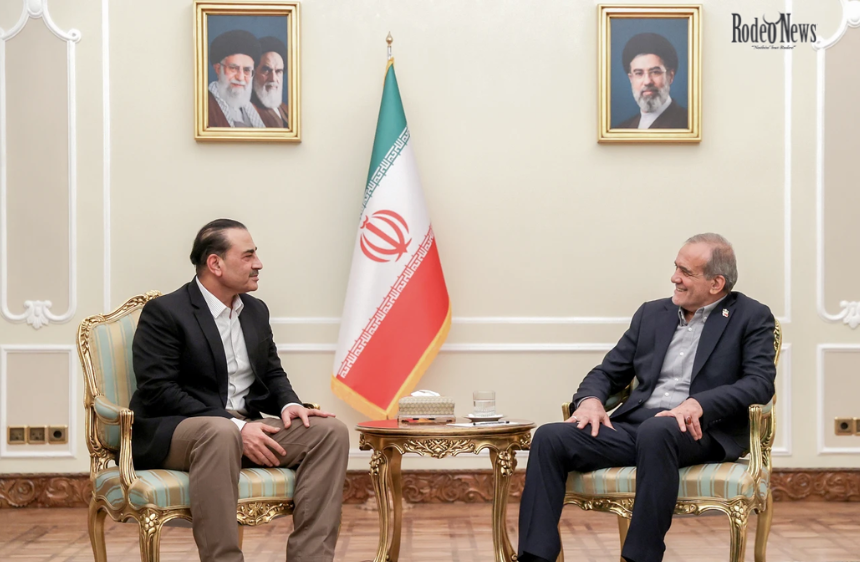
A Pakistani delegation led by Army Chief Field Marshal Asim Munir traveled to Iran for talks with senior Iranian officials. Pakistan has been attempting to mediate between Iran and the United States as both sides look for a possible route toward ending the conflict.
Pakistan’s Interior Minister Mohsin Naqvi described a meeting with Iranian President Masoud Pezeshkian as highly positive and productive.
The Pakistani delegation also discussed the possibility of reopening the Strait of Hormuz. That issue is critical because restoring predictable commercial traffic would reduce pressure on global energy markets and provide a major incentive for broader negotiations.
However, diplomatic progress remains uncertain.
Iran and Oman are separately working on a proposal for managing the waterway. Oman sits across the strait from Iran and has historically played an important diplomatic role in regional disputes.
The major challenge will be finding an arrangement that can satisfy Iran, the United States and commercial shipping interests at the same time.
Why the Strait of Hormuz Matters to the Global Economy
The importance of the Strait of Hormuz extends far beyond the Middle East.
The narrow maritime passage is one of the world’s most important energy routes. Large quantities of crude oil and other energy products traditionally pass through the waterway every day.
A prolonged disruption could increase transportation costs and create additional pressure on energy prices. It could also force companies to seek alternative routes, potentially adding time and expense to global supply chains.
The current conflict has already reduced shipping activity through the strait. Continued uncertainty could make insurers more cautious, increase premiums for vessels and discourage some commercial operators from entering the area.
For governments, the situation creates an additional strategic concern. Energy-importing countries must consider whether their supplies can continue moving through the region if military tensions intensify.
For Iran, meanwhile, the waterway provides significant leverage because of its geographic position along the northern side of the passage.
That leverage is one reason negotiations over the future management of the strait have become so important.
Iran and Oman Discuss New Management Plan
Iran and Oman are reportedly finalizing a proposal for managing traffic through the Strait of Hormuz.
Details of the proposal remain limited, and it is not yet clear whether the United States would accept the arrangement.
Oman’s role could prove particularly important. The country has frequently positioned itself as a diplomatic bridge between rival powers and has maintained relationships with both Western governments and Iran.
An agreement involving Iran and Oman could potentially establish clearer procedures for commercial vessels and reduce the likelihood of confrontations.
However, such an arrangement would need to address several difficult questions.
These include who would control maritime traffic, what rules ships would be expected to follow, whether fees would be imposed and how disputes would be handled.
Most importantly, shipping companies would need confidence that any new system would provide predictable and reliable access.
Without that confidence, even a formal agreement might not immediately restore normal traffic levels.
China Pushes Back Against New U.S. Sanctions
The Strait of Hormuz crisis is also becoming increasingly connected to the wider economic confrontation between Washington and Tehran.
The U.S. Treasury Department announced sanctions targeting nearly 60 Iran-linked entities, including some based in China. Treasury Secretary Scott Bessent has also warned that additional pressure could follow.
China responded by warning that its cooperation with Iran should not be disrupted.
Chinese Foreign Ministry spokesperson Lin Jian argued that China-Iran economic cooperation has been conducted in accordance with international law. He also warned that unilateral economic sanctions could worsen tensions.
China is particularly important to Iran’s economy because it is one of Tehran’s largest trading partners and purchases most of Iran’s oil exports.
That relationship means the effects of the sanctions debate could extend well beyond Washington and Tehran.
If the United States expands sanctions against companies or financial institutions connected to Iranian trade, Chinese businesses could face difficult choices over whether to continue commercial relationships with Iran.
The dispute could therefore create another source of tension between the United States and China at a time when the two countries already have significant disagreements over trade, technology and geopolitics.
Gaza Adds Another Layer to the Regional Crisis
The latest developments surrounding the Strait of Hormuz are unfolding alongside continued violence in Gaza.
An Israeli airstrike in southern Gaza killed at least one Palestinian and wounded four others, according to hospital officials. The strike reportedly hit a group of people northwest of Khan Younis.
The Israeli military did not immediately comment on that specific incident.
The continuing violence underscores how multiple conflicts and security crises remain interconnected across the region.
The situation also coincided with the one-year anniversary of an Israeli strike on Nasser Hospital in Gaza that killed 22 Palestinians, including journalists and rescue workers, according to reporting by The Associated Press.
Israeli officials previously said the operation targeted a suspected Hamas camera position. However, questions surrounding accountability remain unresolved.
The combination of continuing violence in Gaza and the wider confrontation involving Iran, Israel and the United States makes regional diplomacy considerably more difficult.
Five Developments to Watch Next
The coming days could be especially important for regional stability.
1. Strait of Hormuz Shipping
The first major issue to watch is whether commercial shipping through the Strait of Hormuz increases or decreases.
A sustained reduction in traffic could create additional pressure on energy markets and international supply chains.
2. Pakistan’s Mediation Efforts
Pakistan’s diplomatic initiative could become increasingly important if Washington and Tehran remain unable to restart meaningful negotiations.
The Pakistani delegation’s positive assessment suggests Islamabad believes there may still be room for progress.
3. Iran-Oman Maritime Proposal
The details and implementation of the Iran-Oman proposal will be closely watched.
If it can create a workable framework for commercial shipping, it could provide an important opening for de-escalation.
4. U.S. Sanctions
Washington’s next steps could determine whether the economic confrontation expands.
Additional sanctions involving Chinese companies could introduce a new dimension to the crisis and complicate international efforts to stabilize energy trade.
5. Regional Military Activity
Finally, further attacks against commercial vessels could quickly reverse diplomatic momentum.
For shipping companies, even isolated incidents can have significant consequences if they increase perceptions that the waterway is unsafe.
What the Strait of Hormuz Crisis Means for Global Energy Security
The latest tanker attack demonstrates why the Strait of Hormuz remains one of the most closely watched locations in the world.
The waterway is geographically narrow but economically enormous in importance. Any sustained disruption could affect energy prices, insurance costs, shipping routes and consumer economies far from the Middle East.
Yet the current crisis is not simply a maritime security problem.
It is also a diplomatic test.
Pakistan is trying to bridge differences between Iran and the United States. Oman is discussing a possible maritime management framework with Iran. China is pushing back against expanded U.S. sanctions. Meanwhile, violence involving Israel and Palestinians continues to complicate the regional environment.
These developments are happening simultaneously, making the situation unusually complex.
A diplomatic breakthrough could stabilize shipping and reduce pressure on global energy markets. Conversely, another serious attack on a commercial vessel could increase military tensions and make negotiations much harder.
For now, the tanker incident serves as a reminder that the region remains highly volatile.
Conclusion
The Strait of Hormuz has once again become a critical flashpoint as an oil tanker attack, diplomatic negotiations and new economic sanctions converge across the Middle East.
The immediate priority is preventing further attacks on commercial shipping. At the same time, diplomatic efforts led by Pakistan and discussions between Iran and Oman could offer a possible path toward stabilizing the waterway.
China’s opposition to expanded sanctions adds another important dimension, particularly because of its major economic relationship with Iran.
The next phase of the crisis will depend heavily on whether diplomacy can produce practical results before another military incident changes the situation.
For global energy markets, shipping companies and governments, the message is clear: stability in the Strait of Hormuz remains essential, and the risks surrounding the waterway are far from resolved.
Source: The Associated Press, reporting published August 25, 2026