Chang’e 7 Lunar Mission: Major Launch Delay Revealed
China has abruptly postponed the Chang’e 7 lunar mission, delaying one of its most ambitious attempts to explore the Moon’s south pole and search for water ice. The spacecraft had been preparing for launch from the Wenchang Spacecraft Launch Site on Hainan Island, but Chinese authorities said the mission did not meet the necessary launch conditions.
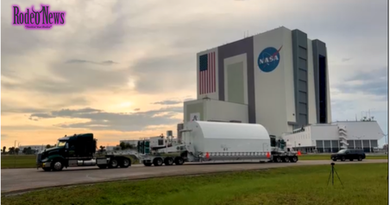
The announcement came just days after China moved the Chang’e 7 spacecraft and its Long March 5 rocket into the launch area. On Aug. 19, the China National Space Administration reported that the rocket-spacecraft combination had completed its vertical transfer and that preparations were continuing for a launch opportunity in the near future.
Instead, the planned launch window has now been abandoned.
The delay is significant because Chang’e 7 is designed to investigate one of the most scientifically valuable regions of the Moon. Permanently shadowed craters near the lunar south pole may contain water ice that has survived for billions of years. Scientists want to determine how much ice exists, where it is located and what it can reveal about the Moon’s history and future exploration.
Chang’e 7 Lunar Mission Faces Sudden Setback
The China Manned Space Agency said the Chang’e 7 mission did not meet launch conditions and therefore could not take place during the planned window this year.
Officials described the decision as the result of a comprehensive assessment based on caution, reliability and the goal of ensuring mission success. However, they did not publicly provide detailed technical reasons for the postponement.
That lack of detail has led to uncertainty about exactly when the spacecraft will fly.
Some reports have pointed to unfavorable weather near Hainan as a possible factor. Space.com reported that a tropical depression developing in the Gulf of Tonkin contributed to concerns around the launch site. However, the official statement did not specifically identify weather as the reason for the postponement.
This distinction matters.
A rocket can be technically ready while still being unable to launch because of weather, range-safety restrictions, spacecraft conditions or other operational requirements. In Chang’e 7’s case, Chinese authorities have so far kept the explanation broad.
Why the Chang’e 7 Lunar Mission Matters
Chang’e 7 is far more than another robotic trip to the Moon.
The mission is intended to conduct an extensive survey of the lunar south polar region, including studies of the surface environment, composition and potential water ice. China’s own mission documentation describes water ice and volatile investigations as major scientific objectives.
The mission is expected to combine several spacecraft and surface systems.
Its architecture includes an orbiter, lander, rover and a small flying or hopping vehicle designed to investigate difficult terrain. The mission is particularly focused on areas around the lunar south pole, where deep craters can remain permanently shielded from direct sunlight.
These environments are among the coldest places in the solar system.
Because sunlight never reaches some crater floors, volatile materials such as water ice may remain trapped there. That makes the region attractive not only to scientists but also to future lunar exploration planners.
Water could eventually become an important resource for sustained human activity on the Moon.
The Hunt for Water Ice on the Moon
The search for lunar water is one of the central reasons international space agencies are increasingly interested in the Moon’s south pole.
Water is scientifically valuable because it can preserve clues about the Moon’s past. It is also potentially useful for future explorers.
If accessible deposits are confirmed, water could potentially be processed into drinking water, oxygen and hydrogen. Oxygen could support life, while hydrogen and oxygen could potentially be used as rocket propellants.
That does not mean lunar ice can immediately become a fuel source.
Extracting resources from the Moon would require sophisticated equipment capable of operating in extreme temperatures and difficult terrain. Scientists must first establish where the ice is located, how concentrated it is and how easily it can be extracted.
That is why missions such as Chang’e 7 are strategically important.
The mission is intended to provide detailed information about the lunar south pole and its environment, helping scientists and engineers understand whether these permanently shadowed areas contain resources that could support future exploration.
Chang’e 7 Was Nearly Ready to Launch
The postponement came at an especially late stage of preparations.
According to China’s space agency, the Chang’e 7 spacecraft and Long March 5 Y14 rocket were vertically transferred to the launch area on Aug. 19. The spacecraft had arrived at the Wenchang launch site earlier in the year, while the rocket reached the facility in July. Teams then completed assembly, testing and other preparations.
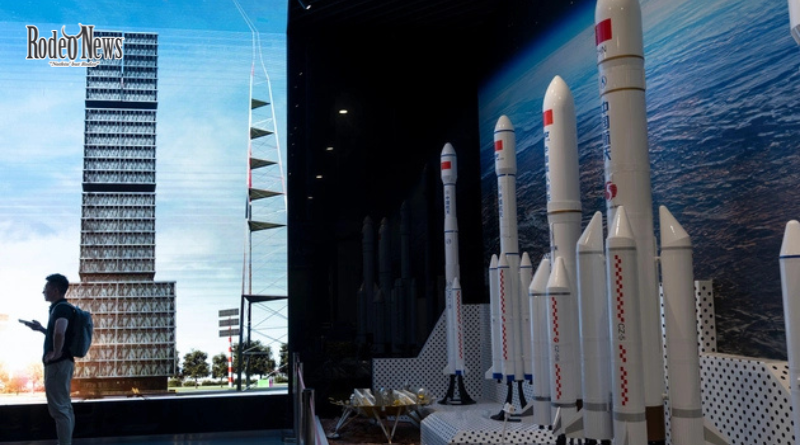
The Long March 5 is one of China’s most powerful operational rockets and is used for some of the country’s most demanding deep-space missions.
The rocket’s role is particularly important because Chang’e 7 requires enough energy to travel from Earth to lunar orbit and deliver its complex collection of spacecraft to the Moon.
The fact that the rocket and spacecraft had already reached the launch area shows how advanced the preparation process had become before the delay was announced.
Why China Cannot Simply Launch a Few Days Later
One of the most important details about the delay is that Chang’e 7 cannot necessarily launch immediately after bad weather passes.
Lunar missions depend on orbital mechanics.
The spacecraft must leave Earth at an appropriate time to reach the Moon efficiently and enter the required trajectory. Conditions around the Moon also matter, particularly for a mission targeting a specific region near the south pole.
As a result, missing a launch opportunity can create a delay that lasts weeks or longer.
Space.com reported that some unofficial expectations pointed toward a possible September launch, while China’s official messaging left the timing uncertain and indicated that the mission could slip into 2027.
Another report citing international partners suggested the delay could be at least a month.
Until Chinese authorities announce a new launch window, however, those dates should be treated as possibilities rather than confirmed schedules.
A Major Step After Chang’e 6
The Chang’e 7 lunar mission follows one of China’s biggest achievements in robotic lunar exploration.
In 2024, Chang’e 6 successfully returned samples from the far side of the Moon. NASA describes it as the first mission to return samples from the lunar far side.
That achievement demonstrated China’s ability to perform increasingly complicated operations beyond Earth.
Chang’e 6 had to land on the far side of the Moon, collect material and transfer the samples through lunar orbit before returning them to Earth. NASA’s Lunar Reconnaissance Orbiter later photographed the Chang’e 6 landing site.
Chang’e 7 represents a different challenge.
Rather than focusing primarily on sample return, the mission is designed around detailed exploration of the lunar south pole. Its combination of orbital observations and surface operations is intended to produce a much broader picture of the region.
The Lunar South Pole Is Becoming a Global Target
China is not alone in targeting the lunar south pole.
The region has become a major focus of modern lunar exploration because of its potential resources and unusual lighting conditions. NASA and other space agencies are also planning missions to the area.
NASA’s lunar mission program lists Chandrayaan-3 as the first spacecraft to soft-land near the lunar south pole, while subsequent missions have continued to investigate the region and its scientific potential.
The growing competition has transformed the Moon’s south pole into one of the most strategically important destinations in space exploration.
For China, Chang’e 7 is part of a larger sequence of lunar missions.
The mission is intended to help build knowledge and technologies that can support future exploration, including China’s longer-term plans for human lunar activity and the development of a future lunar research presence.
What Happens If Chang’e 7 Is Delayed Into 2027?
A prolonged delay would not necessarily mean the mission has failed.
Space missions are often delayed to protect hardware and improve the chances of success. In fact, China’s official explanation emphasized reliability and mission success when announcing the postponement.
A later launch could provide engineers with additional time to inspect systems, address technical concerns or wait for a more suitable launch opportunity.
However, the timing of a lunar mission can be complicated.
Chang’e 7 is designed for a particular trajectory and lunar environment. A significant change in the launch schedule could affect mission planning, operations and the timing of surface activities.
For scientists waiting for data about lunar ice, every additional delay means waiting longer for answers about one of the Moon’s most mysterious environments.
What Scientists Hope Chang’e 7 Will Discover
The biggest scientific question is simple: How much water ice is actually present at the lunar south pole?
Scientists already have evidence suggesting that water exists in permanently shadowed regions. But detection from orbit is different from directly studying material on or near the lunar surface.
Chang’e 7 is intended to take the next step.
The spacecraft’s instruments will examine the lunar environment and investigate the distribution and characteristics of potential ice and other volatile materials. China’s mission documentation specifically identifies water ice and the south polar surface environment among its core objectives.
The mission could therefore help answer several important questions.
How is water distributed across the south pole? Is it concentrated in certain types of terrain? How deep beneath the surface might it be? And can future spacecraft access it?
The answers could influence the design of future lunar bases and resource-utilization systems.
A Delay, Not the End of China’s Moon Program
The postponement of Chang’e 7 is a setback, but it does not change the broader direction of China’s lunar program.
China has steadily increased the complexity of its lunar missions. The progression from orbiters to landers, rovers and sample-return spacecraft has demonstrated a deliberate effort to develop increasingly sophisticated capabilities.
Chang’e 7 is the next major stage in that progression.
The mission’s eventual launch will be closely watched because it combines scientific exploration with technologies that could become important for long-term lunar operations.
The delay also highlights a reality of modern space exploration: even highly prepared missions can be forced to wait.
Rockets can be assembled. Spacecraft can be tested. Launch facilities can be ready. Yet weather, technical assessments and the precise geometry of a lunar flight can still determine whether a mission leaves Earth on schedule.
When Will Chang’e 7 Launch?
For now, there is no firmly confirmed replacement launch date.
Chinese authorities have said the mission cannot launch during the originally planned window this year, but they have not publicly provided a detailed new schedule.
Reports have suggested that September could be possible, while other reporting has raised the possibility of a launch in 2027.
Until an official new launch window is announced, those dates should not be treated as final.
What is clear is that the mission remains an important part of China’s lunar exploration plans.
When Chang’e 7 eventually leaves Earth, it will head toward one of the most scientifically intriguing regions of the Moon. Its search for water ice could provide valuable information about lunar resources and help shape the next era of robotic and human exploration.
For now, the countdown has paused.
The Moon, however, remains the destination.