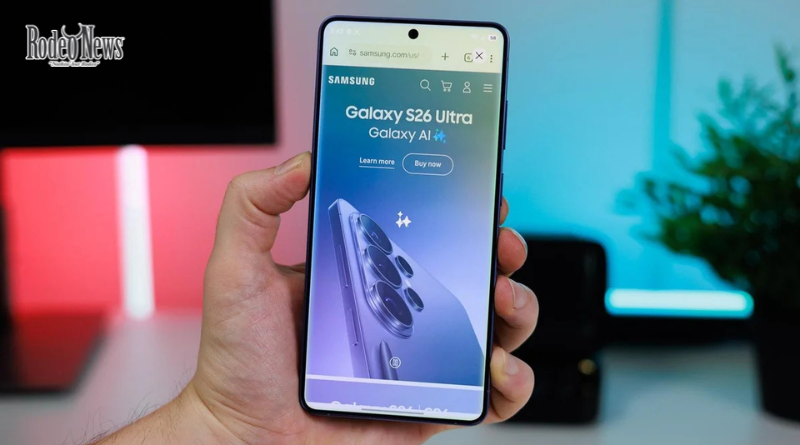
The Samsung Galaxy S26 Ultra is proving that artificial intelligence on smartphones can finally become useful instead of gimmicky. Samsung’s latest flagship is receiving praise for making AI feel less intrusive and more practical, particularly thanks to a feature called AI Select.
In a recent hands-on report from PhoneArena, the publication explained how the Galaxy S26 Ultra completely changed the way users interact with on-screen content through AI-powered contextual actions.
For years, smartphone makers pushed AI features that sounded impressive during launch events but rarely became part of everyday usage. However, Samsung appears to have found a more natural approach with Galaxy AI. Instead of forcing users to open separate apps or remember voice commands, AI Select quietly works in the background and appears exactly when needed.
That small change could become one of Samsung’s biggest software victories in years.
What Is Galaxy S26 Ultra AI Select?
AI Select is part of Samsung’s broader Galaxy AI ecosystem integrated into One UI 8.5. The feature analyzes what appears on the screen and instantly suggests contextual actions users might want to perform.
Rather than manually copying text, searching screenshots, or switching between apps, AI Select can recognize content and recommend actions immediately.
According to reports, AI Select can:
- Detect text and dates
- Create GIFs from videos
- Suggest searches
- Generate summaries
- Trigger quick actions
- Recommend wallpapers
- Extract information from images
Samsung has essentially created an intelligent shortcut layer that sits on top of Android.
What makes the system different is accessibility. Earlier Samsung AI tools often felt buried inside menus or hidden behind gestures. On the Galaxy S26 Ultra, AI Select is easier to reach and faster to understand.
That simplicity may be why more users are finally embracing mobile AI.
Samsung Finally Solved the Biggest AI Problem
The smartphone industry has struggled with one major issue: most AI features interrupt workflows instead of improving them.
Voice assistants require activation phrases. AI apps often need manual input. Generative AI tools usually involve multiple steps before producing results.
Samsung’s AI Select changes that philosophy entirely.
Instead of asking users to adapt to AI, the AI adapts to the user.
The feature appears contextually while users browse social media, watch videos, read articles, or message friends. That subtle implementation removes friction, which is why reviewers say the feature quickly becomes addictive.
This approach mirrors a broader trend in consumer technology. Companies are beginning to realize that the best AI experiences are often invisible.
Users do not necessarily want “AI.” They want tasks completed faster.
Samsung seems to understand that better than many competitors.
Why Galaxy AI Feels More Practical in 2026
Samsung has spent the last several years aggressively expanding Galaxy AI capabilities across its ecosystem. However, the Galaxy S26 Ultra may be the first device where those features feel cohesive instead of experimental.
The phone includes several AI-powered tools beyond AI Select, including:
- Live translation
- Writing assistance
- AI photo editing
- Browsing summaries
- Smart scheduling
- Contextual recommendations
- Automated app actions
Samsung also introduced features like “Now Nudge,” which proactively suggests actions based on what appears on-screen.
Together, these features create an operating system that behaves more like an intelligent assistant than traditional smartphone software.
Importantly, Samsung is not relying entirely on flashy generative AI images or chatbots. Instead, the company focuses on productivity and convenience.
That strategy could help Samsung separate itself from competitors that continue chasing AI hype without practical implementation.
The Galaxy S26 Ultra Hardware Still Matters
Although AI Select is receiving major attention, the Galaxy S26 Ultra also remains one of the most powerful Android phones on the market.
The flagship device reportedly includes:
- A 6.9-inch AMOLED display
- Snapdragon 8 Elite Gen 5 processor
- Up to 16GB RAM
- Advanced 200MP camera system
- Improved battery optimization
- Faster wireless charging
- Enhanced privacy display technology
Samsung also continues integrating AI deeply into photography and battery management.
Unlike some smartphone brands that use AI as a distraction from weak hardware upgrades, Samsung paired software improvements with meaningful performance enhancements.
That balance matters.
Consumers still expect flagship smartphones to excel in cameras, displays, battery life, and raw speed. AI alone cannot justify premium pricing.
The Galaxy S26 Ultra succeeds because AI complements the hardware rather than replacing it.
Samsung’s New AI Direction Could Influence Android
The broader Android ecosystem is watching Samsung closely.
Google continues investing heavily in Gemini AI, while brands like Xiaomi, Honor, and OnePlus are racing to integrate generative features into their devices. However, many implementations still feel experimental.
Samsung’s contextual AI strategy may become the new industry template.
Instead of massive standalone AI applications, future smartphones could prioritize:
- Smaller contextual suggestions
- Faster task completion
- Intelligent app integration
- Invisible automation
- Predictive assistance
That evolution feels more realistic for everyday smartphone usage.
Consumers typically interact with phones dozens or even hundreds of times daily. Saving a few seconds during each interaction can significantly improve user experience over time.
AI Select succeeds because it respects how people already use phones.
AI Fatigue Is Real — Samsung May Have Avoided It
The tech industry is currently experiencing what many analysts describe as “AI fatigue.”
Consumers hear constant promises about revolutionary artificial intelligence, yet real-world benefits often feel minimal.
Samsung appears aware of this problem.
Instead of marketing AI Select as a futuristic revolution, the company presents it as a simple enhancement to existing behaviors.
That subtle positioning is important.
When AI disappears into the interface rather than demanding attention, users are more likely to adopt it naturally.
Reviewers who initially ignored Samsung’s AI ecosystem are now describing AI Select as genuinely useful.
That reaction is rare in the current AI landscape.
Privacy Concerns Still Exist
Despite the excitement surrounding Galaxy AI, privacy questions remain unavoidable.
AI Select continuously analyzes on-screen content to provide contextual recommendations. While Samsung emphasizes security protections and on-device processing, some users may still feel uncomfortable with AI monitoring screen activity.
Samsung claims Galaxy AI uses secure frameworks and gives users control over certain AI permissions.
However, as AI systems become more deeply integrated into operating systems, the debate around privacy and data collection will likely intensify.
Consumers increasingly want convenience without sacrificing personal information.
Samsung must continue balancing intelligent automation with transparent privacy protections.
Can Samsung Beat Apple in Everyday AI?
Samsung currently holds an advantage in practical AI deployment.
While Apple continues developing its own AI ecosystem, Samsung already offers a mature suite of contextual tools across flagship devices.
That does not necessarily mean Samsung has “won” the AI race permanently. Apple historically enters categories later but often refines them effectively.
Still, Samsung deserves credit for making AI feel useful before many rivals.
The Galaxy S26 Ultra demonstrates that smartphone AI works best when it reduces friction instead of creating more complexity.
That lesson could shape the next generation of mobile software design.
The Bigger Picture for Smartphone AI
The Galaxy S26 Ultra AI Select feature represents something larger than a single software tool.
It reflects a shift in how companies think about artificial intelligence on mobile devices.
The first wave of AI focused heavily on spectacle:
- AI-generated images
- Chatbots
- Voice assistants
- Experimental demos
The next wave appears centered on efficiency:
- Faster workflows
- Contextual shortcuts
- Invisible automation
- Intelligent recommendations
Samsung is positioning itself at the front of that transition.
If users continue responding positively to AI Select, other Android manufacturers will almost certainly adopt similar systems in future releases.
That could fundamentally change how people interact with smartphones over the next several years.
Final Thoughts
The Galaxy S26 Ultra AI Select system may not sound revolutionary at first glance, but its impact becomes obvious during daily usage.
Samsung finally created an AI feature that feels genuinely integrated into smartphone behavior instead of functioning like a separate experimental tool.
That distinction matters more than flashy marketing claims.
AI Select succeeds because it saves time, reduces effort, and quietly improves interactions without demanding constant attention.
In an industry flooded with exaggerated AI promises, practical execution stands out.
Samsung may have discovered the formula that finally makes smartphone AI feel indispensable.