Full Article
Hormuz Ceasefire Crisis Sparks Fresh US-Iran Clash
The fragile Hormuz ceasefire crisis intensified dramatically on Friday after the United States and Iran accused each other of violating a recently negotiated truce in the Strait of Hormuz, one of the world’s most strategically important maritime chokepoints.
The renewed confrontation has triggered fears of another major escalation in the Middle East. Global markets are also reacting nervously because the Strait of Hormuz remains a critical route for international oil shipments.
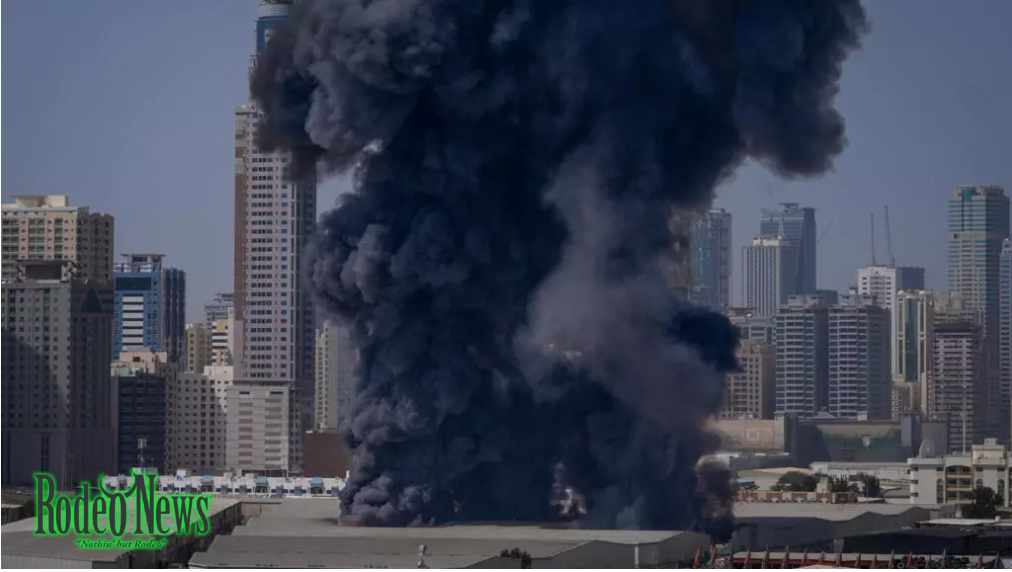
According to Iranian military officials, American forces launched attacks against vessels near the strait and targeted several coastal areas inside Iran. Meanwhile, the United States said its actions were retaliatory strikes after Iranian forces allegedly attacked US naval destroyers operating in the region.
The latest incidents now threaten a ceasefire that had been holding uneasily for several weeks following intense regional conflict earlier this year.
Why the Strait of Hormuz Matters
The Strait of Hormuz is considered one of the most important waterways in the global energy market. Nearly a quarter of the world’s seaborne oil trade passes through the narrow corridor connecting the Persian Gulf to international waters.
Any disruption in the region can immediately impact oil prices, shipping insurance costs, and global supply chains.
In recent months, tensions in the strait have escalated sharply after Iran imposed restrictions on maritime traffic following military confrontations involving the United States and Israel. The ongoing Hormuz ceasefire crisis has already reduced commercial shipping activity and increased fears of wider instability across the Gulf region.
Energy analysts warn that continued instability could trigger another global energy shock if attacks on commercial vessels intensify.
Iran Accuses US of Breaking the Ceasefire
Iranian military authorities claimed the United States violated the ceasefire by attacking two vessels near the Strait of Hormuz.
One of the ships was reportedly an Iranian oil tanker traveling from coastal waters near Jask toward the strategic passage. Iranian officials also alleged that another vessel entering the strait near Fujairah in the United Arab Emirates was targeted.
In addition, Tehran accused the US of conducting airstrikes against civilian areas near Bandar Khamir, Sirik, and Qeshm Island. Iranian state media described the attacks as a direct breach of the truce agreement.
Iranian military commanders warned that any continued aggression would be met with a strong response.
The accusations quickly raised international concern because several Gulf states have already increased military readiness amid fears that the Hormuz ceasefire crisis could spiral into a broader regional war.
US Says Iran Started the Clash
American military officials rejected Iran’s accusations and insisted that US operations were defensive in nature.
According to the US Central Command, Iranian forces launched missiles, drones, and fast attack boats against three American Navy destroyers transiting through the Strait of Hormuz.
The vessels reportedly targeted included the USS Mason, USS Truxtun, and USS Rafael Peralta.
US officials said American forces intercepted the attacks successfully and then launched retaliatory strikes against Iranian military sites connected to missile launches and drone operations.
Washington stated that the response was carefully limited and designed to avoid wider escalation.
Despite the exchange of fire, US President Donald Trump claimed the ceasefire remained technically intact.
Trump reportedly minimized the incident publicly and described the Iranian attack as a “love tap,” while also warning Tehran against future aggression.
Rising Fears Over Global Oil Supply
The Hormuz ceasefire crisis has already begun affecting global financial markets.
Oil prices rose sharply after reports emerged of renewed military clashes in the strategic waterway. Analysts fear that further disruption could severely impact international energy supplies because millions of barrels of crude oil move through the strait daily.
Several shipping companies are reportedly reconsidering routes through the region due to security concerns.
International maritime organizations have also warned that thousands of commercial vessels and crew members remain vulnerable if fighting intensifies further.
The shipping slowdown has already reduced traffic in the Strait of Hormuz dramatically compared with normal operating levels.
Experts say insurers are increasing premiums for ships entering Gulf waters, making energy transportation significantly more expensive.
Diplomatic Efforts Continue Behind the Scenes
Despite the military confrontation, diplomatic negotiations between Washington and Tehran are reportedly continuing through regional mediators.
Pakistan and several Gulf nations are believed to be involved in efforts to preserve the ceasefire framework and prevent a return to full-scale war.
Recent reports suggest negotiators have been discussing broader issues, including sanctions relief, maritime security, and future nuclear talks. However, deep disagreements remain unresolved.
Iran continues demanding changes to US sanctions policy, while Washington insists Tehran must reduce military activity in the Gulf and comply with international maritime standards.
The Hormuz ceasefire crisis has therefore become both a military and diplomatic challenge with enormous global implications.
Regional Powers Closely Monitoring the Situation
Countries across the Middle East are watching developments closely because the conflict could destabilize the entire Gulf region.
The United Arab Emirates reported intercepting missiles and drones connected to recent hostilities. Saudi Arabia has also attempted to distance itself from direct involvement while urging diplomatic restraint.
Meanwhile, European governments are calling for immediate de-escalation to protect global trade routes and prevent a wider humanitarian crisis.
French President Emmanuel Macron recently urged all parties to remove blockades and restore freedom of navigation in the region.
International pressure is growing because the Strait of Hormuz remains essential for both Western and Asian economies.
China, India, Japan, and South Korea all depend heavily on energy shipments passing through the Gulf corridor.
The Future of the Hormuz Ceasefire Crisis
The coming days may determine whether the Hormuz ceasefire crisis evolves into a larger regional confrontation or returns to fragile diplomacy.
Military analysts believe both Washington and Tehran are attempting to avoid total war while still projecting strength to domestic and international audiences.
However, the risk of miscalculation remains extremely high.
Even limited naval clashes in the Strait of Hormuz can quickly escalate due to the heavy military presence in the region and the strategic importance of commercial shipping lanes.
Experts also warn that proxy groups aligned with Iran could become involved if tensions continue rising.
At the same time, economic pressure may push both sides toward renewed negotiations because prolonged instability threatens global oil markets and regional economies alike.
For now, the ceasefire appears weakened but not entirely collapsed.
Still, with accusations, retaliatory strikes, and military deployments continuing across the Gulf, the Hormuz ceasefire crisis remains one of the most dangerous geopolitical flashpoints in the world today.