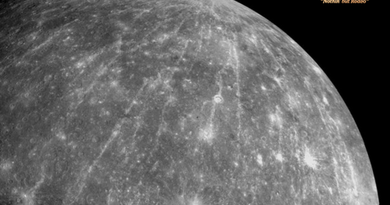
Asteroid DNA Discovery Revealed by Japan Mission
A groundbreaking asteroid DNA discovery is changing how scientists think about the origins of life in the universe. Researchers analyzing samples from the asteroid Ryugu have confirmed the presence of all five essential nucleobases that form DNA and RNA — the molecules responsible for storing genetic information in every known living organism.
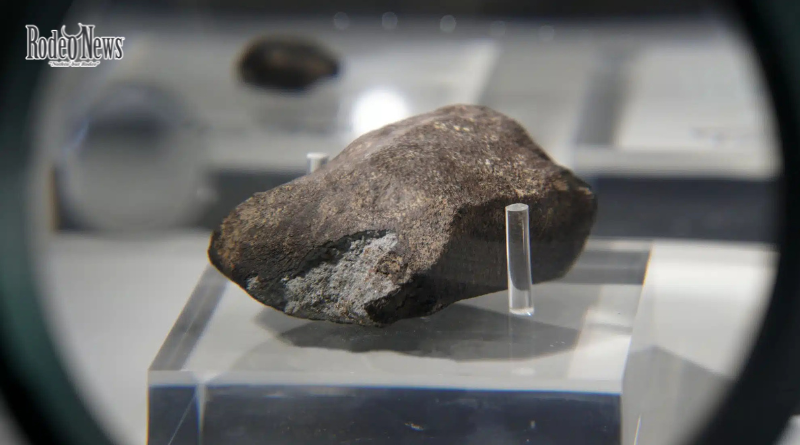
The historic finding came from material collected by Japan’s Japan Aerospace Exploration Agency Hayabusa2 mission. Scientists now believe that the chemical ingredients required for life may have existed throughout the solar system billions of years ago.
This discovery does not prove alien life exists. However, it strongly supports the theory that asteroids may have delivered critical organic molecules to early Earth long before life began.
What Scientists Found Inside Asteroid Ryugu
The Ryugu asteroid samples contained adenine, guanine, cytosine, thymine, and uracil — the five nucleobases necessary for DNA and RNA formation. These compounds are considered the fundamental “letters” of life.
Scientists explained that this is the first time all five nucleobases have been identified together inside pristine asteroid material collected directly in space and safely returned to Earth without contamination.
The samples were gathered during the Hayabusa2 mission, which landed on the carbon-rich asteroid Ryugu and returned material to Earth in 2020. Because the material was sealed immediately after collection, researchers believe the chemical compounds remained untouched by Earth’s atmosphere.
Scientists described the asteroid as a “time capsule” from the early solar system.
Why This Asteroid DNA Discovery Matters
The importance of this asteroid DNA discovery goes far beyond one space mission. Researchers believe it strengthens the long-standing theory that asteroids and meteorites may have delivered prebiotic chemicals to Earth billions of years ago.
This theory, often connected to astrobiology research, suggests that Earth may not have produced all life-building molecules on its own. Instead, some of the ingredients may have formed in deep space before arriving on the young planet during heavy asteroid bombardments.
Scientists say carbon-rich asteroids like Ryugu preserve ancient organic chemistry from the earliest days of the solar system.
The Ryugu findings also closely resemble earlier discoveries from asteroid Bennu, studied through NASA’s OSIRIS-REx mission. Bennu samples also contained organic compounds and nucleobases connected to life chemistry.
Together, the two discoveries suggest these life-related compounds could be widespread throughout space.
Hayabusa2 Mission Changed Space Science
The Hayabusa2 mission has become one of the most important asteroid exploration projects ever completed.
Launched by Japan Aerospace Exploration Agency, the spacecraft traveled millions of kilometers to reach Ryugu, a dark carbonaceous asteroid believed to contain primitive material from the solar system’s formation.
The spacecraft successfully collected underground asteroid material before returning it to Earth in late 2020. Scientists considered the mission especially valuable because subsurface samples are less exposed to radiation and space weathering.
This preserved chemistry allowed researchers to analyze ancient molecules that may have existed more than 4.5 billion years ago.
Many experts now see Hayabusa2 as a milestone for future deep-space biology research.
Could Life’s Ingredients Be Everywhere?
One of the biggest implications of the asteroid DNA discovery is the possibility that life’s chemical ingredients may not be rare.
Researchers noted that the nucleobases discovered on Ryugu formed naturally without biological activity. That means complex organic molecules can emerge in space through non-living chemical processes.
Scientists also observed unusual chemical balances between purines and pyrimidines inside the asteroid samples. According to the published research, ammonia levels inside parent asteroid bodies may influence how nucleobases form.
This could help researchers understand how organic chemistry develops across different planetary systems.
However, experts continue to warn that finding DNA ingredients is not the same as finding life itself.
The Ryugu asteroid contains isolated molecules, not living cells, organisms, or genetic strands. Life requires many additional processes, including stable environments, energy sources, and complex biological systems.
Still, the discovery dramatically increases scientific interest in how chemistry in space may contribute to biology on planets.
Scientists Urge Caution About Alien Life Claims
Despite the excitement, researchers emphasized that the asteroid DNA discovery should not be misinterpreted as evidence of extraterrestrial organisms.
Scientists explained that the nucleobases discovered are individual chemical compounds rather than organized DNA structures.
Online discussions quickly reflected both excitement and skepticism about the findings.
One Reddit user summarized the distinction clearly:
•
r/space
›
They’re individual nucleobases, not strands. Finding actual organized strands on an asteroid would be a completely different level of discovery.
•
r/biology
›
This is cool and interesting. It was just a theory that life came from space.
•
r/EverythingScience
›
Panspermia is what you’re referring to.
Give feedback
The discussion highlights a growing public fascination with panspermia — the idea that some ingredients for life may travel through space on asteroids and comets.
Scientists say the Ryugu discovery does not confirm panspermia directly. However, it strengthens the possibility that organic chemistry is widespread across the cosmos.
The Search for Life Beyond Earth Expands
The asteroid DNA discovery arrives during a major era of astrobiology exploration.
Space agencies around the world are increasingly focused on missions searching for organic molecules, water, and potentially habitable environments beyond Earth.
NASA continues analyzing samples from asteroid Bennu, while future missions aim to study Mars, Europa, Titan, and other worlds that may contain ingredients connected to life.
Meanwhile, astronomers are using advanced telescopes to search distant exoplanets for chemical signs linked to biology.
The Ryugu discovery provides scientists with new evidence that complex organic chemistry can emerge naturally in space environments. That finding may influence future missions designed to search for biosignatures beyond Earth.
Asteroids May Hold the Secrets to Human Origins
For decades, researchers have debated how life first emerged on Earth. Some theories suggest Earth’s early oceans produced the first biological molecules through lightning and volcanic activity. Others argue space-delivered chemistry played a critical role.
The asteroid DNA discovery now adds powerful evidence supporting the idea that at least some essential molecules arrived from space.
Scientists believe asteroid impacts during Earth’s early history may have delivered enormous quantities of water and organic compounds.
If that theory proves correct, humanity’s biological story may partly begin in deep space.
Researchers say future asteroid missions could uncover even more complex compounds, including amino acids, sugars, and additional prebiotic molecules linked to life formation.
For now, Ryugu remains one of the strongest clues yet that the universe may be chemically prepared for life far beyond Earth.