Beijing Auto Show 2026 Revealed: 7 Shocking Future Cars
The Beijing Auto Show 2026 has officially emerged as one of the most important global automotive events, offering a powerful glimpse into the future of mobility. Held from April 24 to May 3, the massive exhibition features more than 1,450 vehicles and over 180 world premieres, signaling a dramatic shift in how cars are designed, powered, and experienced.
From AI-powered cockpits to ultra-fast charging batteries and even driverless robotaxis, the event showcases a world where vehicles are no longer just transportation—but intelligent, connected ecosystems.
A Global Power Shift Toward China’s Auto Industry
One of the biggest takeaways from the Beijing Auto Show 2026 is clear: China is no longer catching up—it is leading.
Chinese automakers such as BYD, Geely, and XPeng are now pushing boundaries in electric mobility and software integration. Meanwhile, global brands are racing to adapt, unveiling China-specific models in an attempt to stay competitive.
This shift reflects a broader transformation. China has rapidly become the world’s largest exporter of vehicles, driven largely by innovation in electric vehicles (EVs) and intelligent driving systems.
As a result, the show isn’t just about cars—it’s about geopolitical influence, technology leadership, and the future of transportation.
1. AI-Powered Cars Are Taking Over
Artificial intelligence is now at the center of automotive design. Many vehicles unveiled at the Beijing Auto Show 2026 feature advanced AI systems capable of learning driver behavior, optimizing routes, and even monitoring emotional states.
Some cars now include:
- Voice-controlled navigation systems
- Smart cockpit ecosystems powered by proprietary operating systems
- Driver monitoring systems that detect fatigue or stress
Companies like Huawei are investing billions into AI mobility, signaling that future vehicles will behave more like smartphones on wheels.
This shift represents a major evolution—from hardware-focused cars to software-defined vehicles.
2. Ultra-Fast Charging Changes Everything
Charging anxiety may soon become obsolete. One of the standout innovations at the show is next-generation battery technology capable of extremely fast charging.
New EV batteries demonstrated at the event can:
- Charge nearly fully in under 10 minutes
- Deliver ranges approaching or exceeding 900 km
- Maintain efficiency with advanced thermal management systems
For example, cutting-edge battery platforms showcased at the event highlight how EVs are closing the gap with traditional gasoline vehicles in both convenience and performance.
This advancement could accelerate global EV adoption dramatically.
3. The Rise of Autonomous Robotaxis
Autonomous driving was another major highlight of the Beijing Auto Show 2026, with several companies unveiling fully driverless vehicle concepts.
One of the most futuristic developments includes purpose-built robotaxis—vehicles designed without traditional steering wheels or pedals. These systems rely on:
- Lidar sensors
- AI-based navigation systems
- High-performance onboard computing
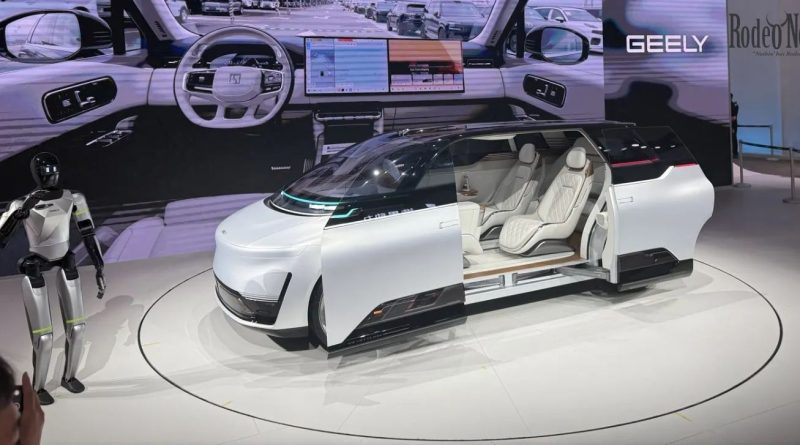
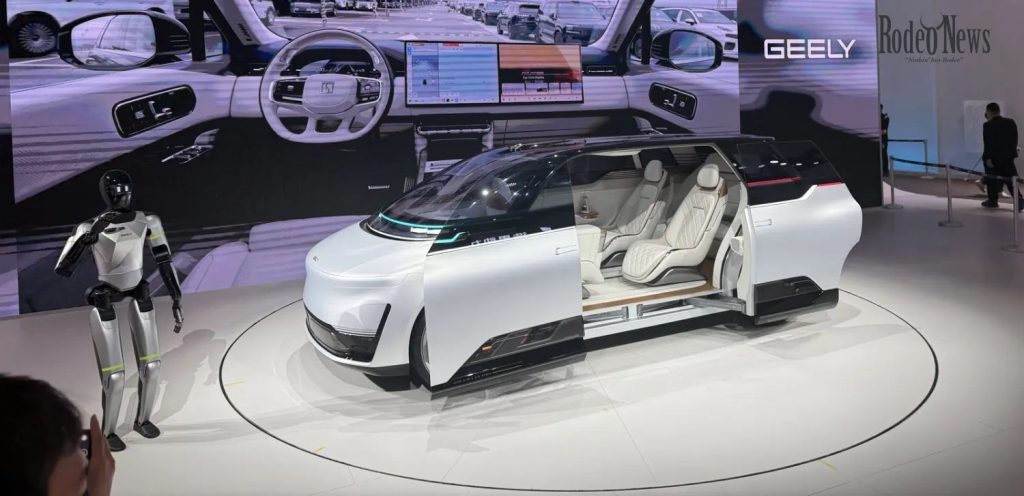
Geely, for instance, revealed a robotaxi platform aimed at future commercial deployment, potentially reshaping urban mobility.
Meanwhile, partnerships with tech companies are accelerating real-world deployment, including plans for international expansion.
4. Extreme Performance Meets Electric Power
Electric vehicles are no longer just efficient—they’re fast. Extremely fast.
At the show, several high-performance EVs stunned audiences with supercar-level capabilities:
- Over 1,000 horsepower outputs
- Acceleration rivaling Formula 1 cars
- Advanced multi-motor systems for precision control
These vehicles demonstrate that EVs can outperform traditional combustion engines not just in efficiency, but also in raw performance.
This marks a turning point where sustainability no longer comes at the cost of excitement.
5. Radical New Car Designs
Design innovation was everywhere at the Beijing Auto Show 2026. Automakers are experimenting with bold concepts that challenge traditional vehicle architecture.
Key design trends include:
- Pillarless doors and full glass roofs
- Reconfigurable interiors that transform into lounges or offices
- Aerodynamic shapes focused on efficiency and performance
Concept cars like futuristic coupes and modular family EVs demonstrate how vehicles are evolving into multifunctional living spaces.
These designs are not just aesthetic—they reflect how cars will be used in a more autonomous future.
6. Affordable EVs Are Disrupting the Market
Another major theme is affordability. While luxury EVs grabbed headlines, many automakers also introduced budget-friendly electric vehicles designed for mass adoption.
Some new models offer:
- Competitive pricing under $20,000
- Impressive driving range
- Modern connectivity features
This shift is especially significant as Chinese manufacturers target global markets, offering high-tech vehicles at lower prices than traditional Western competitors.
The result? A growing challenge to established brands worldwide.
7. Software Is the New Engine
Perhaps the most important trend at the Beijing Auto Show 2026 is the rise of software-defined vehicles.
Modern cars are increasingly powered by:
- Over-the-air updates
- Integrated operating systems
- Cloud-based services
Some vehicles now feature ecosystems similar to smartphones, allowing users to download apps, customize interfaces, and continuously upgrade functionality.
This shift means the value of a car is no longer fixed at purchase—it evolves over time.
The Bigger Picture: A New Era of Mobility
The Beijing Auto Show 2026 highlights a fundamental transformation in the automotive industry.
Key changes include:
- Electrification replacing combustion engines
- AI redefining driving experiences
- Connectivity turning cars into digital platforms
- Global competition intensifying between East and West
China’s dominance in EV innovation is pushing the entire industry forward, forcing traditional automakers to rethink their strategies.
At the same time, the integration of AI, autonomy, and energy technology is creating a future where cars are safer, smarter, and more efficient than ever before.
What This Means for Consumers
For everyday drivers, these innovations could lead to:
- Lower ownership costs due to cheaper EVs
- Reduced charging times
- Enhanced safety through AI systems
- More personalized driving experiences
However, challenges remain. Regulatory hurdles, infrastructure gaps, and global trade tensions could slow the adoption of some technologies.
Still, the direction is clear: the future of driving is electric, intelligent, and connected.
Conclusion
The Beijing Auto Show 2026 is more than just a showcase—it’s a preview of the next decade of mobility.
With breakthroughs in AI, battery technology, autonomous driving, and vehicle design, the event confirms that the automotive world is undergoing its most significant transformation in over a century.
As innovation accelerates and competition intensifies, one thing is certain: the cars of tomorrow will look—and behave—very differently from those of today.