Voyager 1 Shutdown Revealed: 5 Critical NASA Moves
The Voyager 1 shutdown strategy has entered a new phase as NASA takes bold steps to keep humanity’s most distant spacecraft alive. Nearly five decades after launch, the iconic probe is facing a harsh reality: its power supply is slowly fading, forcing engineers to make difficult decisions that balance survival against scientific discovery.
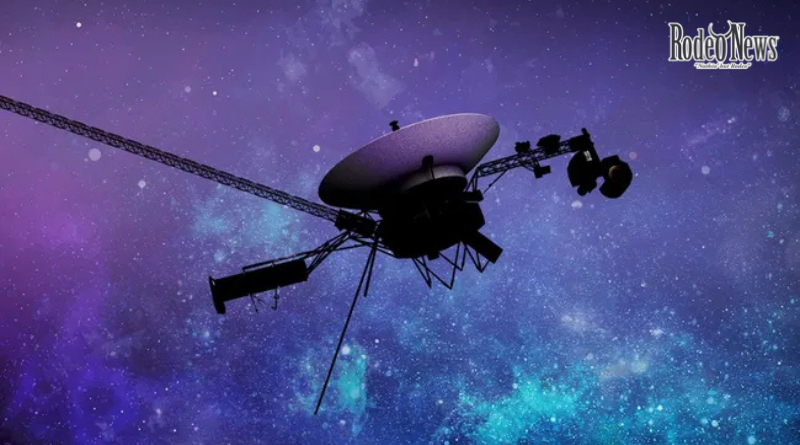
In April 2026, NASA officially powered down another instrument aboard Voyager 1, marking a pivotal moment in the spacecraft’s long and historic journey. While the move may sound like a setback, it is actually part of a carefully planned strategy to extend the mission as long as possible.
A Historic Spacecraft Nearing Its Limits
Launched in 1977, Voyager 1 was never expected to last this long. Originally designed to explore Jupiter and Saturn, the spacecraft went on to achieve something extraordinary—it became the first human-made object to enter interstellar space in 2012.
Today, Voyager 1 is more than 15 billion miles (24 billion kilometers) from Earth, making it the most distant object ever built by humans.
However, distance is not the only challenge. The spacecraft relies on a radioisotope power system that steadily loses energy each year. In fact, Voyager 1 loses about 4 watts of power annually, a gradual decline that has forced NASA to shut down systems one by one.
Why the Voyager 1 Shutdown Is Necessary
The latest Voyager 1 shutdown involves the Low-Energy Charged Particles (LECP) instrument, a key scientific tool that has been operating since the spacecraft’s launch.
This instrument has played a crucial role in measuring cosmic rays and charged particles in interstellar space. Its data helped scientists understand the environment beyond our solar system—something no other spacecraft can currently do.
Despite its importance, NASA engineers made the tough decision to turn it off. The reason is simple: survival.
By shutting down the LECP instrument, NASA can conserve enough power to keep the spacecraft’s core systems functioning, ensuring that communication with Earth continues for as long as possible.
The Power Crisis Behind the Decision
Voyager 1’s power comes from a radioisotope thermoelectric generator (RTG), which converts heat from decaying plutonium into electricity. While incredibly reliable, this system is not permanent.
Over time, the power output drops steadily. Engineers must carefully decide which systems to keep running and which to sacrifice. This process has been described as a “ruthless economics of power,” where every watt matters.
A recent power drop earlier in 2026 made the situation even more urgent. If the energy level falls too low, the spacecraft’s automatic protection system could shut down critical functions entirely.
To prevent that scenario, NASA acted quickly—leading to the latest Voyager 1 shutdown.
How Many Instruments Are Still Working?
Originally, Voyager 1 carried 10 scientific instruments. Over the decades, most have been turned off to conserve energy.
After the latest shutdown, only a small number of instruments remain active—primarily those focused on measuring plasma waves and magnetic fields in interstellar space.
These remaining instruments continue to send back valuable data, offering a rare glimpse into a region of space that no other probe has reached.
However, the margin for survival is shrinking. Engineers estimate that by the late 2020s or early 2030s, Voyager 1 may no longer have enough power to operate any instruments at all.
The Risky “Big Bang” Maneuver Explained
One of the most intriguing aspects of the Voyager 1 shutdown plan is a proposed strategy known as the “Big Bang” maneuver.
This is not an explosion, but rather a complex engineering procedure. It involves reconfiguring multiple systems on the spacecraft simultaneously to improve energy efficiency and extend its operational life.
The maneuver is considered risky because of the extreme distance involved. Signals take more than 23 hours to reach Voyager 1, meaning engineers cannot control the spacecraft in real time.
Any mistake could be irreversible.
To reduce risk, NASA plans to test the maneuver on Voyager 2 first, which is closer to Earth and has slightly more available power.
If successful, the same approach could be applied to Voyager 1—potentially extending its life by several years.
A Mission of Unmatched Scientific Value
Even in its weakened state, Voyager 1 continues to deliver unique scientific insights.
It is currently the only spacecraft capable of directly measuring conditions in interstellar space. This includes:
- Plasma density
- Magnetic fields
- Cosmic radiation
These measurements help scientists understand the boundary between our solar system and the rest of the galaxy.
Without Voyager 1, this data would simply not exist.
That is why NASA is willing to make difficult sacrifices. Each shutdown is not a failure—it is a calculated move to preserve the mission’s most valuable capabilities.
The Emotional Weight of the Voyager 1 Shutdown
For many scientists and engineers, the Voyager 1 shutdown process is deeply emotional.
This spacecraft has been operating for nearly 50 years, far exceeding its original mission timeline. It has outlived generations of technology and continues to function with hardware designed in the 1970s.
Every instrument turned off represents the end of a scientific chapter.
Yet, there is also a sense of pride. Voyager 1 remains a symbol of human ingenuity and exploration—a machine that continues to operate at the edge of the solar system, billions of miles from home.
What Happens Next?
The future of Voyager 1 is uncertain but not without hope.
NASA aims to keep at least one instrument operational for as long as possible, potentially into the early 2030s.
Eventually, however, the spacecraft will run out of power entirely. When that happens, it will stop transmitting data and drift silently through interstellar space.
Even then, Voyager 1 will not truly “end.”
It will continue traveling through the galaxy, carrying the famous Golden Record—a message from humanity intended for any intelligent life that might encounter it in the distant future.
The Legacy of Voyager 1
The Voyager 1 shutdown marks the beginning of the mission’s final chapter, but its legacy is already secure.
Over nearly five decades, the spacecraft has:
- Transformed our understanding of the outer planets
- Provided the first direct measurements of interstellar space
- Become the farthest human-made object ever created
Its journey is a testament to what humanity can achieve through science and exploration.
Conclusion
The Voyager 1 shutdown is not the end—it is a strategic effort to extend one of the most important space missions in history.
By turning off instruments and preparing risky maneuvers, NASA is fighting against time, physics, and distance to keep the spacecraft alive.
Each decision reflects a careful balance between loss and longevity.
And as Voyager 1 continues its silent journey through interstellar space, it remains a powerful reminder that exploration does not end when challenges begin—it evolves.