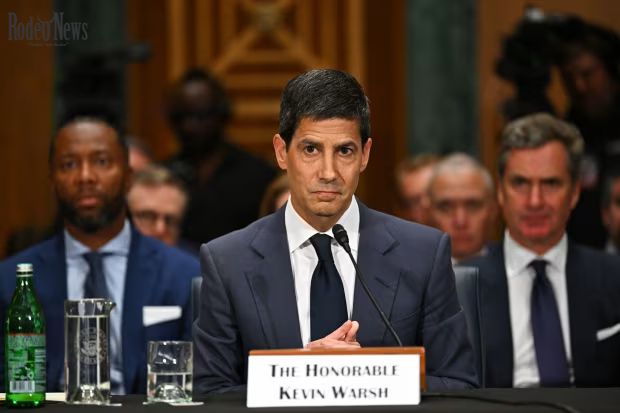
The Kevin Warsh Fed hearing has quickly become one of the most closely watched financial events of the year, sending ripples across Wall Street and Washington alike. Investors, policymakers, and economists are analyzing every statement from the Federal Reserve chair nominee to gauge the future direction of U.S. monetary policy.
From interest rate expectations to sweeping reform ideas, Warsh’s testimony revealed key signals that could shape markets in the coming months. While his tone was measured, the implications of his views are anything but minor.
Below are five major takeaways from the hearing—and what they mean for markets and the global economy.
1. A Strong Push for Federal Reserve Reform
One of the most striking aspects of the Kevin Warsh Fed hearing was his clear call for structural reform within the Federal Reserve.
Warsh emphasized the need for a “reform-oriented” central bank, suggesting that the current system may not be adequately equipped to handle evolving economic challenges.
His proposals include:
- Reassessing how the Fed models inflation
- Reevaluating policy frameworks
- Improving institutional discipline
He also suggested that the Fed’s framework—last updated in recent years—should be revisited to better align with modern economic realities.
Why this matters:
Markets tend to prefer stability and predictability. Any structural reform introduces uncertainty, which could lead to volatility in both equities and bonds in the short term.
2. Rethinking Forward Guidance Strategy
Another major revelation from the Kevin Warsh Fed hearing is his skepticism toward “forward guidance,” the Fed’s practice of signaling future policy moves in advance.
Warsh argued that this approach can backfire, making policymakers too committed to earlier forecasts—even when economic conditions change.
He noted that:
- Forecast transparency can reduce flexibility
- Policymakers may delay necessary changes
- Markets might misinterpret long-term signals
Market impact:
If implemented, this shift could make Fed decisions less predictable, potentially increasing short-term volatility. However, it may also allow the central bank to react more quickly to economic shifts.
3. Commitment to Fighting Inflation
Despite discussions about reform and flexibility, Warsh made one thing very clear: inflation control remains a top priority.
During his opening statement, he stressed that maintaining price stability is a deliberate policy choice and pledged accountability for achieving it.
This stance positions him as relatively hawkish compared to candidates who favor aggressive rate cuts.
What investors are seeing:
- Lower likelihood of rapid interest rate cuts
- Continued focus on inflation metrics
- Potential for tighter monetary conditions
Indeed, early market reactions showed a slight dip in stocks, reflecting concerns that Warsh may not pursue aggressive easing policies.
4. Mixed Market Reaction Signals Uncertainty
Financial markets responded cautiously to the Kevin Warsh Fed hearing, highlighting uncertainty about his future leadership.
Key reactions included:
- Stocks: Slight decline
- Bond yields: Relatively stable
- Rate expectations: Modest changes
Investors appear divided. While some see Warsh as a disciplined policymaker capable of managing inflation, others worry he may slow down potential rate cuts.
Importantly, interest-rate futures suggest that markets are not expecting dramatic shifts in policy—at least in the near term.
Interpretation:
This “wait-and-see” reaction indicates that markets are still trying to decode Warsh’s long-term strategy.
5. Big Ideas, Few Specifics
While Warsh outlined an ambitious vision for reform, critics pointed out a lack of detailed policy plans during the hearing.
Economists noted that:
- His proposals were broad
- Specific implementation strategies were unclear
- Key questions on rate policy remained unanswered
For example, Warsh avoided committing to specific interest rate targets, even when pressed by lawmakers.
Why this matters:
Markets rely on clarity. Without concrete guidance, uncertainty may persist, potentially increasing volatility in financial markets.
The AI Factor: A Wild Card for Policy
An interesting dimension of the Kevin Warsh Fed hearing was his discussion of artificial intelligence and its economic impact.
Warsh expressed optimism that AI could:
- Boost productivity
- Reduce inflationary pressures
- Support long-term economic growth
However, he also acknowledged that more research is needed to fully understand its effects.
Market implication:
If AI-driven productivity gains materialize, they could reshape the Fed’s approach to interest rates and inflation management.
Independence of the Federal Reserve Under Scrutiny
Another central theme was the independence of the Federal Reserve.
Warsh argued that independence is maintained through internal discipline rather than simply resisting political pressure.
This comes amid broader political tensions surrounding his nomination, including concerns about potential influence from former President Donald Trump and ongoing investigations involving current Fed leadership.
Why it matters:
Central bank independence is critical for market confidence. Any perceived political interference could undermine trust and increase volatility.
Balance Sheet Reduction: A Long-Term Challenge
Warsh also highlighted the need to shrink the Fed’s balance sheet, which has expanded significantly over the past decade.
He argued that:
- Large asset holdings distort financial markets
- The Fed’s footprint should be reduced
- Long-term normalization is necessary
However, experts warn that reducing the balance sheet could be a slow and complex process.
Investor takeaway:
This suggests a gradual shift rather than a sudden policy change—reducing the risk of immediate market disruption.
Political and Economic Stakes Are High
The Kevin Warsh Fed hearing is not just about monetary policy—it’s also deeply political.
Key issues include:
- Ongoing investigations involving Fed leadership
- Partisan disagreements over his nomination
- Concerns about transparency and financial disclosures
These factors could influence whether Warsh ultimately secures confirmation and how quickly policy changes might occur.
What Happens Next?
Looking ahead, several factors will determine the market impact of the Kevin Warsh Fed hearing:
- Senate confirmation outcome
- Clarity on policy direction
- Economic data trends (inflation, jobs, growth)
- Global economic conditions
Investors will also closely watch upcoming Fed meetings and economic reports for signals that align—or conflict—with Warsh’s views.
Conclusion: A Turning Point for Monetary Policy?
The Kevin Warsh Fed hearing marks a potential turning point for the Federal Reserve and global financial markets.
While his emphasis on reform, inflation control, and institutional discipline signals continuity in some areas, his willingness to rethink core strategies introduces a new level of uncertainty.
For now, markets remain cautious. But one thing is clear:
If confirmed, Kevin Warsh could reshape how the Federal Reserve operates for years to come.