
Virginia Turnout Decline Signals Shift in High-Stakes Redistricting Vote
The Virginia turnout decline during the 2026 redistricting referendum has become one of the most closely analyzed political developments in the United States this year. While the vote itself carried enormous national consequences, early data suggests that fewer voters participated compared to previous major elections, raising new questions about voter engagement, political fatigue, and the future of electoral mobilization.
The referendum, held on April 21, 2026, asked voters whether to approve a constitutional amendment allowing the state legislature to redraw congressional districts ahead of the next census. The outcome could reshape political power not only within Virginia but across the entire country.
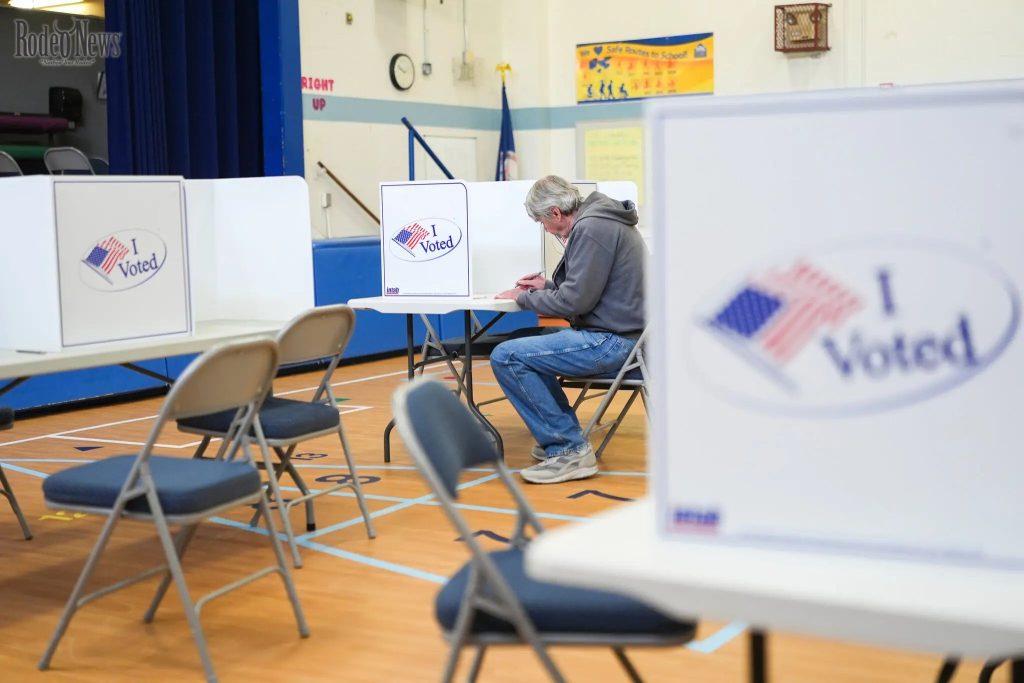
A High-Stakes Election With Lower Participation
Despite intense media coverage and tens of millions of dollars in campaign spending, turnout did not reach the levels seen in recent statewide elections. Approximately 48% of registered voters participated, noticeably lower than the roughly 55% turnout in the previous gubernatorial election.
This Virginia turnout decline stands out because the referendum was widely described as one of the most consequential ballot measures in years. It had the potential to influence control of the U.S. House of Representatives, making the lower participation rate particularly significant.
Early voting numbers were also substantial but did not fully compensate for weaker Election Day turnout. Around 1.37 million ballots were cast early, reflecting strong initial interest but not enough to match prior election cycles.
What the Redistricting Measure Means
At the center of the vote was a proposal to temporarily allow Virginia’s legislature to redraw congressional district boundaries. Under the plan, lawmakers could implement a new map expected to favor Democrats significantly.
If enacted, the new map could shift Virginia’s congressional delegation from a relatively balanced split to a strong Democratic advantage—potentially 10 out of 11 seats.
Supporters argued the move was necessary to counter similar redistricting efforts by Republican-led states. Critics, however, described it as a clear example of partisan gerrymandering.
This broader debate reflects a nationwide struggle over electoral maps, where both major parties are increasingly willing to redraw districts mid-decade to gain an advantage.
Why the Virginia Turnout Decline Matters
The Virginia turnout decline is not just a local phenomenon—it carries broader implications for U.S. democracy.
1. Voter Fatigue
One possible explanation is voter fatigue. With frequent elections, political messaging, and ongoing national tensions, many voters may feel overwhelmed or disengaged.
2. Off-Cycle Timing
The referendum took place outside the traditional November election cycle. Historically, off-cycle elections tend to attract fewer voters, even when stakes are high.
3. Confusion Over the Issue
Redistricting is a complex topic. Some voters may have struggled to understand the implications of the amendment, leading to lower participation.
According to reports, many residents were still trying to grasp the measure even as voting began.
Massive Spending Couldn’t Prevent Lower Turnout
The campaign surrounding the referendum was one of the most expensive in Virginia history. Combined spending exceeded $80 million, highlighting just how important the issue was to both parties.
Democratic-backed groups significantly outspent their Republican counterparts, investing heavily in advertising and voter outreach. Meanwhile, opposition groups focused on messaging around fairness and accusations of gerrymandering.
Despite this unprecedented spending, the Virginia turnout decline suggests that money alone cannot guarantee voter engagement.
National Implications: Control of Congress at Stake
The significance of the referendum extends far beyond Virginia. Control of the U.S. House of Representatives could hinge on the outcome.
Democrats need only a handful of additional seats nationwide to regain a majority. The Virginia redistricting plan could provide up to four additional Democratic-leaning districts.
This makes the Virginia turnout decline even more critical. Lower participation levels can introduce unpredictability, making outcomes harder to forecast and potentially amplifying the influence of highly motivated voter groups.
A Key Front in the Gerrymandering Battle
The Virginia vote is part of a broader national trend. Across the United States, both parties have engaged in aggressive redistricting strategies.
Republican-led states such as Texas and Missouri have pursued their own map changes, while Democrats have responded with similar efforts in states like Virginia and California.
This escalating battle has transformed redistricting into one of the most contentious issues in American politics. The Virginia turnout decline highlights the challenge of maintaining voter engagement in increasingly complex and partisan electoral fights.
Legal Challenges Add Uncertainty
The referendum has also been surrounded by legal disputes. Courts initially blocked the measure before allowing it to proceed, and additional challenges are expected even after the vote.
This legal uncertainty may have contributed to voter hesitation. When election rules appear unstable or contested, some voters may feel less confident about participating.
What Experts Are Saying
Political analysts view the Virginia turnout decline as a warning sign for future elections.
Some experts argue that declining participation in high-stakes votes could weaken democratic legitimacy. Others believe it reflects a need for clearer communication and more accessible voting processes.
At the same time, campaigns are likely to study turnout patterns closely. Understanding which groups showed up—and which stayed home—could shape strategies for the 2026 midterms and beyond.
The Role of Early Voting
Early voting played a significant role in the referendum, accounting for a large portion of total ballots cast. However, it did not fully offset the drop in Election Day participation.
This trend suggests a shift in how Americans vote. While early voting provides convenience, it may also change traditional turnout dynamics, making overall participation harder to predict.
What Happens Next
If the amendment is implemented, Virginia will adopt new congressional districts for upcoming elections. These changes could remain in place through 2030 before the state returns to its standard redistricting process.
The political consequences will unfold over the next several election cycles. Candidates, parties, and voters alike will need to adapt to a new electoral landscape shaped by the referendum.
Conclusion: A Warning and a Signal
The Virginia turnout decline is both a warning and a signal. It highlights the challenges of engaging voters in complex political issues, even when the stakes are extraordinarily high.
At the same time, it underscores the evolving nature of American elections—where timing, messaging, and voter understanding play as crucial a role as policy itself.
As the nation moves closer to the 2026 midterms, one thing is clear: turnout trends like those seen in Virginia could ultimately determine not just local outcomes, but the balance of power in Washington.