Sabres Must Reset After Emotional Game 1 Win
The Buffalo Sabres opened their playoff series against the Boston Bruins with a dramatic and emotional comeback victory in Game 1. However, despite the excitement surrounding the win, the message inside the locker room is clear: the team must quickly move forward and avoid getting emotionally stuck in the moment.
Buffalo’s late surge in the third period turned a two-goal deficit into a stunning 4–2 victory, energizing the crowd and marking one of the most memorable playoff performances in recent franchise history. Still, coaches and players understand that the series is far from over, and emotional momentum alone will not win the next game.
Emotional High After a Historic Comeback
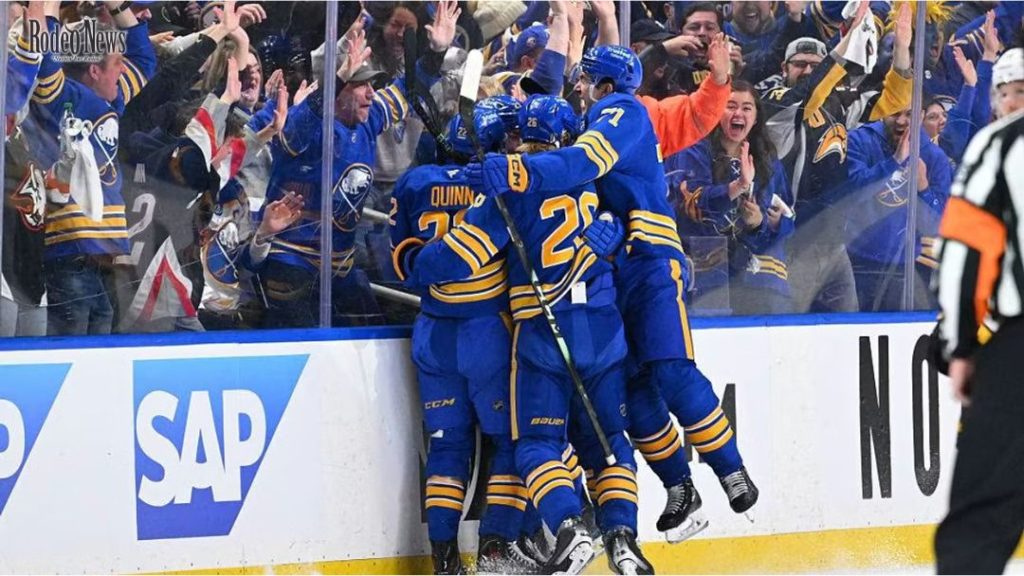
The Sabres’ Game 1 win was defined by a dramatic late push, where Buffalo scored four goals in the final stretch of the third period. The comeback not only shocked Boston but also reignited a fan base that has waited years for meaningful playoff success.
According to game coverage, the arena atmosphere reached one of its highest emotional peaks in recent memory, with players and fans feeding off each other during the late rally.
However, inside the team environment, that emotional surge is being treated cautiously rather than celebrated as a turning point.
Coaching Staff Emphasizes Reset Mentality
Head coach Lindy Ruff made it clear that while the win was significant, the team must not allow emotion to dictate their preparation for Game 2.
The Sabres’ approach focused heavily on staying consistent with their system rather than reacting emotionally to the flow of Game 1. Buffalo’s coaching staff pointed out that the comeback happened because the team stayed structured, physical, and disciplined rather than forcing plays out of frustration.
That same structure, they believe, must carry into the next matchup.
Why Emotional Wins Can Be Dangerous in Playoffs
Playoff hockey is often shaped by momentum shifts, but emotional highs can be misleading. A dramatic win does not guarantee sustained success.
For Buffalo, the concern is that players may unconsciously relax or become overly confident after a comeback like Game 1. That can lead to:
- Slower starts in the next game
- Loss of defensive structure
- Over-reliance on individual plays instead of systems
- Emotional reaction to early setbacks
Boston, as a veteran playoff team, is expected to respond with adjustments that challenge Buffalo’s discipline early in Game 2.
What Changed in Game 1’s Final Minutes
Buffalo’s success in Game 1 came from a shift in execution rather than emotion alone. The Sabres began winning more battles in front of the net, increasing physical pressure and getting defensemen more involved in the attack.
Players like Tage Thompson and Alex Tuch helped tilt the ice by generating sustained offensive pressure, while defensive activation created chaos around Boston’s net.
This structured aggression was the real foundation of the comeback—not just emotional energy.
Focus Shifts Immediately to Game 2
Despite the celebration, the Sabres’ attention quickly shifted to recovery and preparation. The coaching staff prioritized rest, video analysis, and controlled practice intensity to avoid emotional fatigue.
Game 2 now becomes a test of maturity: whether Buffalo can replicate its structure without relying on the adrenaline of a comeback.
The challenge is simple but difficult—prove that Game 1 was not just an emotional peak, but a sustainable playoff identity.
Final Outlook
The Sabres’ Game 1 win will be remembered as a breakthrough moment, but internally it is treated as only the first step in a long series.
If Buffalo wants to advance, the formula is clear: move forward fast, stay disciplined, and separate emotion from execution.
Game 2 will reveal whether the Sabres can turn one emotional victory into consistent playoff performance.