Louisiana Mass Shooting Revealed: 8 Children Killed in Tragic Rampage
A devastating Louisiana mass shooting has shocked the United States, leaving eight children dead in what authorities describe as one of the most horrific domestic violence incidents in recent years. The tragedy unfolded in Shreveport, Louisiana, early Sunday morning, sending waves of grief and outrage across the nation.
According to police, the shooting claimed the lives of eight children—seven of whom were reportedly the suspect’s own—making it one of the deadliest incidents involving minors in modern U.S. history.
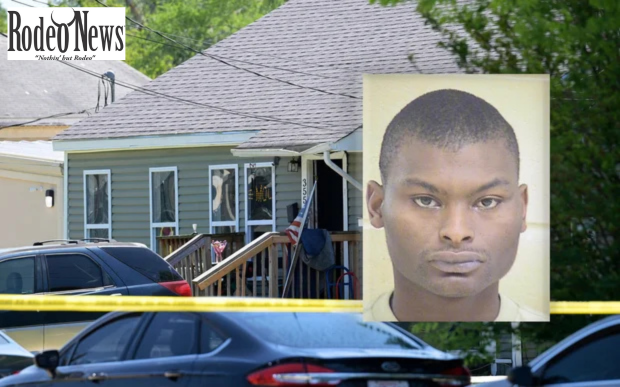
What Happened in Shreveport
The Louisiana mass shooting began in the early hours of April 19, 2026, in the Cedar Grove neighborhood of Shreveport. Authorities say the suspect, identified as Shamar Elkins, carried out a violent rampage that spanned multiple locations.
The incident reportedly started as a domestic dispute. Police say the gunman first shot a woman before moving to a nearby home, where the majority of the victims—children between the ages of 3 and 11—were killed.
In total, 10 people were shot during the attack. Eight children died, while two adult women were hospitalized with serious injuries.
Law enforcement later pursued the suspect after he fled the scene in a stolen vehicle. The chase ended when officers fatally shot him.
Victims: Young Lives Cut Short
The victims of this Louisiana mass shooting were heartbreakingly young. Officials confirmed that the children ranged in age from just 3 to 11 years old.
Reports indicate that five girls and three boys were among those killed. Many were found inside a residence, while at least one child was discovered on a rooftop after attempting to escape the violence.
The brutal nature of the attack has deeply shaken the local community. Authorities described parts of the crime scene as “execution-style,” underscoring the severity and intent behind the killings.
Suspect Background and Motive
Police identified the shooter as 31-year-old Shamar Elkins, a former member of the Louisiana Army National Guard.
Investigators believe the Louisiana mass shooting was rooted in domestic conflict. Reports suggest the suspect had been involved in a dispute with his partner, potentially linked to a separation or ongoing personal issues.
Authorities also revealed that Elkins had a prior weapons-related conviction in 2019, raising questions about how he was able to access firearms.
Despite these details, officials say the full motive is still under investigation. However, early findings strongly indicate that the attack was not random but targeted within a family setting.
A Domestic Violence Tragedy
Law enforcement officials have classified the incident as a domestic violence case rather than a random mass shooting.
This distinction is critical. While mass shootings often involve public spaces, this tragedy occurred within private residences, making it even more devastating for those directly affected.
Experts describe such incidents as “family annihilation,” where a perpetrator kills multiple family members in a single act of violence.
The Louisiana mass shooting highlights the dangerous intersection between domestic violence and access to firearms—a growing concern among policymakers and advocacy groups.
Timeline of the Attack
Authorities have pieced together a chilling sequence of events:
- Early morning: A domestic dispute escalates into violence
- First shooting: A woman is critically injured
- Second location: The gunman targets children inside a nearby home
- Escape attempt: Some children try to flee, including climbing onto a roof
- Carjacking: The suspect flees the scene
- Police chase: Law enforcement tracks the suspect across the area
- Final confrontation: Police fatally shoot the suspect
Investigators say the attack spanned multiple crime scenes, adding complexity to the case.
Community Reaction and Grief
The Louisiana mass shooting has left the Shreveport community in mourning. Local officials described the event as one of the darkest days in the city’s history.
Residents expressed shock, especially given that neighbors reported seeing the children playing just hours before the tragedy.
Community leaders and organizations have begun organizing vigils and support services for affected families. Counseling resources are also being made available to help residents cope with the trauma.
National Impact and Rising Concerns
This Louisiana mass shooting is now considered the deadliest in the United States in 2026 so far.
It has reignited national debates over:
- Gun control laws
- Domestic violence prevention
- Mental health resources
- Firearm access for individuals with prior convictions
Advocacy groups are calling for stricter background checks and improved intervention systems to prevent similar tragedies.
Meanwhile, policymakers are under increasing pressure to address the broader issue of gun violence in America.
A Pattern of Violence
Unfortunately, this incident is not isolated. The United States has recorded over 100 mass shootings in 2026 alone, highlighting an ongoing crisis.
While many of these incidents differ in nature, domestic-related shootings remain a significant portion. Experts warn that without targeted intervention, such tragedies may continue to occur.
Investigation Ongoing
Authorities continue to investigate the Louisiana mass shooting, focusing on:
- The suspect’s background and mental state
- The timeline leading up to the attack
- How firearms were obtained
- Potential warning signs that may have been missed
Police have confirmed that the suspect acted alone, and there is no ongoing threat to the public.
The Human Cost
Beyond statistics and headlines, the Louisiana mass shooting represents a profound human tragedy. Eight children—each with a future ahead—lost their lives in an act of extreme violence.
Families have been shattered. A community has been traumatized. And a nation is once again grappling with the devastating consequences of gun violence.
Moving Forward
In the aftermath of this tragedy, attention is turning toward prevention. Experts emphasize the importance of:
- Early intervention in domestic disputes
- Better access to mental health care
- Stronger firearm regulations
- Community awareness and reporting systems
While no policy can undo the loss, many believe that meaningful action can help prevent future tragedies.