Japan Earthquake Tsunami Warning: What Happened
A powerful Japan earthquake tsunami warning was issued after a massive offshore tremor struck northern Japan on April 20, 2026. The earthquake, initially recorded at magnitude 7.5 and later upgraded to 7.7, occurred near the Sanriku coast, triggering immediate concerns of a potentially dangerous tsunami.
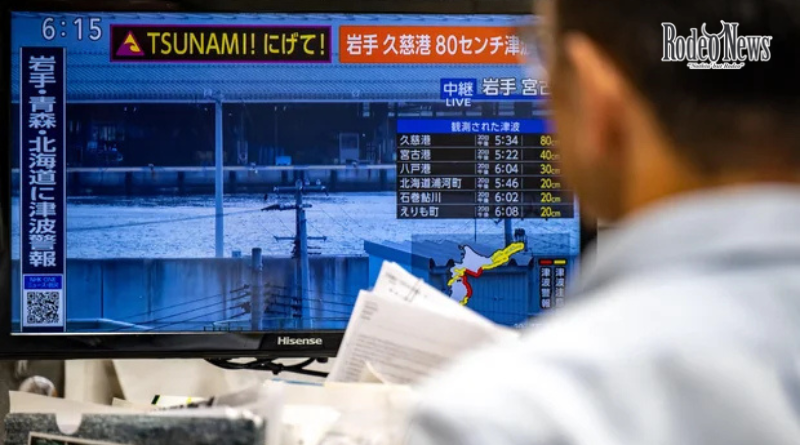
Authorities quickly moved to alert residents across several northern regions, including Hokkaido, Iwate, and Aomori. Emergency broadcasts urged people to evacuate coastal areas and move to higher ground as a precaution against incoming waves.
While early warnings suggested tsunami waves could reach up to 10 feet (3 meters), the actual waves recorded were significantly smaller. Nevertheless, the situation remained serious for hours as officials assessed the risk and monitored aftershocks.
Timeline of the Earthquake and Tsunami Alert
The earthquake struck at approximately 4:53 p.m. local time, with its epicenter located offshore in the Pacific Ocean. The shallow depth—around 6 miles (10 kilometers)—made it more likely to generate a tsunami.
Within minutes, Japan’s advanced early warning system issued alerts across affected regions. The Japan Meteorological Agency (JMA) initially warned of large tsunami waves and instructed immediate evacuation from coastal zones.
Key developments included:
- Tsunami waves of about 2.6 feet (0.8 meters) recorded in Iwate
- Smaller waves detected along nearby coastal areas
- Warnings later downgraded to advisories as the threat decreased
- The Pacific Tsunami Warning Center eventually declared the threat had passed
Despite the downgrade, authorities emphasized that residents should remain cautious, especially due to the possibility of aftershocks.
Evacuations and Emergency Response
In response to the Japan earthquake tsunami warning, local governments issued evacuation advisories affecting more than 120,000 residents across northern Japan.
Although these advisories were not mandatory, many residents took them seriously, given Japan’s history with devastating tsunamis. Emergency services were mobilized quickly, and evacuation centers were prepared in safer, elevated areas.
Prime Minister Sanae Takaichi confirmed that an emergency task force had been established to coordinate response efforts. Television broadcasts and mobile alerts continuously updated citizens, ensuring real-time communication during the crisis.
Importantly, no major injuries or fatalities were reported in the immediate aftermath, and infrastructure damage appeared minimal.
Nuclear Safety and Infrastructure Status
One of the biggest concerns following any major earthquake in Japan is the safety of nuclear facilities. However, officials confirmed that all nuclear plants in the affected regions remained stable, with no abnormalities detected.
Transportation systems, including high-speed bullet trains, were temporarily halted as a precaution. Services resumed gradually after safety inspections were completed.
Power infrastructure also remained largely intact, with only minor disruptions reported in some areas. This highlights Japan’s continued investment in disaster-resilient infrastructure following previous catastrophic events.
The Science Behind the Tsunami Warning
The Japan earthquake tsunami warning system is among the most advanced in the world. When a significant offshore earthquake occurs, sensors quickly analyze seismic data to determine whether a tsunami is likely.
If the conditions indicate a potential threat—such as strong magnitude and shallow depth—warnings are issued within minutes.
Tsunami warnings in Japan are categorized into three levels:
- Major Warning: Waves over 3 meters (destructive)
- Warning: Waves up to 3 meters
- Advisory: Smaller waves but still dangerous
In this case, the warning was initially severe but later downgraded as real-time data showed smaller wave heights than expected.
Risk of a “Mega-Quake” After the Event
Following the earthquake, Japanese authorities issued a rare advisory warning of a slightly increased risk of a larger “mega-quake” occurring in the coming days.
Officials estimated about a 1% chance of a major follow-up earthquake within a week. While this probability remains low, it is significantly higher than normal background levels.
Experts stressed that this is not a prediction but a precautionary measure. Residents were encouraged to:
- Prepare emergency kits
- Review evacuation plans
- Stay updated with official announcements
This advisory reflects Japan’s proactive approach to disaster management, aiming to minimize risk through preparedness.
Historical Context: Lessons from 2011
The current Japan earthquake tsunami warning inevitably draws comparisons to the devastating 2011 Tōhoku disaster.
That event, triggered by a magnitude 9.0 earthquake, caused a massive tsunami that killed more than 22,000 people and led to the Fukushima nuclear crisis.
Since then, Japan has significantly upgraded its disaster response systems, including:
- Faster and more accurate tsunami detection
- Improved evacuation infrastructure
- Stronger building regulations
- Enhanced public awareness campaigns
These improvements likely contributed to the limited impact of the 2026 earthquake.
Why Japan Is So Prone to Earthquakes
Japan sits on the Pacific “Ring of Fire,” one of the most seismically active regions on Earth. This area accounts for a large percentage of the world’s earthquakes, particularly those above magnitude 6.0.
Multiple tectonic plates converge beneath Japan, creating constant geological stress. As a result, earthquakes are frequent, and the risk of tsunamis remains ever-present.
This geological reality is why Japan has invested heavily in early warning systems and disaster preparedness.
Public Reaction and Ongoing Monitoring
Residents across northern Japan reacted quickly to the alerts, with many evacuating coastal areas despite the eventual downgrade of the warning.
Ships returned to ports, transportation slowed, and daily life was briefly disrupted. However, calm returned relatively quickly once authorities confirmed that the tsunami threat had passed.
Still, officials warned that aftershocks could continue for days or even weeks, urging continued vigilance.
What Happens Next?
Although the immediate danger has subsided, monitoring continues. Authorities are closely watching seismic activity in the region and maintaining readiness for any further developments.
Experts recommend that residents remain prepared but avoid panic. The combination of advanced warning systems and public awareness significantly reduces the risk of large-scale disaster.
Conclusion
The Japan earthquake tsunami warning issued on April 20, 2026, highlights both the ongoing risks faced by the country and the effectiveness of its disaster preparedness systems.
While the 7.7 magnitude earthquake initially raised fears of a major tsunami, the actual impact was limited thanks to rapid response, accurate monitoring, and public cooperation.
However, the event serves as a reminder that Japan remains vulnerable to powerful natural disasters—and that preparedness remains the best defense.