Voyager 1 Update Revealed: NASA Restores Signal
In a remarkable breakthrough for space exploration, a new Voyager 1 update confirms that NASA has successfully restored communication with its most distant spacecraft after months of technical issues. The development marks a major milestone in one of humanity’s longest-running scientific missions, reviving a probe that has been traveling through interstellar space for nearly half a century.
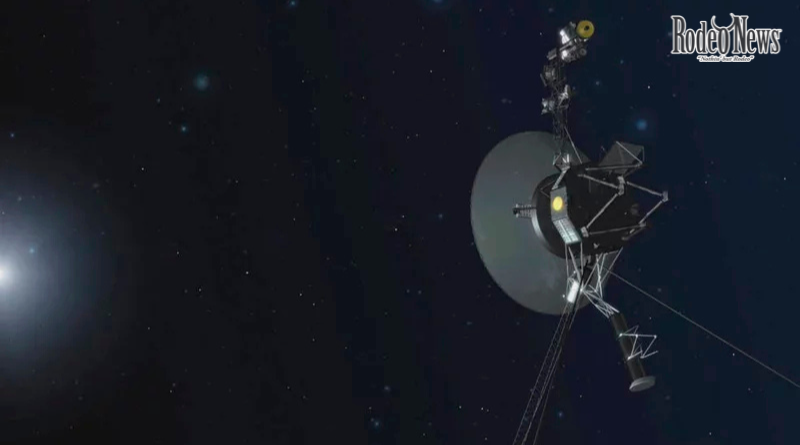
The spacecraft, Voyager 1, had experienced a critical malfunction that prevented it from sending usable data back to Earth. However, engineers have now managed to resolve the issue, allowing the probe to once again transmit meaningful information across billions of miles.
This latest Voyager 1 update highlights not only the resilience of aging space technology but also the ingenuity of the scientists and engineers working tirelessly to keep it alive.
A Historic Mission Facing Modern Challenges
Launched in 1977, Voyager 1 has long surpassed its original mission objectives. Initially designed to study the outer planets, the spacecraft went on to achieve something unprecedented—it became the first human-made object to enter interstellar space in 2012.
Today, the probe continues to send back valuable data about the region beyond our solar system, offering insights into cosmic radiation, magnetic fields, and the structure of interstellar space.
However, maintaining communication with such a distant spacecraft is no small feat. The recent Voyager 1 update follows months of silence caused by a malfunction in its onboard computer system. According to reports, corrupted code disrupted the probe’s ability to relay readable data, leaving mission teams scrambling for a solution.
The situation underscored a harsh reality: even the most advanced space missions are not immune to the effects of time.
The Critical Breakthrough
The turning point came when NASA engineers identified the root of the problem—a faulty memory component within the spacecraft’s flight data system. This issue caused Voyager 1 to send back nonsensical signals instead of coherent information.
To fix the problem, engineers performed what can only be described as remote surgery on a spacecraft located more than 20 billion kilometers away. They developed a workaround that involved relocating critical code to a different part of the system, bypassing the damaged memory section.
Eventually, the efforts paid off.
The latest Voyager 1 update confirms that the spacecraft has resumed sending engineering data back to Earth, a crucial first step toward restoring full scientific operations.
This achievement demonstrates the extraordinary level of precision and creativity required to manage deep-space missions.
Why This Voyager 1 Update Matters
At first glance, restoring communication with an aging spacecraft might seem like a technical footnote. However, the significance of this Voyager 1 update goes far beyond that.
1. Extending Scientific Discovery
Voyager 1 remains one of the only tools capable of directly sampling interstellar space. The data it provides cannot currently be replicated by any other mission.
By restoring communication, NASA ensures that scientists can continue to study:
- Cosmic radiation beyond the solar system
- Plasma waves in interstellar space
- The boundary between solar and interstellar environments
These observations are critical for understanding how our solar system interacts with the broader galaxy.
2. Proving Engineering Resilience
This Voyager 1 update showcases the durability of 1970s-era technology. Despite operating far beyond its intended lifespan, the spacecraft continues to function under extreme conditions.
The ability to diagnose and fix problems remotely also highlights the adaptability of modern engineering teams. In many ways, this success is as much about human ingenuity as it is about the spacecraft itself.
3. Inspiring Future Missions
Voyager 1’s continued operation serves as inspiration for future interstellar missions. Agencies around the world are already exploring concepts for probes that could travel even farther and faster.
The lessons learned from this Voyager 1 update will play a crucial role in designing more resilient spacecraft for the future.
The Challenges of Deep Space Communication
Communicating with Voyager 1 is unlike any other mission. Signals sent from Earth take more than 20 hours to reach the spacecraft, and another 20 hours to return.
This delay means that even simple troubleshooting steps can take days to verify. Engineers must plan carefully, often relying on simulations and predictive models to test their solutions before sending commands.
Moreover, the spacecraft’s power supply is gradually declining. Voyager 1 relies on a radioisotope thermoelectric generator, which produces less energy each year. As a result, NASA has had to shut down non-essential systems to conserve power.
Recent reports indicate that only a limited number of instruments remain operational, making each successful communication even more valuable.
What Comes Next for Voyager 1
Following this Voyager 1 update, NASA plans to gradually restore full scientific operations. Engineers will continue to monitor the spacecraft closely, ensuring that the workaround remains stable.
In the coming months, the focus will be on:
- Recovering additional science instruments
- Ensuring long-term communication stability
- Maximizing data collection before power levels drop further
While Voyager 1 is expected to continue operating for several more years, its mission is inevitably approaching its final phase. Scientists estimate that the spacecraft may only be able to transmit data until the 2030s, depending on power availability.
Nevertheless, every additional day of operation represents a unique opportunity to gather data from a region of space that remains largely unexplored.
A Symbol of Human Curiosity
More than just a spacecraft, Voyager 1 has become a symbol of human curiosity and ambition. It carries the famous Golden Record—a collection of sounds and images representing life on Earth—intended for any potential extraterrestrial discoverers.
Even as it travels farther into the cosmos, the probe continues to serve as a reminder of humanity’s desire to explore the unknown.
This latest Voyager 1 update reinforces that legacy. Against all odds, a spacecraft launched nearly 50 years ago is still communicating with Earth, still contributing to science, and still pushing the boundaries of what is possible.
The Bigger Picture in Space Exploration
The success of this Voyager 1 update comes at a time when space exploration is entering a new era. From lunar missions to Mars exploration and beyond, agencies like NASA are pushing forward with ambitious plans.
Yet, Voyager 1 remains uniquely significant. Unlike newer missions, it operates in a region that no other spacecraft has reached, providing data that cannot be obtained elsewhere.
Its continued operation bridges the past and the future of space exploration, linking the pioneering spirit of the 1970s with the technological advancements of today.
Conclusion
The latest Voyager 1 update is more than just a technical success—it is a testament to human perseverance, innovation, and curiosity. By restoring communication with the spacecraft, NASA has ensured that one of humanity’s greatest scientific missions can continue.
As Voyager 1 journeys deeper into interstellar space, it carries with it not only scientific instruments but also the enduring spirit of exploration. And thanks to this breakthrough, that journey is far from over.