Artemis II Reentry Revealed: 5 Shocking Moments
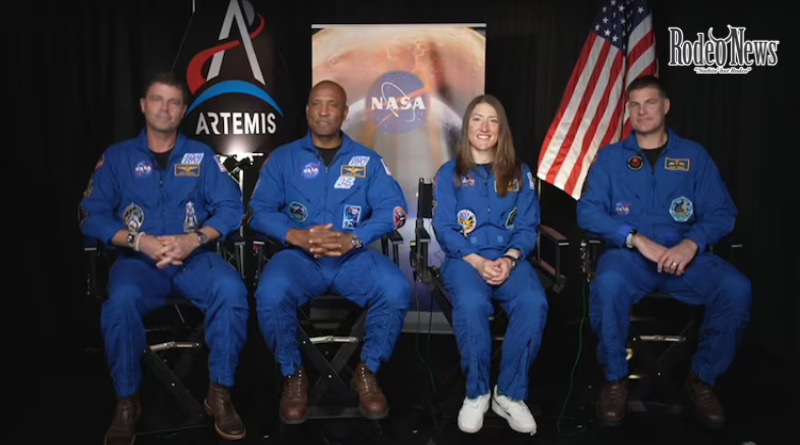
The Artemis II reentry has captured global attention after astronauts shared gripping details about their return to Earth following a historic lunar mission. Nearly a week after completing their journey around the Moon, the crew opened up in an interview with David Muir, describing the descent as far more intense than most people imagine.
Their revelations shed light on one of the most dangerous phases of any spaceflight—reentry—offering rare insight into what astronauts truly experience inside a blazing spacecraft hurtling back to Earth.
A Historic Mission Beyond Earth Orbit
The Artemis II mission marked a major milestone for NASA, becoming the first crewed lunar mission in over 50 years. The four-person crew—Reid Wiseman, Victor Glover, Christina Koch, and Jeremy Hansen—traveled hundreds of thousands of miles during their 10-day journey.
The mission tested the Orion spacecraft’s systems in deep space, paving the way for future lunar landings. While the journey around the Moon was historic, it was the return home that proved to be the most intense part of the experience.
1. “10 Times Wilder Than Launch”
According to astronaut Christina Koch, the Artemis II reentry was “at least 10 times wilder than any rocket launch.”
This statement challenges a common assumption. Many believe liftoff is the most extreme part of space travel, but astronauts insist that coming back to Earth is far more physically and mentally demanding.
Koch described reentry as the “grand finale” of spaceflight—an uncontrollable, high-speed plunge through Earth’s atmosphere that leaves little room for error.
2. A Fiery Plasma Bubble at 5,000°F
As the Orion spacecraft descended, it encountered temperatures reaching nearly 5,000 degrees Fahrenheit due to atmospheric friction.
This extreme heat created a plasma bubble that engulfed the capsule, turning it into a blazing fireball. The glow was so intense that astronauts compared it to looking directly at an arc welder.
The phenomenon occurs when air molecules compress and heat up dramatically, forming ionized gas around the spacecraft. It is both visually stunning and incredibly dangerous.
3. Total Communication Blackout
One of the most nerve-wracking moments during the Artemis II reentry was the communication blackout.
For approximately six minutes, the plasma surrounding the spacecraft blocked all radio signals.
This meant that mission control had no contact with the crew—and vice versa. During this period, astronauts must rely entirely on the spacecraft’s systems and their training.
It is a silent window where anything could go wrong, yet no one on Earth would know until communication is restored.
4. Violent Forces and Unpredictable Motion
The astronauts experienced intense gravitational forces during reentry, reaching up to four times the force of gravity.
Inside the capsule, the ride was anything but smooth. Koch described a deep rumbling sensation unlike anything that can be simulated on Earth.
Meanwhile, pilot Victor Glover maintained precise control, continuously calling out altitude and speed data throughout the descent. His performance was praised by commander Reid Wiseman, who described it as one of the most impressive operational displays he had ever witnessed.
Despite the chaos, discipline and teamwork remained critical.
5. Fear, Trust, and Human Emotion
Beyond the physical challenges, the Artemis II reentry was also an emotional experience.
At one point, Wiseman reassured the crew by saying everything was “nominal,” meaning normal. Koch later admitted she doubted whether anyone truly knew if things were normal—but the reassurance helped calm her.
This moment highlights the psychological dimension of spaceflight. Even highly trained astronauts rely on trust and leadership when facing the unknown.
Why Reentry Is the Most Dangerous Phase
Reentry combines multiple extreme factors:
- Hypersonic speeds exceeding 25,000 mph
- Extreme heat from atmospheric friction
- Limited control over trajectory
- Communication blackouts
- High G-forces on the human body
Unlike launch, which is carefully staged and monitored, reentry is a rapid and unforgiving process. Any failure in heat shielding or navigation could be catastrophic.
Despite these risks, the Orion spacecraft performed as expected, successfully protecting the crew during descent.
A Textbook Splashdown
After enduring the intense descent, the spacecraft executed a precise splashdown in the Pacific Ocean.
Recovery teams quickly reached the capsule, bringing the astronauts safely back to Earth. The successful landing demonstrated the reliability of NASA’s next-generation spacecraft systems.
This “textbook” recovery was a crucial validation step for future Artemis missions.
Lessons for Future Moon Missions
The Artemis II mission is more than a historic achievement—it is a foundation for what comes next.
Data collected during reentry will help improve spacecraft design, heat shield durability, and crew safety for upcoming missions like Artemis III, which aims to land humans on the Moon.
The astronauts’ firsthand accounts also provide valuable insights into human performance under extreme conditions.
A New Era of Space Exploration
The success of Artemis II signals the beginning of a new chapter in space exploration.
For the first time since the Apollo era, humans have ventured beyond low Earth orbit and returned safely. The mission demonstrates that long-duration deep-space travel is once again possible.
It also highlights international collaboration, with astronauts from both the United States and Canada working together toward a shared goal.
The Human Perspective
While technology plays a critical role, the Artemis II story is ultimately about people.
From the fear during blackout to the awe of seeing Earth from deep space, the astronauts’ experiences remind us that space exploration is as much about human resilience as it is about engineering.
Their journey—and especially the Artemis II reentry—offers a powerful glimpse into the realities of traveling beyond our planet.
Conclusion
The Artemis II reentry stands out as one of the most intense and revealing moments of modern space exploration. From searing heat and communication blackouts to emotional resilience and teamwork, the astronauts’ accounts paint a vivid picture of what it takes to return home from the Moon.
As NASA prepares for future missions, these insights will play a crucial role in shaping safer and more advanced journeys into deep space.
The message is clear: reaching the Moon is extraordinary—but coming back may be even more challenging.