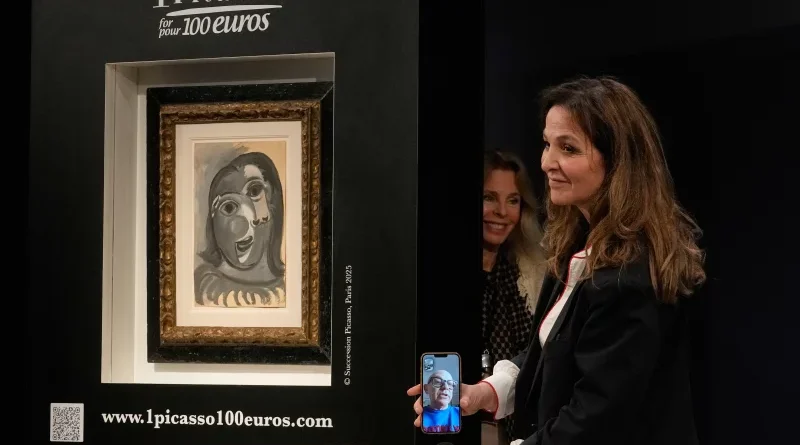
The raffle, officially titled “1 Picasso for 100 euros,” is a charitable initiative designed to make high-value art accessible while raising funds for important causes.
Participants could purchase tickets for €100 each, giving them a chance to win an original painting by legendary Spanish artist Pablo Picasso.
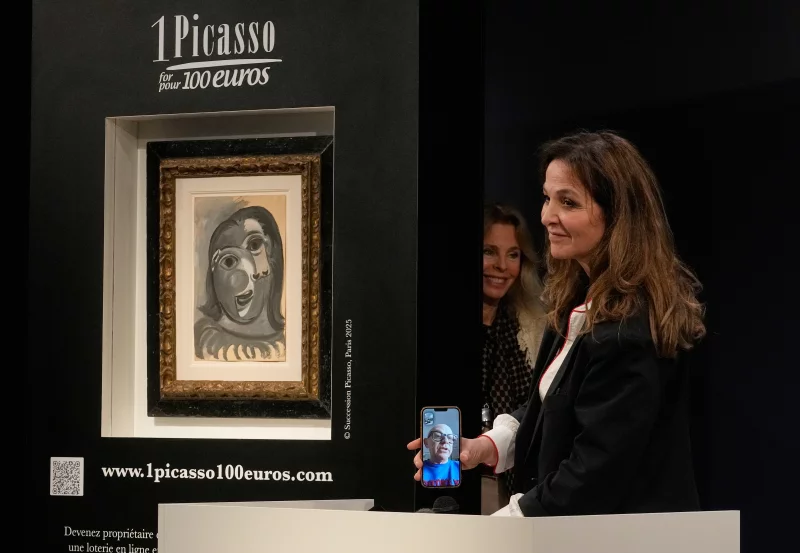
This year’s prize was the 1941 artwork Tête de Femme (Head of a Woman), a gouache-on-paper portrait believed to depict Dora Maar, one of Picasso’s most famous muses.
The raffle was capped at 120,000 tickets, meaning organizers could raise approximately €12 million if all entries sold—and they did.
A Life-Changing Moment for the Winner
For the Picasso raffle winner, the experience was nothing short of surreal.
Hodara reportedly purchased his ticket spontaneously while dining out, with no expectation of winning. When organizers contacted him after the draw, his first reaction was disbelief.
“How do I check that it’s not a hoax?” he reportedly said.
The reaction is understandable. Winning a million-dollar artwork through a low-cost raffle is an extremely rare occurrence—one that instantly places the winner among a unique group of individuals who now own museum-worthy pieces.
Despite the shock, Hodara expressed excitement and indicated he may keep the painting, rather than sell it.
The Painting: A Wartime Masterpiece
The artwork at the center of the raffle is more than just a valuable asset—it is a significant piece of 20th-century art history.
Painted in 1941 during World War II, Tête de Femme reflects a somber yet hopeful tone. Art experts describe the piece as emblematic of Picasso’s wartime style, using muted colors like grey, white, and cream.
The subject, Dora Maar, was not only Picasso’s muse but also an influential artist in her own right. The portrait captures both emotional depth and artistic experimentation, hallmarks of Picasso’s evolving style during that period.
Where the Money Goes
While the Picasso raffle winner gains a priceless artwork, the broader purpose of the initiative lies in philanthropy.
Out of the €12 million raised:
- €1 million goes to the painting’s owner, Opera Gallery
- Approximately €11 million is allocated to Alzheimer’s research
The funds are directed through France’s Fondation Recherche Alzheimer, a leading organization supporting research into the neurodegenerative disease.
This structure ensures that the raffle benefits both the art world and global health initiatives.
A Unique Approach to Art Ownership
The concept behind the raffle is revolutionary: making elite art accessible to the general public.
Traditionally, works by Picasso sell for millions at auction, often purchased by wealthy collectors or institutions. However, this initiative breaks that model by allowing anyone—regardless of financial status—to participate.
This democratization of art aligns with statements from those involved in organizing the raffle, who believe Picasso himself would have supported such accessibility.
Previous Picasso Raffles
This is not the first time such a raffle has taken place.
The initiative began in 2013 and has since held multiple editions:
- 2013: A U.S. winner received Man in the Opera Hat
- 2020: An Italian winner took home Nature Morte
- 2026: Hodara wins Tête de Femme
Together, these raffles have raised more than €10 million for various causes, including cultural preservation and humanitarian projects in Africa.
Each edition continues to build on the success of the last, attracting global attention and participation.
Why This Story Went Viral
The Picasso raffle winner story has captured widespread attention for several reasons.
1. The Odds and Accessibility
Winning a million-dollar artwork for €100 feels almost unbelievable, making it highly shareable online.
2. The Human Element
Hodara’s humble reaction—questioning whether the win was real—resonates with audiences.
3. The Cultural Impact
Picasso remains one of the most recognizable names in art history, ensuring global interest.
4. The Charitable Angle
The fact that proceeds support Alzheimer’s research adds emotional weight to the story.
The Growing Trend of Charity Raffles
This event also highlights a broader trend: using raffles and lotteries to fund charitable initiatives.
By combining entertainment, accessibility, and philanthropy, such campaigns:
- Attract global participation
- Generate significant funding
- Raise awareness for important causes
In this case, the raffle not only changed one person’s life but also contributed millions toward medical research.
What Happens Next?
For the Picasso raffle winner, several possibilities lie ahead:
- Keeping the painting as a personal treasure
- Lending it to museums or exhibitions
- Selling it for a substantial profit
Art experts note that owning a Picasso carries both prestige and responsibility, particularly regarding preservation and security.
Meanwhile, organizers are likely to continue the raffle tradition, given its success and impact.
A Rare Intersection of Luck and Legacy
The story of the Picasso raffle winner is more than just a feel-good headline—it represents a rare intersection of luck, art, and philanthropy.
It demonstrates that even in a world where fine art is often reserved for the elite, innovative ideas can open doors for everyone.
And for one lucky ticket holder in Paris, a simple €100 decision has turned into a once-in-a-lifetime moment—one that will be remembered not just for its value, but for its story.