Israel-Lebanon Talks Reveal Shocking Iran Barrier to Peace
The latest Israel-Lebanon talks have sparked cautious optimism across diplomatic circles. However, early signals suggest that any meaningful breakthrough remains unlikely without a fundamental shift in Iran’s regional role.
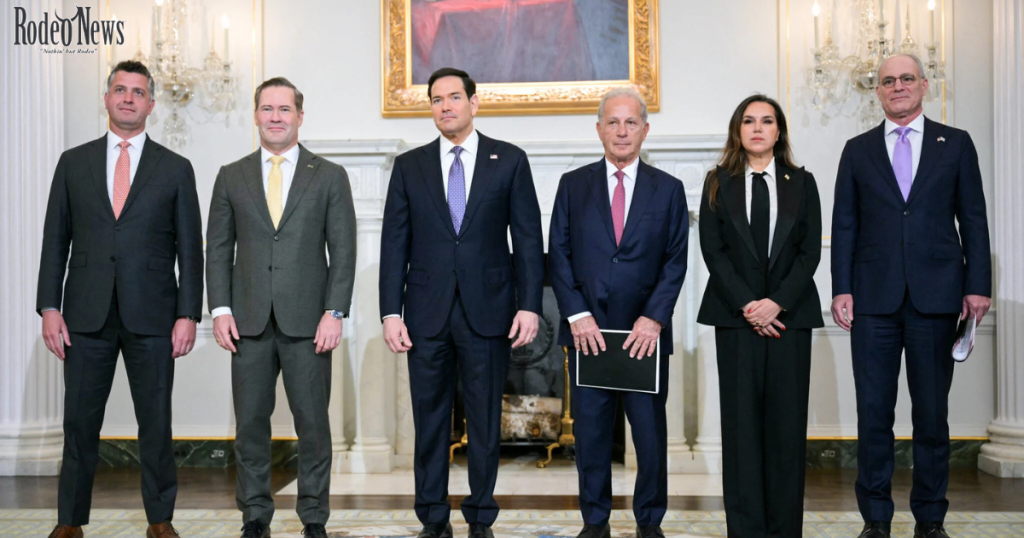
Negotiations hosted in Washington marked a rare moment of direct engagement between the long-time adversaries. Yet despite hopeful rhetoric from the United States and Israel, underlying geopolitical realities continue to cast a long shadow over the process.
At the heart of the issue lies a single, persistent factor: Iran.
A Historic Yet Fragile Diplomatic Moment
The current round of Israel-Lebanon talks represents one of the most significant diplomatic efforts between the two countries in decades. Facilitated by the United States, the discussions aim to establish a pathway toward long-term stability.
US officials expressed optimism following initial meetings, highlighting the potential for a “lasting peace” framework that could benefit both nations. Israeli representatives echoed this sentiment, emphasizing shared interests in security and economic cooperation.
However, Lebanon’s stance appears more restrained.
Lebanese officials have made it clear that their immediate priority is not a comprehensive peace agreement but rather a cessation of hostilities. Their focus remains on achieving a temporary ceasefire to halt ongoing military operations.
This divergence in priorities has already created friction within the negotiation process.
Ceasefire vs. Disarmament: A Fundamental Divide
One of the most critical obstacles in the Israel-Lebanon talks is the stark difference in objectives between the two sides.
- Lebanon is pushing for a ceasefire as a first step
- Israel is insisting on the disarmament of Hezbollah
These positions are not just different—they are fundamentally incompatible in the short term.
According to analysts, Lebanon views a ceasefire as essential to even begin discussing broader peace arrangements. Meanwhile, Israel sees disarming Hezbollah as a prerequisite for any lasting stability.
This creates a diplomatic deadlock.
As one expert noted, Lebanon believes “the road to peace runs through a ceasefire,” while Israel argues that “peace runs through disarmament.”
Without reconciling these opposing approaches, progress is expected to remain limited.
Hezbollah: The Central Flashpoint
The Iran-backed group Hezbollah remains the most contentious issue in the Israel-Lebanon talks.
For Israel, Hezbollah is the primary security threat along its northern border. The group has launched repeated attacks, escalating tensions and triggering military responses.
For Lebanon, the situation is far more complex.
While the Lebanese government recognizes the risks posed by Hezbollah, it lacks both the political consensus and military capability to fully disarm the group. Attempting to do so could potentially trigger internal conflict.
Experts suggest that Hezbollah’s entrenched position within Lebanon’s political and social fabric makes unilateral action nearly impossible.
As a result, the issue remains unresolved—and central to the stalemate.
Iran’s Influence: The Real Barrier
Despite official claims that the Israel-Lebanon talks are separate from broader regional dynamics, most analysts agree that Iran plays a decisive role.
Iran’s support for Hezbollah—financially, militarily, and strategically—has long shaped the balance of power in Lebanon.
As long as this backing continues, efforts to weaken or dismantle Hezbollah are unlikely to succeed.
A regional analyst summarized the situation clearly: the conflicts in Lebanon and Iran are deeply interconnected, and solving one without addressing the other is nearly impossible.
This interconnectedness explains why many experts believe that meaningful progress in the talks depends on significant changes within Iran itself.
Failed US-Iran Talks Add to Uncertainty
Complicating matters further is the lack of progress in parallel US-Iran negotiations.
Recent discussions between Washington and Tehran ended without a concrete agreement or even a commitment to continue talks.
This diplomatic stagnation has direct implications for the Israel-Lebanon talks.
Iran has shown little willingness to discuss its support for regional proxy groups, including Hezbollah. Without addressing this issue, any agreement between Israel and Lebanon risks being superficial.
In essence, the broader geopolitical conflict continues to undermine localized peace efforts.
Lebanon’s Domestic Constraints
Beyond external pressures, Lebanon faces significant internal challenges that limit its negotiating flexibility.
The government must balance international expectations with domestic realities. Engaging in talks with Israel is already controversial within Lebanon, where public opinion remains divided.
Officials are under pressure to demonstrate tangible benefits from negotiations, such as reduced violence or economic relief.
However, ongoing military operations make it difficult to justify continued dialogue.
As one Lebanese official explained, it is nearly impossible to “sell the idea of sitting with Israel” while attacks are still occurring.
This internal tension further complicates the diplomatic process.
Israel’s Strategic Calculations
On the Israeli side, strategic considerations are equally complex.
Israel is unlikely to halt military operations against Hezbollah without concrete assurances of long-term security. Officials remain skeptical that Lebanon’s government can effectively control or disarm the group.
As a result, Israel continues its operations in southern Lebanon, targeting Hezbollah positions and infrastructure.
This approach reflects a broader strategy: applying pressure to weaken Hezbollah while maintaining leverage in negotiations.
However, it also risks escalating tensions and undermining diplomatic efforts.
A Region Shaped by Interconnected Conflicts
The Israel-Lebanon talks cannot be viewed in isolation. They are part of a larger network of conflicts involving Iran, the United States, and various regional actors.
Recent military confrontations between the US, Israel, and Iran have further destabilized the region. These developments have weakened Iran in some respects but have not yet led to a shift in its strategic behavior.
At the same time, Hezbollah continues to act as a key extension of Iranian influence.
This interconnected landscape makes diplomacy significantly more challenging.
Even if progress is made on one front, setbacks in another can quickly derail the process.
Limited Expectations for Immediate Breakthrough
Given these challenges, expectations for the current round of Israel-Lebanon talks remain modest.
Analysts widely agree that a comprehensive peace agreement is unlikely in the near term. Instead, the focus may shift toward smaller, incremental steps.
Possible outcomes include:
- Temporary pauses in hostilities
- Limited agreements on military operations
- Confidence-building measures
While these steps may not resolve the conflict, they could create conditions for future progress.
The Long Road Ahead
Ultimately, the success of the Israel-Lebanon talks depends on factors that extend far beyond the negotiating table.
Without a fundamental change in Iran’s policies—particularly its support for Hezbollah—any agreement is likely to be fragile.
At the same time, internal dynamics within Lebanon and strategic calculations in Israel continue to shape the trajectory of the talks.
The situation underscores a broader reality of Middle Eastern geopolitics: local conflicts are rarely isolated. Instead, they are deeply intertwined with regional and global dynamics.
Conclusion: A Diplomatic Effort at a Crossroads
The current Israel-Lebanon talks represent both an opportunity and a challenge.
On one hand, they signal a willingness among key players to explore diplomatic solutions. On the other, they highlight the deep-rooted obstacles that continue to hinder progress.
Iran’s influence, Hezbollah’s role, and conflicting priorities between Israel and Lebanon all contribute to a complex and uncertain landscape.
For now, the talks serve as a reminder that while diplomacy is essential, it is often constrained by realities that lie far beyond the negotiating room.
Until those realities change, a lasting peace may remain just out of reach.