Historic Lebanon–Israel Peace Talks Begin in Washington Under Rubio
The United States has taken a major diplomatic step by hosting direct talks between Israel and Lebanon, marking the first high-level engagement between the two countries in decades. The meeting, led by US Secretary of State Marco Rubio in Washington, focuses on exploring a possible framework for peace, border stability, and a potential ceasefire amid ongoing conflict involving Hezbollah.
The Lebanon Israel peace talks come at a moment of intense regional instability, with active military operations still ongoing in southern Lebanon and deep disagreements between the two sides over security conditions and the role of armed groups.
First Direct Meeting in Decades Signals Diplomatic Shift
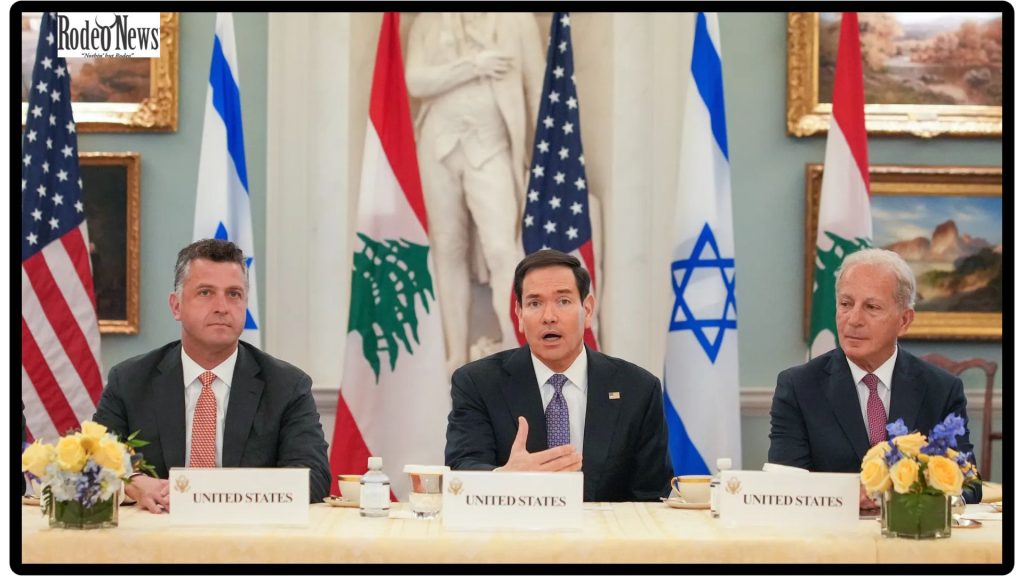
According to Axios reporting, Rubio hosted Israeli and Lebanese ambassadors for a two-hour meeting aimed at launching formal dialogue between the two nations. This marks the highest-level direct contact since 1993, breaking a decades-long diplomatic freeze between the two countries.
The talks were facilitated by the United States as part of broader efforts to prevent further escalation in the region and reduce tensions linked to Hezbollah’s military activity along the Israeli border.
Despite the historic nature of the meeting, officials stressed that no final agreement was reached.
Conflicting Demands Define Early Negotiations
While the meeting was described as “constructive,” both sides entered with sharply different positions.
Israel emphasized that any long-term agreement must include:
- The disarmament of Hezbollah
- Security guarantees along the northern border
- Continued military pressure until threats are neutralized
Lebanon, on the other hand, pushed for:
- An immediate ceasefire
- Withdrawal of Israeli forces from southern areas
- Humanitarian relief for displaced civilians
- Full respect for Lebanese sovereignty
These opposing demands highlight the complexity of achieving a lasting settlement.
Rubio’s Role and US Strategic Interests
Secretary of State Marco Rubio described the talks as the beginning of a “historic opportunity” to reshape relations between the two nations. US officials framed the meeting as part of a broader effort to stabilize the Middle East and prevent the Israel–Hezbollah conflict from expanding further.
Washington’s involvement reflects two strategic priorities:
- Preventing a wider regional war involving Iran-aligned groups
- Establishing long-term security arrangements along Israel’s northern border
The US also reaffirmed Israel’s right to self-defense, while encouraging continued diplomatic engagement.
Hezbollah Remains the Central Obstacle
One of the biggest barriers to progress is the role of Hezbollah, which is not part of the negotiations and strongly rejects the talks.
Israel views Hezbollah as the primary security threat driving the conflict, while Lebanon’s internal political situation remains divided over how to handle the group’s influence.
This creates a structural challenge:
- Lebanon’s government does not fully control armed activity in its south
- Israel refuses to negotiate a ceasefire without Hezbollah disarmament
- Hezbollah rejects any diplomatic process involving Israel
As a result, even preliminary progress remains fragile.
Humanitarian Crisis and Ongoing Conflict
The talks are taking place against the backdrop of a worsening humanitarian crisis. Fighting in southern Lebanon has resulted in thousands of casualties and widespread displacement, with more than a million people affected by ongoing violence.
Despite diplomatic efforts, military operations continue on the ground, complicating negotiations and raising doubts about how quickly any agreement could be implemented.
Early Optimism but No Breakthrough Yet
While both sides agreed to continue discussions, no concrete framework for peace or ceasefire was finalized during the Washington meeting.
Diplomats described the session as “positive but preliminary,” with future meetings expected but not yet scheduled.
Analysts say the talks represent an important symbolic shift, but real progress will depend on whether both sides can narrow their demands in future negotiations.
Conclusion: A Fragile First Step Toward Possible Peace
The Lebanon Israel peace talks in Washington mark a rare diplomatic breakthrough after decades of hostility. However, deep disagreements over Hezbollah, security guarantees, and ceasefire conditions mean that a full peace agreement remains far from reach.
For now, the Rubio-led initiative represents a starting point rather than a solution, opening the door to dialogue in one of the Middle East’s most volatile conflicts.
Image ALT Text
Lebanon Israel peace talks Rubio Washington diplomatic meeting Middle East conflict