Gold Prices Drop 2026: Shocking Impact of Iran War
Gold prices declined sharply on April 6, 2026, as a combination of geopolitical tensions and strong economic data from the United States reshaped investor expectations. The Gold Prices Drop 2026 trend reflects a complex interaction between the ongoing Iran conflict, rising oil prices, and a resilient U.S. labor market that has dampened hopes for Federal Reserve rate cuts.
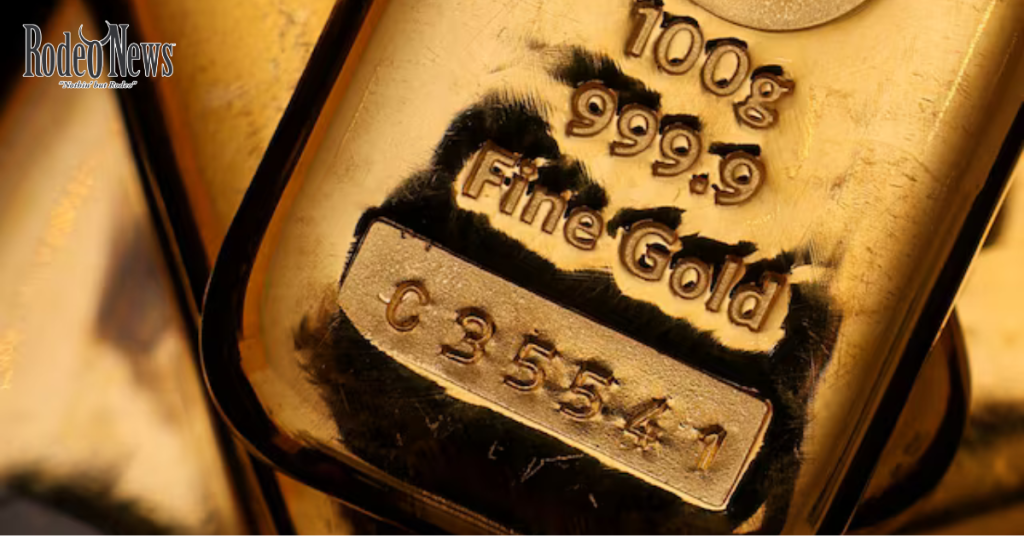
In early trading, spot gold slipped by approximately 0.4% to around $4,658 per ounce, while U.S. gold futures showed marginal gains. Despite gold’s traditional role as a safe-haven asset, macroeconomic forces appear to be outweighing geopolitical risk—at least for now.
Strong US Jobs Data Pressures Gold Prices
One of the primary drivers behind the Gold Prices Drop 2026 trend is the latest U.S. employment report. March payroll data showed the strongest job growth since late 2024, with unemployment falling to 4.3%.
This robust performance signals continued strength in the U.S. economy. As a result, expectations for imminent interest rate cuts by the Federal Reserve have weakened significantly.
Higher interest rates tend to reduce the appeal of gold for investors. Unlike bonds or savings instruments, gold does not yield interest. Therefore, when rates remain elevated, investors often shift capital toward yield-bearing assets.
Moreover, rising U.S. Treasury yields and a stronger dollar have compounded the pressure on gold. A stronger dollar makes gold more expensive for international buyers, further reducing demand.
Iran War Escalation Adds Market Complexity
At the same time, geopolitical tensions remain a critical backdrop. The ongoing conflict involving Iran has intensified uncertainty across global markets. The situation escalated further with warnings about the potential closure of the Strait of Hormuz—a vital oil shipping route.
This conflict has triggered a surge in oil prices and heightened inflation concerns worldwide. However, rather than boosting gold as a safe-haven asset, the inflationary pressure has had the opposite effect.
Why? Because rising inflation linked to energy costs reduces the likelihood that central banks will cut interest rates. Instead, policymakers may maintain or even tighten monetary policy to control price increases.
As a result, the Gold Prices Drop 2026 phenomenon highlights a paradox: geopolitical risk is rising, but gold is falling.
Inflation, Oil Prices, and the Fed’s Dilemma
The Iran war has created what analysts describe as one of the most significant energy supply disruptions in decades. Oil prices have surged, increasing production and transportation costs globally.
This has placed central banks—especially the Federal Reserve—in a difficult position. On one hand, economic growth remains solid. On the other, inflationary pressures are intensifying.
Traditionally, gold performs well during periods of uncertainty and inflation. However, the current environment is different. High inflation combined with strong economic data forces central banks to keep interest rates elevated.
Consequently, gold’s attractiveness diminishes.
Dollar Strength Undermines Safe-Haven Demand
Another key factor behind the Gold Prices Drop 2026 trend is the strength of the U.S. dollar. The dollar has risen alongside Treasury yields, reflecting investor confidence in the U.S. economy.
A stronger dollar typically leads to weaker gold prices. This inverse relationship is well-established in global markets.
Investors seeking safety are currently favoring the dollar over gold. This shift indicates a broader change in market sentiment, where liquidity and yield are taking precedence over traditional safe-haven assets.
Precious Metals Market Reaction
Gold was not the only metal affected by these developments. Other precious metals also showed mixed performance:
- Silver declined by nearly 1%
- Platinum slipped slightly
- Palladium, however, recorded modest gains
These movements suggest that the broader precious metals market is responding to macroeconomic factors rather than purely geopolitical concerns.
Investor Sentiment Shifts in 2026
Investor behavior in 2026 reflects a more nuanced understanding of global risk. In previous crises, gold would typically rally sharply amid geopolitical uncertainty.
However, today’s investors are balancing multiple variables:
- Interest rate expectations
- Currency strength
- Energy prices
- Economic resilience
This shift explains why the Gold Prices Drop 2026 trend is occurring even amid escalating conflict.
Historical Context: Why This Time Is Different
Historically, gold has surged during wars and crises. For example, during past Middle East conflicts, gold prices often rose due to increased demand for safe assets.
But the current situation differs in several ways:
- Stronger Economic Data
The U.S. economy is showing resilience, reducing the urgency for monetary easing. - Persistent Inflation
Inflation driven by energy costs is limiting central bank flexibility. - Higher Interest Rates
Elevated rates reduce gold’s relative attractiveness. - Global Financial Complexity
Markets are more interconnected, with multiple competing safe-haven assets.
These factors combine to create a unique market environment.
What Happens Next for Gold?
Looking ahead, the trajectory of gold prices will depend on several key developments:
1. Federal Reserve Policy
If economic data weakens and the Fed signals rate cuts, gold could rebound quickly.
2. Iran Conflict Developments
A further escalation could renew safe-haven demand. Conversely, a ceasefire could stabilize markets.
3. Inflation Trends
Persistent inflation may continue to suppress gold if it keeps interest rates high.
4. Currency Movements
Any weakening of the U.S. dollar would likely support gold prices.
Market Outlook: Short-Term vs Long-Term
In the short term, the Gold Prices Drop 2026 trend may continue as markets digest strong economic data and geopolitical uncertainty.
However, the long-term outlook for gold remains more balanced. If economic conditions deteriorate or central banks shift toward easing, gold could regain momentum.
Analysts suggest that gold remains a critical hedge against systemic risk, even if its short-term performance appears weak.
Expert Insights and Market Strategy
Market analysts emphasize that investors should not view gold in isolation. Instead, it should be considered as part of a diversified portfolio.
Key strategies include:
- Monitoring central bank signals closely
- Watching inflation and oil price trends
- Diversifying across asset classes
- Using gold as a long-term hedge rather than a short-term trade
This approach allows investors to navigate volatility more effectively.
Conclusion
The Gold Prices Drop 2026 trend highlights a rare and complex market dynamic. Despite rising geopolitical tensions from the Iran conflict, gold prices are falling due to strong U.S. economic data and reduced expectations of Federal Reserve rate cuts.
This shift underscores the evolving nature of global markets, where traditional relationships between risk and asset performance are being reshaped.
For investors, the key takeaway is clear: understanding macroeconomic forces is more important than ever. Gold may still play a vital role as a hedge, but its behavior in 2026 reflects a new era of financial complexity.