NATO Crisis Revealed: 5 Shocking Impacts of Trump Iran War
The NATO crisis Trump Iran war has rapidly become one of the most defining geopolitical developments of 2026. What began as a U.S.-led military campaign against Iran is now reshaping the future of the transatlantic alliance, exposing deep fractures between Washington and its European partners.
As tensions escalate, analysts warn that NATO — once considered the cornerstone of Western security — is entering one of its most uncertain periods since its founding in 1949.
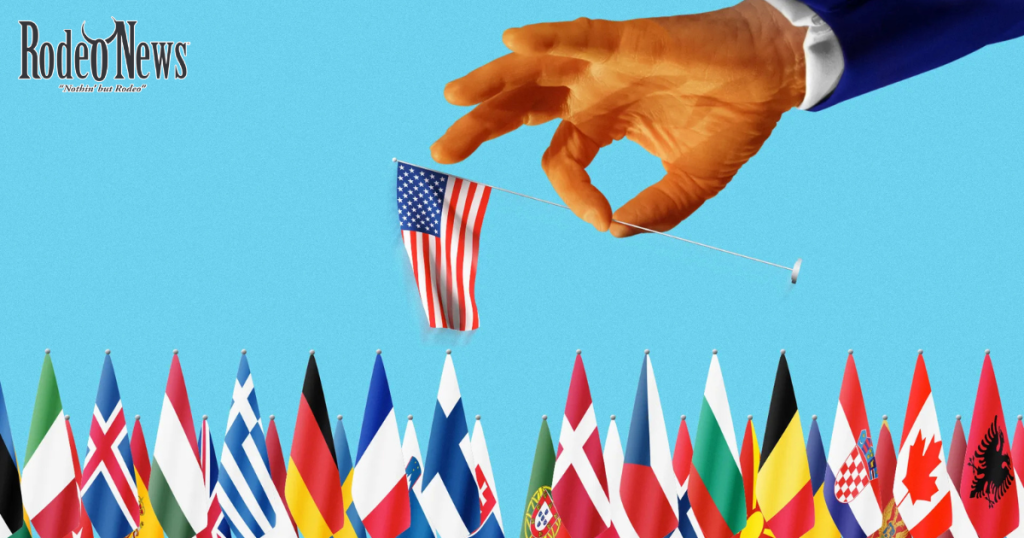
A War That NATO Didn’t Choose
The current conflict with Iran was launched without broad international backing, creating immediate friction between the United States and its allies. European NATO members have largely refused to support the campaign, citing legal concerns and fears of escalation.
This lack of unity has triggered a serious breakdown in trust. Traditionally, NATO operates under Article 5 — the principle that an attack on one member is an attack on all. However, the Iran war does not fall under this collective defense clause, leaving allies divided on whether they should be involved at all.
Meanwhile, U.S. leadership has openly criticized European hesitation, framing NATO as a “one-way street” when allies fail to support American military objectives.
1. Collapse of Alliance Unity
The most immediate impact of the NATO crisis Trump Iran war is the erosion of alliance cohesion.
European nations have resisted U.S. pressure to provide military assistance, deny access to bases, and even limit airspace cooperation. This marks a dramatic shift from previous conflicts, where NATO coordination was far more unified.
Experts say this is the weakest moment for NATO in decades, with internal disagreements now playing out publicly.
The consequences are profound:
- Reduced military coordination
- Growing mistrust among allies
- Uncertainty about future joint operations
In essence, NATO is no longer functioning as a fully unified bloc.
2. Rising Threat of U.S. Withdrawal
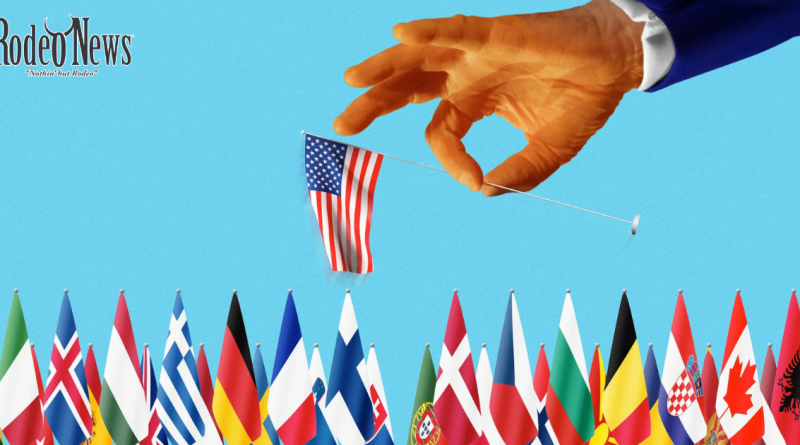
Perhaps the most alarming development is the renewed possibility that the United States could distance itself — or even withdraw — from NATO.
President Trump has repeatedly suggested that American support for NATO could be conditional, depending on whether allies reciprocate in conflicts like Iran.
While a 2023 law requires congressional approval for a formal withdrawal, experts warn that a president could still weaken NATO significantly by:
- Reducing troop deployments
- Limiting intelligence sharing
- Withholding military support
Such actions would effectively undermine NATO without officially leaving it.
For Europe, this raises a critical question: can the continent defend itself without U.S. backing?
3. Europe Begins Rethinking Security
As confidence in U.S. leadership declines, European leaders are increasingly exploring alternative security arrangements.
Discussions are intensifying around:
- Independent European defense systems
- Stronger EU military coordination
- Reduced reliance on U.S. forces
This shift could fundamentally reshape global power structures.
For decades, NATO has been the backbone of European security. If that foundation weakens, Europe may move toward strategic autonomy — a move that could permanently alter transatlantic relations.
4. Strategic Gains for Rivals
While NATO struggles internally, geopolitical rivals are benefiting.
Russia, in particular, is seen as gaining from the alliance’s distraction and division.
At the same time:
- China is expanding its economic influence
- Iran is leveraging global divisions
- Energy markets are being reshaped
The war has also disrupted critical global supply routes, including the Strait of Hormuz, amplifying economic uncertainty worldwide.
This redistribution of power suggests that the NATO crisis is not just a Western issue — it is a global turning point.
5. Escalation Beyond Military Norms
The Iran conflict itself is intensifying in ways that alarm international observers.
Recent U.S. strikes have targeted infrastructure, including bridges and potentially energy facilities — a significant escalation in modern warfare tactics.
There are also growing concerns about:
- Civilian casualties
- Legal justifications for the war
- Violations of international norms
Such developments are further straining NATO relations, as European allies are reluctant to be associated with controversial military actions.
NATO’s Identity Crisis
At its core, the NATO crisis Trump Iran war is not just about military strategy — it is about identity.
What is NATO’s purpose in a world where:
- Threats are no longer clearly defined
- Member states disagree on priorities
- U.S. leadership is unpredictable
These questions are now at the center of global diplomacy.
Even NATO’s fundamental principle — collective defense — is being tested. If allies cannot agree on when or why to act, the alliance risks becoming symbolic rather than functional.
The Future of Transatlantic Relations
The long-term implications of this crisis could be profound.
Several possible scenarios are emerging:
1. NATO Reforms and Survives
The alliance could adapt, redefining its mission and strengthening internal cooperation.
2. A Weakened but Existing NATO
NATO may continue to exist but with reduced influence and unity.
3. A Fragmented Western Alliance
In the worst-case scenario, NATO could splinter, leading to separate regional security systems.
Each outcome would reshape global geopolitics for decades to come.
Economic and Global Fallout
Beyond military implications, the crisis is already affecting the global economy.
Energy markets have been disrupted due to instability in the Middle East, particularly around key shipping routes.
This has led to:
- Rising oil prices
- Increased inflation risks
- Supply chain disruptions
For Europe, the economic impact is especially severe, as the region remains heavily dependent on imported energy.
Internal Link Example
For more geopolitical analysis, visit:
👉 https://yourwebsite.com/global-conflict-analysis
External Sources
- Axios
- Reuters
- TIME
Conclusion: A Defining Moment for NATO
The NATO crisis Trump Iran war marks a historic turning point in international relations.
What was once a unified alliance now faces internal divisions, uncertain leadership, and growing external pressures.
Whether NATO emerges stronger or weaker from this crisis will depend on decisions made in the coming months. However, one thing is clear:
The world order as we know it is changing — and NATO stands at the center of that transformation.