
AI Memory Stocks Revealed: 5 Shocking Investor Risks
The rise of AI memory stocks is reshaping global markets, as investors pour billions into companies like Micron and Samsung. However, beneath the explosive growth driven by artificial intelligence lies a set of emerging risks that could challenge the long-term outlook.
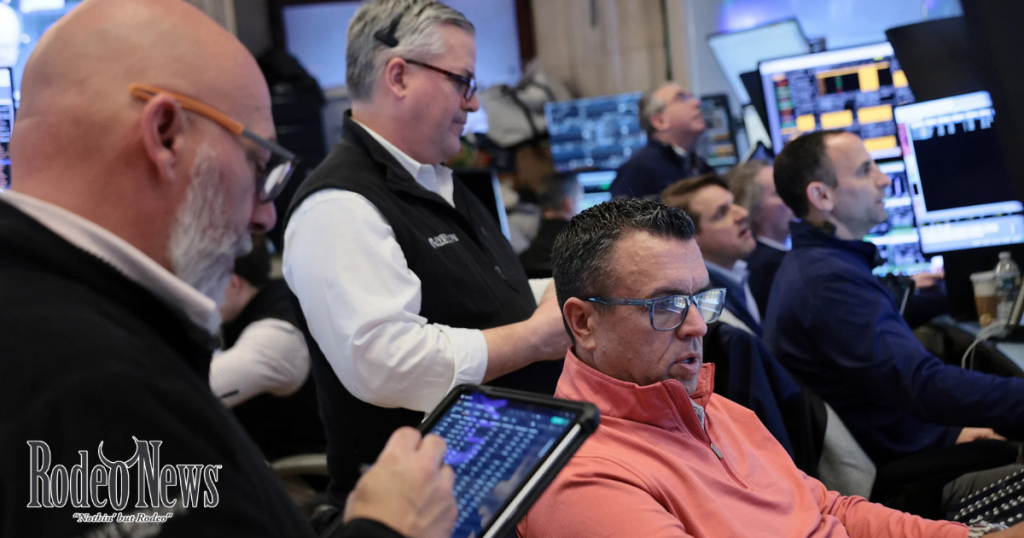
From supply constraints to shifting technology dynamics, analysts warn that the memory-chip boom may not be as stable as it appears. As AI continues to expand rapidly, investors are now questioning whether the sector’s momentum can be sustained.
The Explosive Growth of AI Memory Stocks
Artificial intelligence has triggered unprecedented demand for memory chips. These components—especially DRAM and NAND—are essential for training and running large AI models.
Companies such as Micron Technology, Samsung Electronics, and SK Hynix dominate this space, controlling most of the global supply. Their importance has surged as AI data centers require significantly more memory than traditional computing systems.
According to market data, AI-driven demand has pushed memory prices sharply higher, with some forecasts projecting DRAM prices to rise more than 60% in early 2026.
Meanwhile, a global shortage has emerged, as supply struggles to keep up with demand. This imbalance has boosted revenues and investor interest—but it has also introduced volatility.
Why Investors Are Piling Into Memory Stocks
The appeal of AI memory stocks is clear. As AI adoption accelerates across industries, memory chips have become a critical bottleneck.
Unlike GPUs, which are often dominated by a few companies, memory production is concentrated among just three major players. This limited competition gives them pricing power during periods of high demand.
Additionally, companies are investing heavily to capitalize on the boom. Samsung, for instance, is planning to invest over $70 billion in semiconductor development to secure leadership in AI chips.
This surge in capital spending signals confidence—but it also highlights the high stakes involved.
The “Memory Cycle” Problem Returns
Despite the current optimism, memory-chip markets have historically been cyclical. Periods of high demand and rising prices are often followed by oversupply and sharp downturns.
Analysts warn that the AI boom may not eliminate this cycle—it may simply reshape it.
Even now, some warning signs are emerging. Memory stocks have experienced sudden pullbacks after reaching record highs, reflecting investor concerns about sustainability.
This volatility suggests that while AI demand is strong, it may not guarantee consistent long-term growth.
Risk #1: Overdependence on AI Demand
The biggest driver of current growth is also the biggest risk: reliance on AI.
Memory manufacturers are increasingly prioritizing high-performance chips for AI data centers. While this strategy boosts margins, it reduces diversification.
If AI investment slows—even temporarily—demand for memory chips could drop sharply. That would leave companies exposed, especially after significant capital expenditures.
Risk #2: Supply Constraints and Production Limits
Ironically, strong demand has created a major challenge: companies cannot produce enough memory.
Executives have acknowledged that they can only meet a fraction of customer demand in the near term. This shortage is expected to persist through 2026, driven by the rapid expansion of AI infrastructure.
While shortages can support higher prices, they also limit revenue growth and create uncertainty for customers.
Risk #3: Technological Disruption
Another emerging risk is technological innovation that reduces memory usage.
Recent developments in AI efficiency—such as improved algorithms—could lower the amount of memory required for certain applications. This has already triggered market reactions, with investors fearing reduced demand for memory chips.
If such innovations continue, they could fundamentally change the economics of the memory market.
Risk #4: Intensifying Global Competition
The memory-chip industry is becoming increasingly competitive.
Samsung, SK Hynix, and Micron are all expanding capacity and investing heavily in next-generation technologies. At the same time, new entrants—particularly from China—are ramping up production.
This competition could lead to oversupply in the future, putting downward pressure on prices.
Moreover, geopolitical tensions and trade policies add another layer of uncertainty, especially for companies operating across global supply chains.
Risk #5: Massive Capital Spending Pressure
To keep up with AI demand, memory companies are committing billions to new factories and research.
Micron alone has pledged massive investments in manufacturing expansion, while Samsung is aggressively increasing its spending.
Although these investments are necessary, they also increase financial risk. If demand slows or prices fall, companies may struggle to generate returns on their capital.
This dynamic has historically led to boom-and-bust cycles in the semiconductor industry.
A Structural Shift—or Another Bubble?
Some analysts believe the current AI-driven memory boom represents a structural shift rather than a temporary cycle.
AI systems require significantly more memory than traditional applications, and this demand is expected to grow as models become more complex.
However, others argue that the market may be overestimating long-term demand. The rapid rise in stock prices has raised concerns about overvaluation, especially given the sector’s history of volatility.
What This Means for Investors
For investors, the key question is whether AI memory stocks offer sustainable growth—or short-term gains followed by correction.
On one hand, the fundamentals are strong:
- Explosive AI demand
- Limited supply
- High pricing power
On the other hand, risks are mounting:
- Cyclical market behavior
- Technological disruption
- Heavy capital spending
This combination creates both opportunity and uncertainty.
The Future of AI Memory Stocks
Looking ahead, the trajectory of AI memory stocks will depend on several factors:
- The pace of AI adoption
- Advances in chip efficiency
- Global supply expansion
- Macroeconomic conditions
If AI continues to grow rapidly, memory manufacturers could remain among the biggest beneficiaries. However, any slowdown or disruption could quickly change the narrative.
Conclusion
The surge in AI memory stocks reflects the transformative impact of artificial intelligence on the global economy. Companies like Micron and Samsung are at the center of this shift, supplying the critical components that power AI systems.
Yet, as investor enthusiasm grows, so do the risks.
From supply constraints to technological shifts, the memory-chip market faces multiple challenges that could reshape its future. For now, the sector remains one of the most compelling—and unpredictable—areas in the stock market.