Iran Retaliates After US and Israel Strikes, Targets American Bases Across the Middle East
A sharp escalation rippled across the Middle East on Saturday as Iran launched retaliatory missile strikes against US military facilities and Israel, hours after American and Israeli forces struck Iranian military and government targets.
Explosions were reported in multiple countries across the Gulf, and air defense systems lit up the night skies as incoming projectiles were intercepted. The rapid exchange of fire marked one of the most significant direct confrontations between Tehran and its adversaries in recent years.
Iranian state media said the retaliation was swift and coordinated. According to Nour News, an outlet affiliated with the Islamic Revolutionary Guard Corps (IRGC), “dozens” of ballistic missiles were launched toward Israel. At the same time, Iranian officials claimed that US bases across the region had been targeted.
US Military Facilities in the Crosshairs
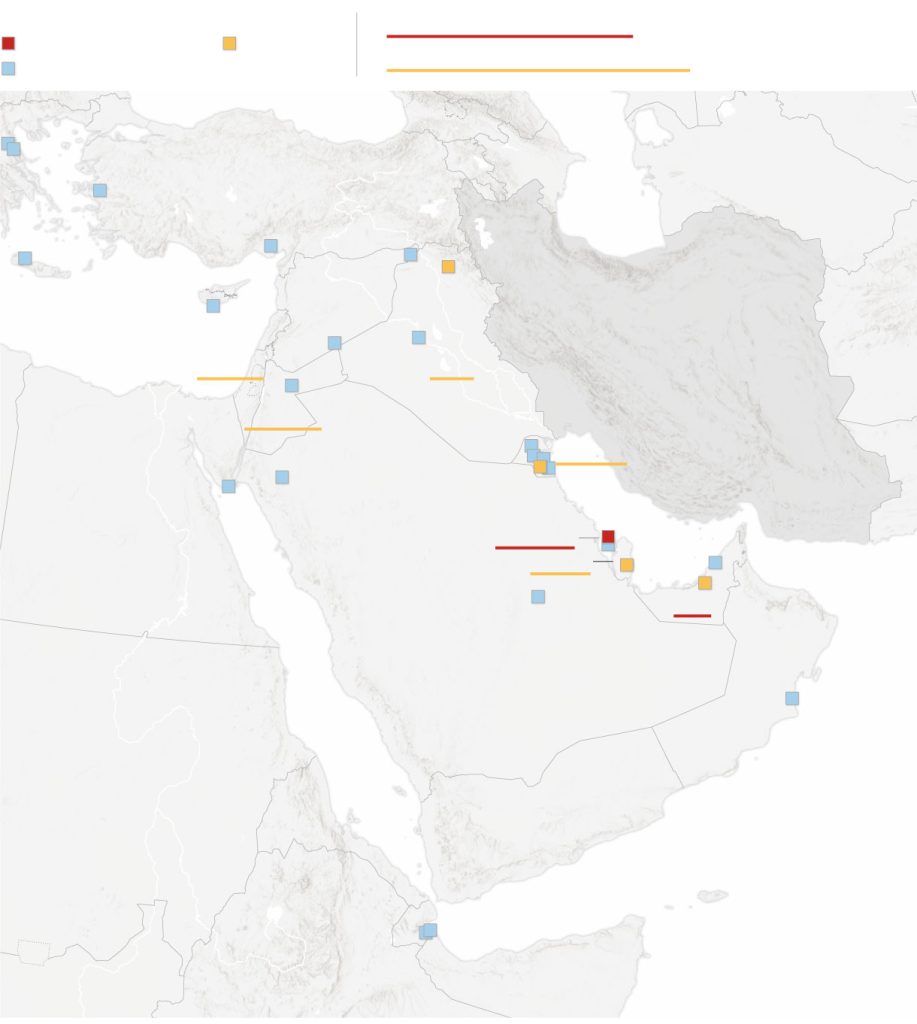
The IRGC said it had struck Al Udeid Air Base in Qatar, one of the largest US military installations in the Middle East and home to thousands of American personnel. It also claimed attacks on Al Salem Air Base in Kuwait and Al Dhafra Air Base in the United Arab Emirates.
In Bahrain, Iranian media reported that the US naval base — home to the US Fifth Fleet — had been targeted. Additional strikes were said to have hit Muwaffaq Al Salti Air Base in Jordan and a US facility in northern Iraq.
The extent of the damage remains unclear. Gulf governments have yet to release detailed assessments, and US officials have not confirmed the scale of the impact on their installations. Early indications suggest that regional missile defense systems were activated quickly, intercepting a number of incoming projectiles.
Military analysts say the selection of targets appears designed to signal Iran’s capacity to reach American assets throughout the Gulf without immediately escalating to attacks on civilian infrastructure.
Barrages Toward Israel
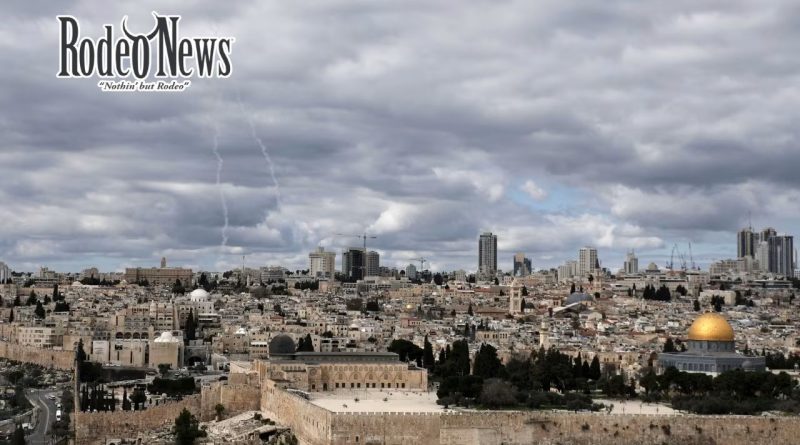
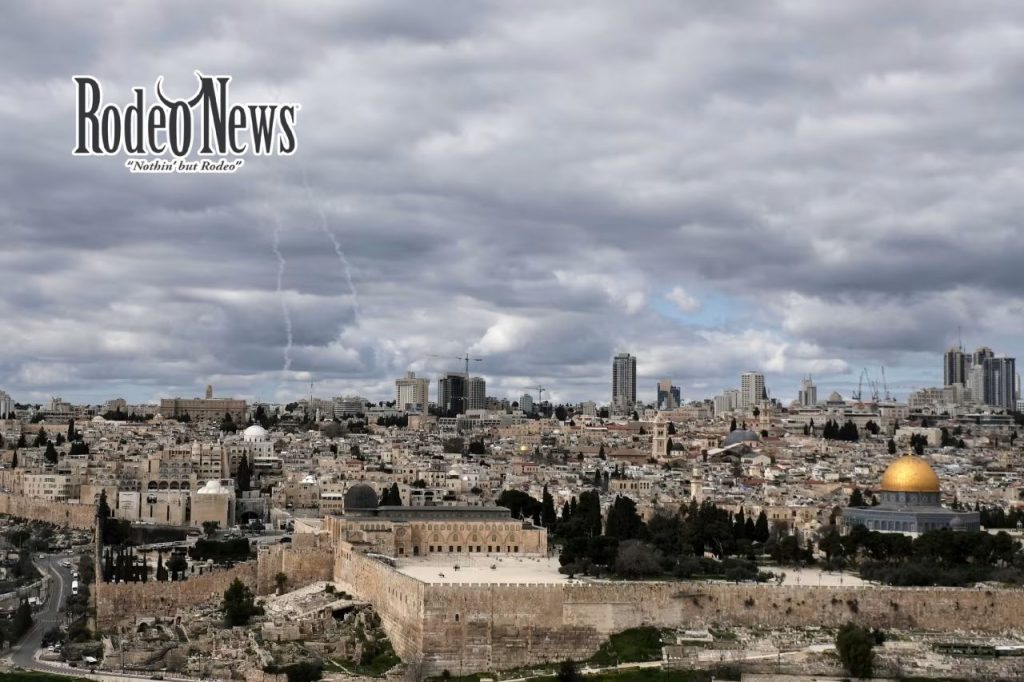
Simultaneously, Iran directed missile fire toward Israel. Residents in Jerusalem and other major cities reported hearing explosions as air defenses engaged the incoming threats. Trails of interceptor missiles streaked across the skies above the Old City, underscoring the intensity of the exchange.
Israeli authorities did not immediately confirm how many missiles penetrated their defenses, though officials described the barrage as substantial. Emergency services were placed on high alert, and air raid sirens sounded in multiple areas.
Tehran framed the missile launches as a direct response to what it called aggression by Washington and Tel Aviv earlier in the day. The United States and Israel had begun coordinated strikes on Iranian military and government targets Saturday morning local time, according to regional officials.
A Region on Edge
The confrontation reverberated far beyond Israel and Iran. In Qatar, Kuwait, the United Arab Emirates and Bahrain, governments activated security protocols and urged residents to remain vigilant. Airspace in parts of the Gulf was temporarily restricted as authorities assessed potential risks.
The targeting of facilities such as Al Udeid and Al Dhafra carries symbolic and strategic weight. These bases serve as critical hubs for US air operations across the Middle East, supporting missions ranging from counterterrorism to regional deterrence. Any confirmed damage could affect operational readiness and further strain already fragile regional stability.
Jordan and Iraq, both key US partners, also found themselves drawn into the confrontation. A strike on Muwaffaq Al Salti Air Base — which hosts US forces on a rotational basis — underscores how quickly regional actors can become entangled in a broader conflict.
Calculated Response or Escalation Spiral?
Iran’s response appears calibrated but expansive. By striking military targets rather than civilian centers, Tehran may be attempting to project strength while avoiding immediate escalation into full-scale war. At the same time, the geographic spread of the attacks signals a willingness to widen the theater of confrontation.
Regional security experts warn that even limited damage could trigger further retaliatory measures. The United States has consistently stated that attacks on its personnel or facilities will be met with decisive action. Israel, too, has vowed to respond forcefully to any direct Iranian aggression.
Diplomatic channels are reportedly active behind the scenes, with several Gulf states urging restraint. However, the rapid exchange of strikes highlights the volatility of a region already burdened by overlapping conflicts and proxy wars.
Uncertain Aftermath
As night fell across the Middle East, governments were still assessing the immediate consequences. Casualty figures, if any, had not been released at the time of writing. Satellite imagery and official statements are expected in the coming hours to clarify the scale of the damage.
What is clear is that the threshold for direct confrontation has shifted. The simultaneous targeting of Israel and multiple US installations represents a bold move by Tehran and a significant test of regional defense systems.
Whether this latest round of strikes marks the beginning of a sustained military exchange or a sharp but contained escalation will depend on the decisions made in Washington, Tel Aviv and Tehran in the days ahead. For now, the Middle East remains on high alert, bracing for what may come next.