Trump to Deliver State of the Union Address in Deeply Polarized America
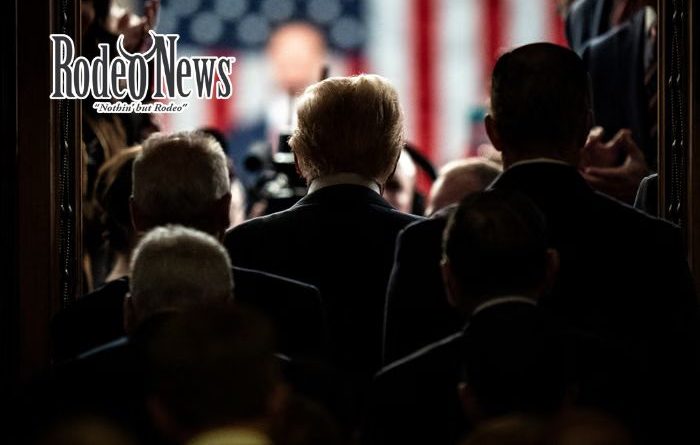
When Donald Trump steps to the podium on Tuesday night, he will do so in a country more divided than at any time in recent memory.
The last time he delivered a formal State of the Union address, in February 2020, the defining image came not from the speech itself but from the Democratic House speaker, Nancy Pelosi, who tore up her copy of his remarks behind him. The gesture captured the depth of partisan rancor in Washington.
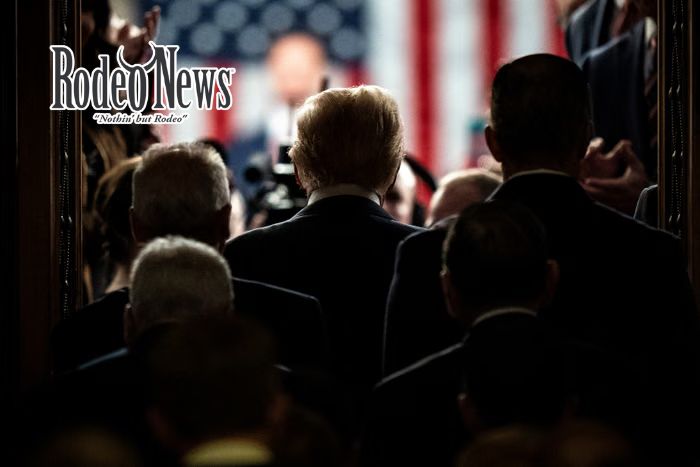
Six years later, the political choreography will look different. Mike Johnson, a staunch Trump ally, now presides over the House chamber. But beyond the optics, the divisions shaping the country remain profound — and in some cases, sharper than before.
With the 2026 midterm elections approaching, opinion polls show more voters disapproving than approving of the president’s performance. On issues ranging from the economy and tariffs to immigration and foreign policy, Americans appear unsettled — even fatigued — by the turbulence of Trump’s second term.
An Economy Losing Steam
Fresh figures released last week showed annual GDP growth slowing to 1.4% in the final quarter of 2025, down from 4.4% in the previous quarter and well below the 3% forecast by many economists. Analysts attributed part of the decline to last autumn’s 43-day government shutdown — the longest in US history.
The slowdown complicates Trump’s long-standing claim that he alone can engineer an economic “golden age.” While unemployment remains low and employers added 130,000 jobs in January, many voters say their personal finances feel squeezed.
Retailers continue to report resilient consumer spending. Yet dissatisfaction over “affordability” — a term that has become shorthand for the cost of groceries, housing and healthcare — poses a political risk for Republicans. Although inflation has moderated compared with earlier peaks, surveys suggest many Americans believe the economy feels worse now than during the presidency of Joe Biden.
For a president who campaigned heavily on restoring prosperity, that perception gap could loom large in November.
Tariffs in Legal Turmoil
No policy better defines Trump’s economic nationalism than tariffs. Over the past year, he imposed sweeping import duties on goods from nearly every major trading partner, arguing they would revive domestic manufacturing and reduce reliance on foreign supply chains.
But last week, the Supreme Court of the United States delivered a major setback, ruling that the president had exceeded his authority under the International Emergency Economic Powers Act when implementing parts of his tariff regime.
The decision cast uncertainty over what Trump once branded “liberation day” for American industry. Financial markets reacted nervously, and business groups warned of prolonged instability.
In a combative press conference, Trump denounced the justices who ruled against him and vowed to pursue alternative legal avenues. Over the weekend, he announced a fresh round of 15% across-the-board tariffs under a different statutory authority.
Politically, the setback could cut both ways. Polls suggest a majority of Americans believe tariffs raise consumer prices. If the court’s ruling ultimately leads to a rollback, it could ease cost pressures. But it also undermines a central pillar of Trump’s economic identity.
Immigration Backlash
Immigration — perhaps the most consistent theme of Trump’s political career since 2015 — has also become more complicated.
A large-scale enforcement action in Minneapolis, dubbed “operation metro surge,” saw more than 3,000 federal agents deployed in coordinated raids. Images of masked Immigration and Customs Enforcement agents detaining suspects quickly spread online, igniting protests.
Several incidents intensified the controversy. Two US citizens were fatally shot during unrest linked to deportation roundups. In another case, a five-year-old child was photographed being detained with his father before a court ordered their release.
While border enforcement initially enjoyed broad support, nearly half of voters now say the administration has gone “too far,” according to recent polling. Trump’s border czar, Tom Homan, later scaled back the federal presence in Minneapolis, but the episode underscored the delicate balance between toughness and public opinion.
The president is unlikely to retreat from an issue that helped define his political brand. Yet images of aggressive enforcement may complicate Republican messaging ahead of the midterms.
Foreign Policy and the Shadow of Conflict
Trump returned to office promising an “America First” foreign policy that would end so-called forever wars. Instead, tensions appear to be escalating.
A significant US military force is preparing for potential strikes on Iran — the second such confrontation in a year. Reports suggest the administration is weighing options that could extend beyond limited retaliation.
The rhetoric marks a shift from Trump’s repeated criticism of the 2003 Iraq invasion under George W. Bush. Critics argue that deeper military involvement would contradict his anti-interventionist campaign pledges.
At the same time, Trump has strained relations with allies. He renewed pressure on Denmark over Greenland and launched a self-styled “Board of Peace” initiative aimed at resolving global conflicts — though participation has been limited.
The president has openly mused about winning a Nobel peace prize, asserting — inaccurately — that he has ended multiple wars. For now, however, the geopolitical landscape looks anything but tranquil.
Justice Department Under Scrutiny
Under Attorney General Pam Bondi, the Department of Justice has faced accusations of politicization. Investigations targeting former FBI director James Comey and New York attorney general Letitia James have drawn criticism from legal scholars who warn of potential overreach.
A federal judge recently dismissed two high-profile cases, citing concerns over the appointment of the prosecutor involved.
Elsewhere, Federal Reserve chair Jerome Powell has reportedly come under scrutiny after disputes with the White House over interest rate policy — an extraordinary development in a system that traditionally prizes central bank independence.
The slow release of documents related to financier Jeffrey Epstein has further fueled accusations of opacity, with millions of files still withheld months after a congressional deadline.
Crime and Competing Narratives
Trump frequently asserts that violent crime has fallen to historic lows under his leadership. Homicide rates are indeed projected to decline in 2025 to roughly four per 100,000 residents, according to the Council on Criminal Justice.
Yet crime had already been trending downward before his return to office, following a spike during the pandemic years. Democrats argue that the broader trajectory complicates claims of a singular presidential impact.
As with the economy, perception may matter as much as data.
Healthcare Pressures Mount
Healthcare costs remain a source of anxiety. Polls show more than half of Americans fear they may be unable to afford essential services this year, particularly as federal subsidies linked to the Affordable Care Act expire.
Meanwhile, Health Secretary Robert F. Kennedy Jr.’s “Make America Healthy Again” agenda has triggered debate over vaccine policy and environmental regulations. Supporters describe it as a long-overdue reset; critics warn it risks undermining public health infrastructure.
A Defining Moment
Trump’s address comes at a crossroads: a slowing economy, legal headwinds for his signature trade policy, intensifying immigration debates and the specter of foreign conflict.
Unlike in 2020, there may be no dramatic tearing of papers behind him. But outside the chamber — in polling data, in courtrooms, and in communities grappling with change — the fractures are unmistakable.
On Tuesday night, the president will present his version of the nation’s condition. Whether voters share that assessment may determine not only the outcome of the midterms, but the trajectory of his second term.