BBC Apologises After Racial Slur Heard During Baftas Broadcast
The BBC has issued an apology after a racial slur shouted during the Bafta Film Awards ceremony was broadcast unedited on BBC One, despite the programme airing on a two-hour delay.
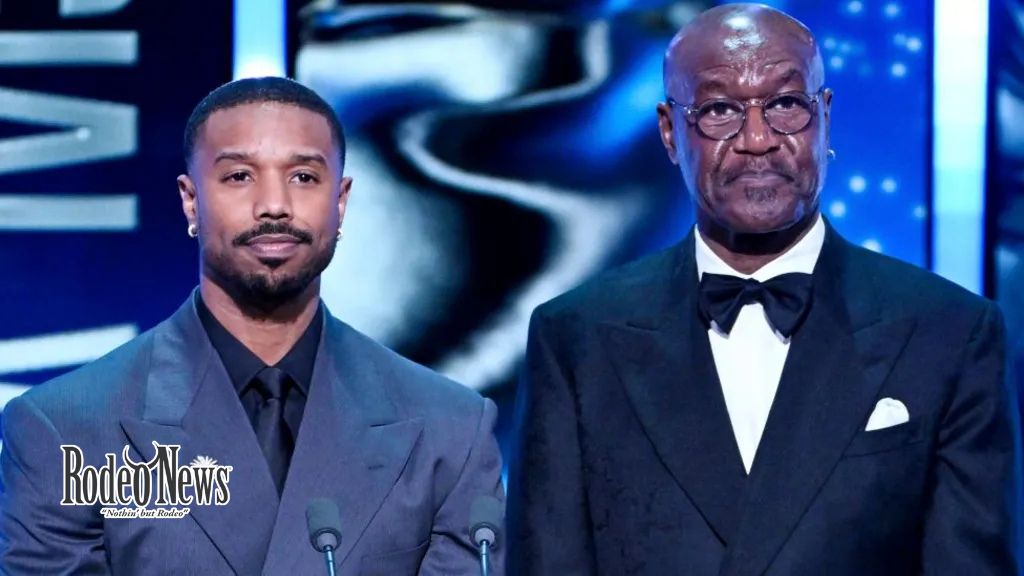
The remark was made by John Davidson, whose life inspired the film I Swear, as actors Michael B Jordan and Delroy Lindo took to the stage to present the first award of the evening. Davidson, who has Tourette’s syndrome, shouted the N-word during what witnesses described as a series of involuntary verbal tics.
Although the word was not clearly audible to all viewers, it was not edited out of the broadcast. The ceremony remained available on BBC iPlayer until Monday morning, when it was removed.
In a statement, the corporation said: “We apologise that this was not edited out prior to broadcast and it will now be removed from the version on BBC iPlayer.”
A Delay, But No Edit
The Baftas ceremony, organised by the British Academy of Film and Television Arts, ran for three hours in real time but was reduced to a two-hour programme for BBC transmission. The broadcaster declined to explain why the remark was not bleeped or edited before airing.
A spokesperson added: “Some viewers may have heard strong and offensive language during the Bafta Film Awards. This arose from involuntary verbal tics associated with Tourette syndrome, and as explained during the ceremony it was not intentional.”
The moment sparked swift political reaction. Kemi Badenoch, leader of the Conservative Party, described the incident as “a horrible mistake” in an interview on Good Morning Britain. “I think an apology is important,” she said. “They need to explain why it wasn’t bleeped out.”
On Stage and Aftermath
Host Alan Cumming addressed the audience during the ceremony, acknowledging that some viewers may have heard offensive language. He explained that Tourette’s syndrome is a disability characterised by involuntary tics and emphasised that such outbursts are beyond an individual’s control.
Davidson, a campaigner from Galashiels in Scotland, reportedly left the ceremony of his own accord before it concluded. He has long advocated for greater understanding of Tourette’s and was awarded an MBE in 2019 for services to the condition.
Actor Robert Aramayo, who portrays Davidson in I Swear, said after the event that public understanding of Tourette’s remains limited.
“They’re tics, he is ticking, and we have to understand that the way we perceive Tourette’s is a joint responsibility,” Aramayo said. “It’s not shouting obscenities, it’s not being abusive. It’s Tourette’s.”
Hurt and Frustration
Despite the explanation, several figures in the film industry voiced anger that the first response was not a direct apology to the actors on stage.
Hannah Beachler, production designer for the film Sinners, wrote on social media that the word had been directed at her later in the evening. “Of course we were offended,” she said, criticising what she described as a “throwaway apology.”
Actor Wendell Pierce, known for his role in The Wire, said it was “infuriating” that there had not been “complete and full-throated apologies” to Jordan and Lindo. “The insult to them takes priority,” he wrote. “It doesn’t matter the reasoning for the racist slur.”
Oscar winner Jamie Foxx also described the language as “unacceptable” in a comment posted online.
Understanding Tourette’s
Tourette’s syndrome is a neurological condition characterised by sudden, repetitive movements or sounds known as tics. According to the charity Tourette’s Action, between 10% and 30% of people with the condition experience coprolalia — a form of tic that produces socially inappropriate or taboo words.
Pippa McClounan, communications manager for Tourette’s Action, stressed that such words are involuntary and do not reflect a person’s beliefs or intentions.
“It’s a neurological condition,” she said. “The tics are involuntary, and they are in no way a reflection of what that person is thinking.”
She added that the public reaction often overlooks the daily reality faced by people living with Tourette’s. “This is what John lives with every day of his life. It’s not just one occasion at an award ceremony.”
A Separate Editing Decision
The BBC also faced questions over another edit during the broadcast. Part of an acceptance speech by director Akinola Davies Jr, which included the phrase “Free Palestine,” was cut from the televised version.
Davies Jr had been accepting the award for best debut by a British writer, director or producer for his film My Father’s Shadow. The BBC said the edit was due to time constraints, noting that several speeches were shortened to fit the two-hour slot. Full versions, it added, would be available via Bafta’s YouTube channel.
A Complex Intersection
The incident has exposed a difficult intersection between disability awareness and racial harm, raising questions about how broadcasters should handle live events — even those aired on delay.
While many have called for greater understanding of Tourette’s syndrome, others argue that the impact of racial language cannot be separated from its historical weight, regardless of intent.
For the BBC, the immediate issue is editorial oversight. For the wider public, it has become a reminder that live television — even when delayed — can present moments that are both deeply uncomfortable and profoundly complex.
As debate continues, the corporation’s apology may close the technical chapter of the broadcast. But the broader conversation about disability, responsibility and harm is likely to endure well beyond this year’s awards ceremony.