Trump Calls Cambodia–Thailand Conflict ‘A Big One’ at Board of Peace Meeting
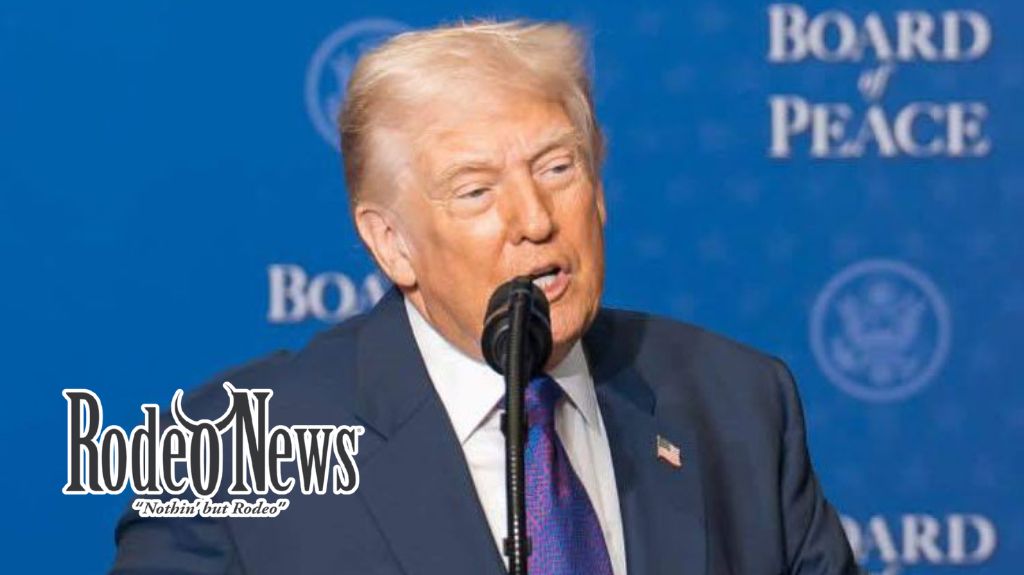
WASHINGTON, D.C. — Donald Trump described the recent border tensions between Cambodia and Thailand as “a big one” during the inaugural session of the Board of Peace held in the U.S. capital on February 19.
Speaking at the opening of the Board’s first formal meeting at the Donald J Trump Institute of Peace, Trump praised both nations for stepping back from confrontation and resolving their differences through dialogue.
“Cambodia and Thailand, so incredible what you did, that you—you got together and it all worked out,” Trump said, framing the de-escalation as an example of effective diplomacy under mounting regional pressure.
Acknowledging Hun Manet
During his remarks, Trump acknowledged the presence of Hun Manet, inviting him to identify himself in the room.
“Prime Minister Hun Manet of Cambodia, raise your hand wherever you may be because—yeah. Hi. How are you?” Trump said, drawing attention to Cambodia’s participation in the meeting.
Hun Manet’s attendance underscored Phnom Penh’s engagement in emerging international peace mechanisms, particularly as Cambodia seeks to maintain balanced diplomatic relations across Southeast Asia and beyond.
‘These Are Nasty Fighters’
Trump characterized the recent border dispute as serious, describing it in stark terms.
“That was a big one, Cambodia and Thailand. These are nasty fighters, I have to tell you. These fighters are nasty,” he said, before comparing the situation to conflicts elsewhere. “Now we talk about—you talk nasty fighter, you’re nice guys compared to this, Congo and Rwanda.”
His comments appeared intended to emphasize both the volatility of regional disputes and the relative success of diplomatic engagement in preventing broader escalation.
While Trump did not elaborate on specific incidents along the Cambodia–Thailand border, tensions in the area have historically flared over territorial demarcation and military positioning near contested zones. Recent developments had raised concerns of renewed confrontation before both sides moved to stabilize the situation.
The Board of Peace Initiative
The remarks were delivered during the inaugural charter meeting of the Board of Peace, an international organization established with the stated goal of promoting global peacekeeping and conflict resolution.
The body, proposed in September 2025, was formally established on the sidelines of the 56th World Economic Forum in January 2026. Led by the United States government and founded under Trump’s initiative, the Board is positioned as a coordinating platform for diplomatic interventions and peace frameworks.
According to its founding documents, the Board has been referenced in United Nations Security Council Resolution 2803 as a supervisory entity tasked with overseeing processes related to the Gaza peace plan.
The Washington meeting marked its first high-level gathering since its formation, bringing together representatives from multiple regions to discuss active and potential conflict zones.
Positioning the U.S. in Global Mediation
Trump used the occasion to reinforce Washington’s role in global diplomacy, highlighting cases where dialogue replaced confrontation.
The Cambodia–Thailand example, he suggested, demonstrated that even deeply rooted disputes can be defused through negotiation.
Analysts note that Southeast Asia has long relied on regional diplomacy, particularly through multilateral frameworks, to manage tensions. Trump’s remarks placed the U.S.-led Board of Peace as an additional platform aimed at facilitating such resolutions on a broader scale.
Regional Implications
The stabilization of the Cambodia–Thailand border dispute carries wider implications for Southeast Asia’s security architecture. Both countries are key members of regional organizations and play important roles in maintaining economic and political stability across the Mekong subregion.
A prolonged confrontation could have disrupted trade routes, tourism flows, and diplomatic relations within the region. Instead, recent talks appear to have reduced immediate tensions.
Trump’s public commendation may also signal Washington’s intention to maintain engagement in Southeast Asian affairs amid evolving geopolitical dynamics.
Looking Ahead
The Board of Peace’s long-term effectiveness remains to be seen. Its mandate, particularly concerning oversight of the Gaza peace process, places it at the center of complex geopolitical negotiations.
For now, Trump’s remarks framed the Cambodia–Thailand situation as an early example of de-escalation that the Board hopes to replicate elsewhere.
As global conflicts continue to challenge diplomatic institutions, the success or failure of new peace mechanisms like the Board of Peace will likely be closely watched by policymakers and international observers alike.
The February 19 meeting in Washington may mark the beginning of a broader test of whether newly structured peace platforms can deliver tangible outcomes in an increasingly fragmented geopolitical landscape.