Singapore Imposes Sustainable Aviation Fuel Levy as Southeast Asia Emerges as Global SAF Hub
SINGAPORE — Singapore will introduce a sustainable aviation fuel levy later this year, marking a significant step in the city-state’s push to decarbonize air travel while positioning Southeast Asia as a rising force in the global clean fuel market.
The levy, which takes effect for flights departing after Oct. 1 and sold after April 1, is designed to support the growing use of sustainable aviation fuel, or SAF — a cleaner-burning alternative to conventional jet fuel often produced from used cooking oil, agricultural residue and other waste materials.
The global aviation industry has increasingly championed SAF as a practical solution to curb emissions without requiring changes to existing aircraft fleets. With passenger demand climbing and environmental scrutiny intensifying, governments and airlines alike are searching for scalable ways to reduce the sector’s carbon footprint.
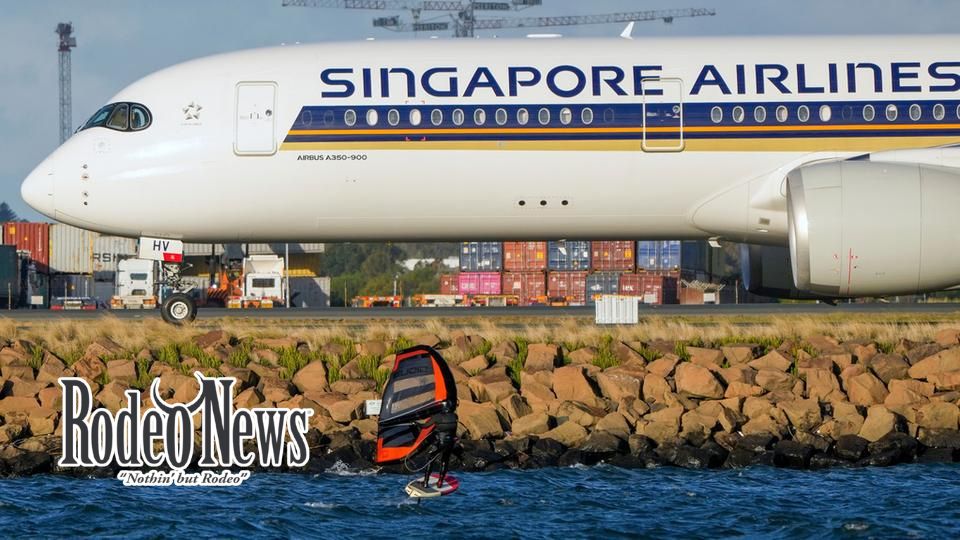
Singapore’s move reflects both environmental ambition and strategic positioning.
A Surcharge for Sustainability
The new levy will apply to passengers departing from Changi Airport, one of Asia’s busiest air hubs, which handled a record 70 million passengers last year.
Under the plan, travelers will pay a surcharge based on flight distance and cabin class. Economy passengers flying within Southeast Asia will pay the lowest rate — 1 Singapore dollar (about 75 U.S. cents). At the other end of the scale, premium cabin passengers traveling to the Americas will pay up to 41.60 Singapore dollars (about $32).
Cargo operators will also be subject to a levy calculated by distance and shipment weight. Authorities say the surcharge will be transparently itemized on tickets and air freight contracts.
Daniel Ng, chief sustainability officer at the Civil Aviation Authority of Singapore, said the policy ensures that “all aviation users do their part to contribute to sustainability at a cost which is manageable for the air hub.”
Officials argue that spreading the cost across travelers and freight operators allows Singapore to scale SAF adoption without undermining its competitiveness as a major transit center.
A Regional Production Surge
Beyond domestic policy, Southeast Asia is rapidly building capacity to produce sustainable aviation fuel — a development that could shift the balance of global supply.
Singapore already hosts the region’s largest SAF production facility and is preparing to begin construction this year on a next-generation plant. The project is backed by Chicago-based Aether Fuels, which has secured supply agreements with major carriers including JetBlue and Singapore Airlines.
“The industry is just getting started, but we do sense the momentum is clearly building up,” said Tat Chuan Goh of Aether Fuels.
Elsewhere in the region, Thailand opened a new SAF facility in Bangkok in 2025. Vietnam and Malaysia achieved key domestic production milestones last year, delivering locally produced SAF blends to carriers such as VietJet Air and Malaysia Airlines. Indonesia has announced plans to expand its existing output, while the Philippines is streamlining regulations to attract fuel developers.
The region’s advantage lies in its raw materials. Agricultural byproducts, forest residue and waste oils — critical inputs for SAF — are abundant across Southeast Asia’s agrarian economies.
According to the Association of Southeast Asian Nations (ASEAN), the bloc could potentially produce up to 8.5 million barrels of SAF per day by 2050 if managed responsibly and supported by consistent policy frameworks.
Kelvin Lee, who oversees sustainability in the Asia-Pacific region for the International Air Transport Association, said it is “natural that people are paying quite a bit of attention to SAF production in this part of the world.” Still, he cautioned that sustained government backing remains essential to maintain investment momentum.
Climate Pressure and Industry Targets
Aviation currently accounts for roughly 2.5% of global carbon emissions, according to the International Energy Agency, and emissions from air travel are rising faster than those from other transportation sectors.
With demand for flights rebounding strongly in the post-pandemic era, the UN-backed International Civil Aviation Organization has set a target of achieving net-zero carbon emissions from aviation by 2050.
SAF is widely regarded as one of the most viable pathways to reach that goal. Industry estimates suggest that widespread adoption could reduce lifecycle emissions by as much as 65% compared to conventional jet fuel.
Yet scaling production remains a formidable challenge. SAF still accounts for a small fraction of total jet fuel supply globally, and production costs remain significantly higher than fossil-based alternatives.
U.S. Policy Shifts Create Uncertainty
Global output of sustainable aviation fuel had been expanding steadily since large-scale production began in 2018. The United States nearly doubled its output last year, reaching record levels.
However, uncertainty has crept into the market following policy reversals under President Donald Trump, whose administration rolled back several clean energy initiatives introduced during former President Joe Biden’s tenure.
Industry analysts warn that global SAF production growth could slow for the first time in years, reflecting hesitancy among investors amid shifting policy signals.
Preeti Jain, who leads net-zero research at IATA, described the U.S. policy changes as “definitely a topic of discussion,” though she noted that some incentives remain in place.
“There is some period of uncertainty,” she said, suggesting that long-term commitments from other regions — including Europe and Southeast Asia — could help stabilize the market.
Strategic Opportunity for Southeast Asia
For Singapore and its neighbors, the shifting global landscape may represent an opportunity rather than a setback.
By combining regulatory support, feedstock availability and expanding refinery capacity, Southeast Asia is positioning itself as a critical node in the future supply chain for sustainable aviation fuel.
Singapore’s levy, though modest in cost to passengers, signals a broader intent: to anchor demand locally while encouraging regional production growth. As airlines face mounting pressure to curb emissions without grounding flights or redesigning aircraft, the success of such policies could determine how quickly sustainable aviation fuel moves from niche alternative to industry standard.
For now, the region’s ambitions are clear — and the runway toward a cleaner aviation future is being paved one surcharge at a time.