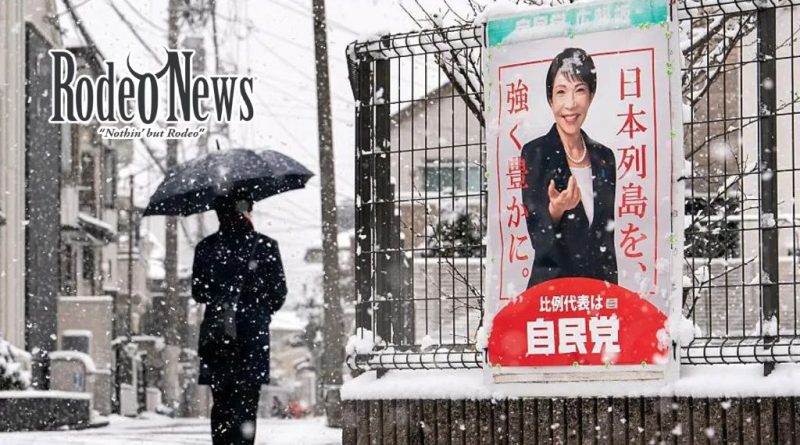
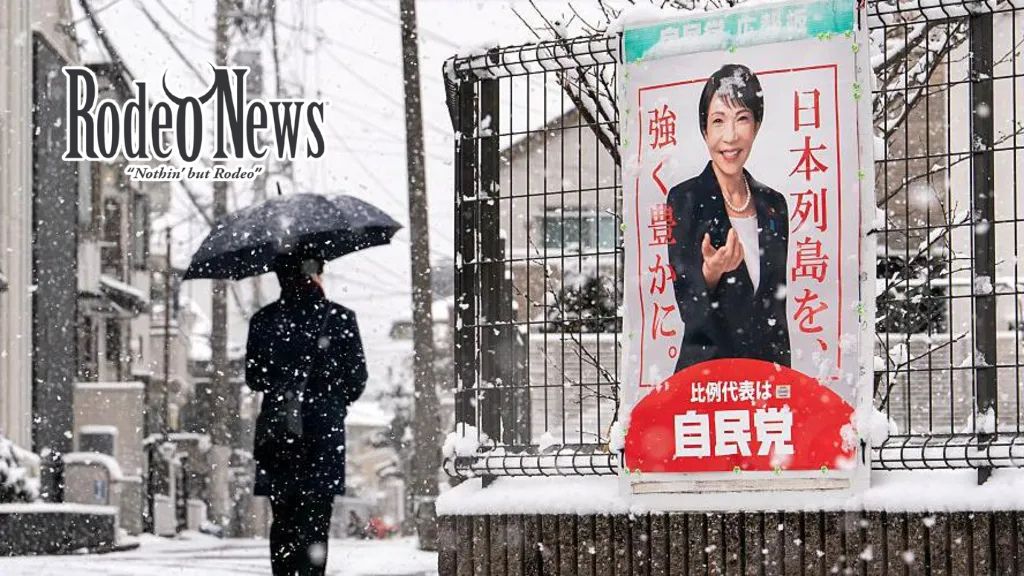
Japanese Voters Brave Heavy Snow in High-Stakes Snap Election Called by PM Takaichi
Japanese voters across the country trudged through heavy snow on Sunday to cast ballots in a rare mid-winter snap election, a political gamble called by Prime Minister Sanae Takaichi that could cement her authority and return her party to dominance after years of turmoil.
The election, the first held during Japan’s winter in more than three decades, comes just months after Takaichi won the leadership of the long-ruling Liberal Democratic Party (LDP). Seeking a swift public mandate, she dissolved the Lower House despite concerns that harsh weather could dampen turnout.
Early indications suggest the gamble may pay off. Opinion polls ahead of voting projected that the LDP and its new coalition partner, the populist Japanese Innovation Party, could secure as many as 300 of the 465 seats in the Lower House—enough for a decisive majority.
If confirmed, the result would mark a dramatic turnaround for the LDP, which lost its parliamentary majority last year following a series of corruption scandals and public anger over rising living costs.
Weather Disruptions and Turnout Concerns
Snowfall blanketed large parts of northern and eastern Japan, complicating voting and disrupting transport networks. The transport ministry reported that by Sunday morning, 37 train lines and 58 ferry routes had been suspended, while at least 54 domestic flights were cancelled. Rare snowfall was also recorded in Tokyo as residents made their way to polling stations.
Niigata Prefecture and other central regions reported particularly heavy snowfall, raising fears that turnout could suffer. Early voting figures appeared to confirm those concerns: nearly 4.6 million people cast ballots ahead of election day, down 2.5% from the previous general election in 2024. Officials attributed the decline largely to adverse weather conditions.
Despite these obstacles, long queues were reported at polling stations in several urban areas, underscoring the high stakes of the contest.
A New Face After Political Turmoil
Takaichi’s rapid rise follows a turbulent period for Japan’s ruling party. Two successive LDP prime ministers stepped down after their approval ratings collapsed, weakened by economic pressures and a fundraising scandal that forced the resignation of four cabinet ministers and triggered criminal investigations.
Against that backdrop, the 64-year-old prime minister has emerged as an unexpectedly popular figure. Since taking office in October, approval ratings for her government have remained above 70%, buoyed by promises of tax cuts, subsidies, and a more assertive leadership style.
Supporters say her straightforward messaging and image as a decisive reformer have resonated with voters weary of political instability.
“She offers clarity at a time when people want direction,” said one LDP lawmaker campaigning in Tokyo.
Economic Promises Under Scrutiny
Central to Takaichi’s campaign is a pledge to stimulate the economy through tax relief and government spending aimed at easing the burden of inflation on households. While those measures have helped broaden her appeal, economists and opposition figures warn that they carry significant risks.
Japan already has one of the highest public debt levels among developed economies, and critics question whether additional spending can be sustained without structural reforms.
The government’s policy package may provide short-term relief, but “fails to address the underlying problems of weak productivity and stagnant real wages,” wrote Masahiko Takeda, a senior fellow at the Australian National University, in a recent analysis.
The opposition has seized on those concerns, arguing that Takaichi’s plans postpone difficult decisions while deepening Japan’s fiscal vulnerabilities.
Popularity, Image, and a Cultural Shift
An admirer of former British prime minister Margaret Thatcher, Takaichi has long spoken of her ambition to become Japan’s “Iron Lady.” A close ally of the late Shinzo Abe, she shares his hawkish stance on defence and nationalist positions on history and identity.
Yet her appeal extends beyond traditional conservative voters. Polls suggest she is especially popular among younger voters aged 18 to 30, a demographic that has often been disengaged from Japanese politics.
Her strong presence on social media has amplified that support. Takaichi has amassed 2.6 million followers on X, and an LDP campaign video featuring her was viewed more than 100 million times in under ten days.
She has also become an unlikely fashion icon. A trend dubbed “sanakatsu,” or “Sanae-mania,” has seen fans snap up items associated with her public appearances, including a black leather tote bag that sold out nationwide and a pink pen that went viral after her first press conference as prime minister.
Sociologist Yuiko Fujita of Tokyo University sees the enthusiasm as part of a broader cultural shift.
“The fact that the prime minister is now a woman, someone with a different background from what people are accustomed to, creates a feeling that something is shifting,” she told Nikkei Asia.
Skepticism and a Unified Opposition
Still, some analysts caution that personal popularity does not always translate into electoral success in Japan’s parliamentary system.
“This is not a presidential election,” said Koichi Nakano, a political science professor at Sophia University. “Voters are choosing local candidates, many of whom are LDP politicians tainted by past scandals.”
Complicating matters further is a more coordinated opposition. The LDP’s former coalition partner Komeito has aligned itself with the Constitutional Democratic Party of Japan, creating the largest opposition bloc in the Lower House and presenting a more formidable challenge than in recent elections.
Foreign Policy Risks
Beyond domestic issues, Takaichi’s foreign policy stance has also drawn criticism. Relations with China, Japan’s largest trading partner, have deteriorated after she suggested Tokyo could deploy its self-defence forces if China attacked Taiwan. Beijing condemned the remarks, plunging ties to their lowest point in more than a decade.
Nakano warned that Takaichi has dug “a deep hole in foreign and security policy by antagonising China,” potentially endangering Japan’s economic interests.
At the same time, she has sought to strengthen ties with Washington. In a rare move, US President Donald Trump publicly endorsed Takaichi on Friday, signalling closer alignment as Tokyo looks for stability in its most important alliance.
As polls close and ballots are counted, the election will determine whether Takaichi’s momentum—powered by popularity, image, and bold promises—can overcome weather disruptions, economic doubts, and political baggage to deliver the decisive mandate she is seeking.